
Your cart
There are no more items in your cart
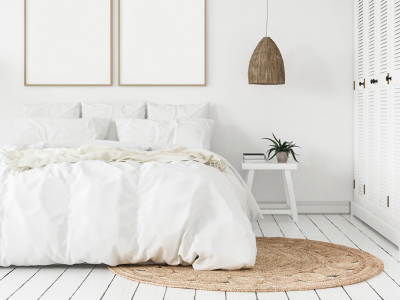
Bedding – description and uses
Definition and history of bedding
Definition
By definition, bedding refers to all the components of a bed, the main elements being the mattress and the bed base, but also, more broadly, all the accessories used with the bed (pillows, bed linen, etc.). Over time, we have seen the functions of bedding evolve, and we have sought to determine to what extent we could make it more comfortable, thereby improving our sleep. As the setting for numerous activities, bedding has spanned the ages, evolving between luxury and ostentation. The concept of hygiene was not incorporated until the 19th century, and that of comfort until the early 20th.
Bedding was long a part of a bride’s dowry. Even though buying bedding represented a significant portion of one’s wages, it was a symbolic gesture and became an essential item for setting up home. The bed also featured prominently in notarial deeds of inheritance, but gradually, bedding inherited from parents or grandparents has tended to be replaced by new items, with more modern materials such as foam replacing wool, and by furniture adapted to one’s body shape. Nowadays, people’s attitudes towards the bed are changing; new ways of thinking mean it is no longer regarded as quite so sacred, and although it remains an important piece of furniture within the home, it is no longer used solely for sleeping.
History
The ceremonial piece of furniture
This is how beds were regarded in the most ancient times: intricately carved, inlaid with precious stones, built to last and to accompany princes in ancient Egypt into eternity. Later, in Ancient Greece, the bed was used for both eating and sleeping, and the Greeks would take part in grand feasts whilst lying in bed; these beds still featured highly ornate designs, but were set on higher legs to facilitate service. Sheets were not yet in use, but bedspreads and pillows were beautifully crafted and embroidered.
The bed was a sign of wealth amongst the Romans, and the concept of comfort began to emerge in the design of the bedding. The quality and beauty of the fabrics were of great importance and signs of affluence. The style was not minimalist; ostentation was the order of the day. In terms of design, the bed remained high, heavily inspired by the Greek model, and was still intended for use at mealtimes. The legs were ornately crafted, and headboards and footboards began to appear.
In the Middle Ages, this highly refined use of the bed continued amongst the wealthy, in contrast to the more common use made of it by the common people, who sought warmth and comfort and where the bed was sometimes the only one available and shared by several people. It was from the Renaissance onwards that the bed came into its own, and France boasts some of the most remarkable examples. The bed was a ceremonial piece of furniture, often placed in the centre of the room, with columns supporting a canopy draped in fabric to provide privacy for the sleeper.
The comfortable and restorative bed
After the Revolution, the bed became more intimate, and the concept of comfort grew in importance. The various ways in which beds could be used, depending on the setting or time of day, led to the creation of new designs and products: twin beds made their appearance, as did cotton mattresses, which were less susceptible to insect infestation. It was not until the early 19th century that springs first appeared, and the era of industrialisation enabled the establishment of workshops equipped with the machine tools needed to manufacture the components of the bed.
With the arrival of foam in the 1940s, comfort became accessible to everyone. Criteria have changed; beds are now expected to be comfortable and healthy, and are directly associated with sleep and rest. A bed must be restorative, as a third of our lives is spent in bed. Present from the first to the last day of our lives, it is a space cherished by everyone, depending on how they use it. Nowadays, the bedding industry has evolved to produce products suited to all tastes and body types. It is often a long-term investment, and its performance does not remain constant over the years (deterioration of around 25 per cent after 10 years’ use). Bedding therefore needs to be replaced in order to continue meeting the demands placed upon it.
Bedding – Different types of bed bases and mattresses
The different types of bed bases
General information on bed bases
As the bed base contributes to comfort, its choice must be directly linked to that of the mattress, depending on the mattress’s composition. To optimise the comfort of your bedding, it is essential to choose a bed base that can absorb a third of the impact experienced by the mattress. This is why it is strongly advised not to combine a bed base and mattress whose compatibility has not been proven, or two items that do not wear at the same rate. As a general rule, manufacturers offer the bed base that best suits the mattress and will optimise its comfort. Bed bases can be slatted or spring-based.
When the bed base is covered in fabric (both the frame and the surface), it is known as an upholstered bed base. This is an effective way of protecting the mattress and providing support across the entire surface of the bed base. Within the range of upholstered bed bases, there is also a design with raised edges, more commonly known as a ‘trough’ design, which helps to keep the mattress securely in place. Whether upholstered or with a bare frame, the bed base can be mounted on legs or be extra-flat to fit into a bed frame. Finally, ventilation and airflow for bedding are important, as we lose an average of 40cl of water per night. This ventilation is particularly important on upholstered bed bases, as the fabric acts as an insulator. However, for people with allergies, bare frames are less prone to dust mite infestations.
The spring bed base
Compatible only with spring mattresses – to ensure their quality – the spring bed base offers various levels of comfort depending on the different characteristics of the springs and, above all, their number. Indeed, the higher the number of springs, the better the distribution of body pressure across the surface of the bed base. Similarly, wear and tear will be slower if there are a large number of springs. The diameter of the steel wire connecting the springs is also important; generally, the larger the wire diameter, the firmer the bed base. For this type of bedding, there are three types of springs, each with its own characteristics.
Biconical coil springs are connected by steel wires running across the width of the mattress. This type of spring adapts to all body types, providing progressive support whose response is directly linked to the pressure exerted by the body. This design is built to last and falls into the category of fairly firm support. On average, there are 300 springs in this type of bed base.
Pocket springs are individually encased in fabric, providing effective support both lengthways and widthways. The sleeping surface offers greater independence as the springs operate independently of one another. This design is a real advantage for double beds, as there is no disturbance caused by the movements of one person affecting the other. Manufacturers have developed several pocket spring technologies, but generally speaking, the support is firm and optimal thanks to the distribution of the springs across the surface and the number of springs, which is typically between 600 and 1,200.
Finally, multi-coil springs consist of a spiral steel wire that runs the entire length of the mattress base. This type of mattress base is suitable for all body types, even heavier individuals. Support is consistent across the entire surface of the mattress and, as with pocket springs, features central reinforcement for effective lumbar support. The number of springs is substantial, ranging from 600 to 2,000.
The slatted bed base
The slatted bed base is compatible with all types of mattress, but is particularly well-suited to foam or latex mattresses. The slats may be exposed or covered, which helps to better protect the mattress and ensure a uniform sleeping surface. They are positioned widthways, and there are several grades of slatted base depending on the number of slats, which can vary from 16 to 32. As with spring bed bases, comfort is directly linked to the number of slats: the greater the number, the more comfortable the bed base will be and the better the support.
The highest-performing slats are made of beech wood; those made of fir or birch do not offer the same quality. They may be made using a laminated process, which involves bonding thin strips of wood edge-to-edge, providing greater strength whilst maintaining the bed base’s flexibility. Due to their position on either side of the bed base’s centre line, the slats also promote independent sleeping zones. This is a type of product commonly found on the bedding market.
The different types of mattress
General information on mattresses
The word ‘mattress’ derives from an Arabic expression meaning ‘to throw a cushion on the ground’. This was a common method of sleeping during the Crusades, and over the centuries the word ‘mattress’ has come to refer to the product we know today. Gone are the days of the horsehair, straw or wool used by our grandmothers, which made for cosy mattresses but which, in the long run, lost their qualities very quickly and required the mattress to be refilled regularly. Nowadays, mattresses consist of two parts, each of which plays a key role in the product’s comfort and durability: the core, which ensures comfort, and the filling, which provides support for the body.
In bedding, there are currently three types of core: spring, foam or latex. The filling, depending on its composition (synthetic or natural), is described as firm or soft. The mattress is entirely covered with a fabric known as the ticking, which plays an aesthetic role but also contributes to the mattress’s flexibility and hygiene. Thus, each component of the mattress plays a key role in comfort, body support and the independence of the sleeping surfaces.
Spring systems
As with bed bases, the spring system in spring mattresses is made up of steel wire, the diameter and shape of which directly affect the comfort and support provided by the bedding. The same types of springs are used – biconical, pocketed or multi-coil – as in mattresses, offering the same levels of comfort and independent sleeping zones. Individually pocketed springs are particularly recommended for those seeking independent sleeping zones, whilst multi-coil springs, stretched across the entire length of the mattress, provide full body and lumbar support and are suitable for heavier individuals.
The material used for the springs is natural and durable (steel), and a common feature of spring mattresses – regardless of the spring design – is ventilation. As a result, this product is particularly well-suited to people who sweat profusely. Air circulation occurs easily within the centre of the mattress, thanks to the space left between the springs. However, it is important to have a layer of insulation between the springs and the filling, to ensure that the sleeper does not feel the pressure of the springs. Whilst a spring system should give slightly when a person lies down, it must also be able to withstand heavy pressure, and it is essential that it responds progressively to the weight exerted by the user.
Foam suspension
General information on foam suspension
In the bedding industry, there are two methods of manufacturing foam. The first is individual moulding, in which the core of the mattress is formed in a single mould of the desired mattress size. The second is known as continuous production, and involves cutting a piece of foam from an endless block to the size of the desired mattress. In recent years, foam manufacturing has shifted towards natural products, and manufacturers no longer use chlorofluorocarbons (CFCs) or greenhouse gases in the composition of the foam, with a view to protecting the environment. In this context, foam mattresses are highly recommended for people suffering from allergies or respiratory problems (asthma, emphysema, etc.). Several characteristics distinguish the different types of foam used in mattress manufacture.
Firstly, it is important to consider density. High-density foam will improve the mattress’s longevity, enabling it to retain its elasticity and prevent it from losing its shape. You should also pay attention to the compression of the foam, which determines whether the mattress is soft or firm. The higher the compression of the foam, the firmer the mattress will be. This choice should be based on each person’s body type and their own idea of comfort. There are three types of foam (polyether foam, polyurethane foam and viscoelastic memory foam) which differ in terms of their thickness and density.
Polyether and polyurethane
Polyether foam does not have a high density, being less than 25 kg/m³. It does not offer much resistance to the user’s weight or movement. As a result, mattresses made from this type of foam are more suitable for children than for adults. Due to its low density, it does not provide independent support for each sleeper, and the mattress deforms quickly.
Polyurethane foam, in the broadest sense of the term, is defined as having a density exceeding 28 kg/m³. From 30 kg/m³ upwards, it is referred to as high-resilience polyurethane foam, and some top-of-the-range models can reach up to 60 kg/m³. Resilience is the foam’s ability to return to its original shape. The high-resilience process is a cold-foaming manufacturing process, involving compression that bursts the air bubbles, thereby ensuring the foam’s durability and superior quality. High-resilience polyurethane foam mattresses are high-quality products that are commonly found on the bedding market.
Viscoelastic memory foam
Developed by NASA in the 1970s to ensure the comfort of astronauts on long-duration missions, memory foam – or viscoelastic foam – is now used in the medical sector for people confined to bed for long periods. It used to be criticised for being excessively warm due to its density, but new manufacturing processes have succeeded in minimising these drawbacks and making the product more appealing.
A state-of-the-art technology, memory foam has the ability to mould perfectly to the body and, crucially, adapts to the position the user adopts in bed. Muscle tension is reduced and pressure points are absorbed, which helps to minimise the user’s movements whilst sleeping. It is a foam that is highly sensitive to temperature, which enables it to mould to the body. Its resilience is superior to that of polyurethane foam, making it a high-quality foam on the bedding market. Furthermore, it has a high density, ranging from 50 to 85 kg/m³.
Latex
A natural product, latex is derived from the sap of the rubber tree and is harvested by making incisions in the tree’s trunk. Latex is not a durable material, and mattress manufacturers must add synthetic latex to improve its durability and stability. The amount of natural latex in a mattress is, of course, linked to its quality; the higher the percentage of latex, the better the mattress’s elasticity and comfort. A mattress must contain at least 85 per cent natural latex to qualify for the label. If the content is below 50 per cent, the term ‘synthetic latex’ is used. The latex slabs are perforated to provide optimum comfort, and the degree of sinkage is determined by the diameter of the perforations.
Latex mattresses are the least prone to sagging and offer the greatest comfort. Their density must be at least 70 kg/m³ to ensure adequate elasticity and prevent the mattress from sagging. The antibacterial and anti-mite properties of latex make it an attractive material for people suffering from allergies. Some models feature a zoned mattress, a process that divides the latex into several support zones tailored to different parts of the body. These are generally high-end bedding models, but they are particularly popular with people suffering from back problems. The price of latex mattresses remains high, but it is a product which, in the long term, guarantees consistent comfort.
Bedding – The bed frame, filling, ticking and accessories
The bed frame
Once the choice of bedding in the literal sense has been made, it is common to consider the different types of bed frame that will support this bedding. Although it is very straightforward to fit legs to the bed base and opt to use the bedding in its standard form (bed base + mattress), various models of bed frames or bed surrounds can enhance the bedding and give it a more aesthetic or even stylish look. In this context, only the shape of the bed base will change, and you’ll choose an extra-flat, built-in bed base that fits inside the bed frame. These are generally slatted bed bases.
The most common materials for bed frames are wood and metal. Pine is a classic choice; it suits any bedroom as it is a warm, low-maintenance material that stands the test of time. Pine can be stained in various colours, given a wood stain finish or made to look aged, depending on the atmosphere you wish to create in the room. Other materials, such as bamboo or rattan, are more commonly found in adults’ bedrooms, lending the room an exotic feel. Their durability and ease of maintenance make them a popular choice. The most commonly used metals are aluminium and wrought iron. They differ greatly in terms of their appearance and the atmosphere they create in a room; the curves of wrought iron are more welcoming, whilst aluminium has a cooler feel.
The filling
The padding or covering of the core determines how comfortable the mattress feels. This is the part of the mattress that is visible, encasing the entire structure, whether it is made of springs, foam or latex. The filling consists of various layers, topped with the ticking. These layers follow a logical order, with the thickest material being the last to be added, as it will be closest to the sleeper, beneath the ticking. The thickness must be at least 4 cm to ensure a satisfactory level of support. There are several types of filling, the most common being wadding, wool, cotton or silk. In lower-end mattresses on the bedding market, foam filling is also found, but it will not meet the quality standards one would expect from a mattress. This is why product selection must be rigorous to ensure the success of this crucial stage in mattress production.
Many models now feature a summer side and a winter side, with two layers of filling around the core. Silk and wool are materials that provide warmth, making them ideal for winter. Linen or cotton have cooling and absorbent properties, which also help to regulate temperature effectively. Bedding manufacturers have agreed to place their label on the winter side of the mattress, which is how the two sides are distinguished. Although a winter side may not be necessary in our well-heated homes, this system also reminds us to rotate the mattress at least twice a year – an essential step in extending its lifespan.
The cover
The mattress is covered with a fabric commonly known as the cover. Various types of cover are available on the bedding market (stretch weave, viscose, cotton or bamboo), and it is important to choose it carefully. As well as its aesthetic role, it also plays a part in the mattress’s softness and comfort and, of course, in hygiene (antibacterial, anti-dust mite, anti-mould, hypoallergenic) as it is in direct contact with the person using the bedding.
Stretch weaving is a process that softens the fibres, giving them greater elasticity; viscose is a plant-based fibre, similar to silk. Cotton and bamboo, meanwhile, are widely used for mattress covers due to their durability and breathability. Some mattresses have two sides (a summer side and a winter side), and the cover is adapted to this feature by being made of a different material for each side (wool and cotton, for example). New technologies have made it possible to develop a cover that regulates body temperature. It consists of microcapsules which, as soon as you lie down, absorb heat and then release it throughout the night. There are also mattress covers in which carbon fibres are woven in, to remove static electricity from the person using the bedding.
Fitting the cover is the final stage in the mattress manufacturing process. Sophisticated technological equipment allows certain parts of the mattress-making process to be automated, but some tasks still require specialist skill and manual labour; to ensure a flawless finish, these are carried out by hand. Some brands make it a point of honour to carry out these finishing touches by hand, from cutting the ticking to closing the mattress, including the attachment of labels and handles.
Pillows
These are items that are increasingly included in the purchase of bedding in the strict sense (bed base + mattress), as physical comfort is also linked to their specific characteristics. A pillow helps support the spine, but it should also be chosen according to the sleeping position you usually adopt. It should be quite voluminous and not too firm if you sleep on your back, whereas it should be much less voluminous if you sleep on your stomach.
The composition of pillows varies depending on the desired outcome; a wide range of materials can be used, most commonly synthetic (polyurethane foam of varying qualities) or natural for more eco-friendly bedding (feathers, spelt husks, soya bean husks, etc.). The softness and comfort of a feather filling can be appealing, as can its much longer lifespan compared to a foam filling, but its allergenic nature can sometimes be a problem. Foam, if made from synthetic agglomerates, deteriorates more quickly. Some manufacturers offer high-quality synthetic foam pillows, which are also distinctive for their unique shape, allowing them to mould perfectly to the contours of the neck. They thus provide perfect support and relief for the neck and shoulder muscles when sleeping on your side or back. In any case, an unsuitable pillow can cause neck pain and negate the benefits of good bedding.
The duvet
The origins of the duvet date back to the Middle Ages. In Northern Europe, a bag filled with goose down was given as a wedding gift, promising to provide warmth and comfort during harsh winters and in poorly heated homes. However, the many drawbacks of this product (feathers becoming flattened, dust mites, allergies, etc.) led to its phasing out of bedding, paving the way for sheets to become popular from the early 20th century onwards. With the advent of synthetic materials and new techniques for treating fabrics to minimise their undesirable effects, the duvet has made a comeback in bedding, offering both comfort and aesthetic appeal.
The quality of a duvet depends on the composition of its filling material. Whether natural or synthetic, choosing between the two is often a real dilemma. Synthetic fillings on the bedding market are an essential ally for people with allergies, provided they have been suitably treated and carry the relevant certification. The price of a synthetic duvet is also attractive, due to the fact that the raw material is less expensive as it is non-natural, and because the manufacturing process is less complex. However, their lifespan is shorter, as washing causes the synthetic fibres to shrink. Natural materials are undoubtedly the softest. Thanks to their lightness, they envelop the body, providing a feeling of softness, whilst the air pockets between the down clusters help to reduce perspiration. Finally, the duvet cover also plays a part, and is available in various materials (cotton of different qualities, expressed in threads per cm², percale, satin, linen, etc.), each of which can satisfy the consumer in its own way.
New bedding
Certified and eco-friendly bedding
In the current climate, manufacturers’ efforts are focused on sustainable development and environmental protection, and consumers are seeking to play their part by purchasing certified products to contribute to this effort. The National Bedding Council brings together a number of manufacturers who have committed to adhering to a charter established in collaboration with the CTBA (Technical Centre for Wood and Furniture), known as the “BELLE LITERIE” charter. Bedding bearing the BELLE LITERIE label must have been manufactured in accordance with strict specifications covering product compliance, the manufacturing process and the tests to which it has been subjected.
Eco-friendly bedding, on the other hand, uses natural, unprocessed materials. Materials containing VOCs (volatile organic compounds), such as certain types of foam, are to be avoided. Some foam manufacturers replace petroleum-based derivatives with plant-based oils (eucalyptus, lemon, etc.) and may come close to meeting the criteria for an eco-friendly label. Latex and wool are 100 per cent natural materials and contribute to the production of eco-friendly bedding. Synthetic mattress covers are excluded; instead, one should opt for linen or bamboo fibres, or organic cotton. The Oeko-Tex label certifies that the product contains no toxic substances that may have been introduced during washing or dyeing. The wood used for bed bases is PEFC-certified (Programme for the Endorsement of Forest Certification), guaranteeing sustainable forest management and certifying the products sold. The FSC label, meanwhile, guarantees the environmentally responsible management of products as well as respect for indigenous communities.
Extra bedding
A sign of modern times and people’s mobility (holidays, weekends, staying with family, etc.), the extra bed provides essential support for an impromptu sleeping arrangement. This type of bedding is often used by young people. The choice depends on the space available to set it up, the budget, and also how easy it is to store and set up. The futon is ideal for those seeking comfort combined with quick set-up, although it remains quite expensive. The air mattress is one of the options that combines a moderate price with easy set-up and storage. It comes in two sizes: single or double.
The mattress is usually inflated electrically and this is a quick process. The system may consist of a separate pump (battery-powered or mains-powered) which connects to a valve on the mattress. More commonly, the system is built into the mattress itself; in this case, a cable connects directly from the mattress to a standard mains socket. These systems ensure almost instantaneous inflation. Some are fitted with dial valves so that the firmness can be easily adjusted and the air let out, ensuring they suit every body type.
Relaxation bedding
This is the term used for adjustable beds (electric or manual) which, contrary to what one might think, are not medical-grade beds but simply products designed to provide greater comfort and relaxation. The bed base is adjustable, allowing the head and foot sections to be raised to personalise the position to suit individual preferences. For a double bed, it is strongly recommended to opt for two independent bed bases, each with its own mattress, so that each sleeper can adjust their position individually. Most electric models offer between 3 and 5 sleeping positions (or body positions); the choice will depend on your objectives and the budget you have set for purchasing the product. Manual relaxation bedding offers fewer options in terms of sleeping positions.
Slatted bed bases are often found in relaxation beds, but the disc suspension system also stands out by offering optimum comfort. The springs are independent, moving and following the body’s movements very closely. Springs combined with slats also offer an ideal combination, particularly recommended for heavier people and for those who frequently change position whilst sleeping.
Mattresses known as ‘relaxation mattresses’ are designed to adapt to this type of adjustable bed base. The core of the mattress is specially designed to conform to all the contours of the adjustable bed base. Handling should not cause any damage, and the mattress must withstand repeated changes in position. In terms of the composition of a relaxation mattress, it always features the same type of support system as a fixed mattress: springs, foam or latex, adapted to the mobility of the bed base. Latex and viscoelastic foam are most commonly recommended, as these are high-density materials that do not lose their shape.
The futon
General information
It was in the late 1980s that what is known as the futon first appeared in France. It is a sleeping concept which, far more than just comfort, adds a touch of style. The word ‘futon’ means ‘mattress’ in Japanese, and for a long time it was used as an extra bed or space-saving sleeping solution, consisting of a simple piece of cotton that was unrolled at bedtime. Nowadays, futon manufacturers have drawn on Japanese tradition to adapt designs for our bedding needs. These are high-quality sleeping solutions that provide good back support and are environmentally friendly as they use natural materials.
Futon mattresses comprise quilted layers of carded cotton (whose fibres have been separated from one another to restore volume and loft), all enclosed in a ticking. Stitching holds the layers in place and ensures the mattress retains its shape. In some models, additional layers (such as foam, latex or coconut fibre) may be added to adjust the firmness and resilience. The lifespan of a futon is no shorter than that of conventional bedding and ranges from 10 to 12 years, depending on how well it is looked after and how it is used.
Filling and support
A 100 per cent cotton futon tends to compress and lose some of its suppleness, but after about two months’ use it settles and remains consistent over time, offering the comfort one would expect from it. It is generally thin and firm. More commonly, futons combining cotton and latex, cotton and foam, or cotton and coconut fibre are available on the bedding market. Latex is a cellular plant-based material that lends the futon its suppleness; it does not compress and allows air to circulate through the mattress, making it easier to look after. Coconut fibre is a natural fibre extracted from coconuts. It offers greater resistance to pressure than latex, but when combined, these two materials help to optimise the futon’s comfort and support.
The futon is placed on the floor, which is first covered with a tatami mat, made up of several layers of rice straw covered with woven rushes – a combination inspired by pure Japanese tradition. Various sizes and styles of tatami are available on the market, adaptable to the floor space available. Their thickness and density must be carefully considered, as these factors determine the tatami’s lifespan. More traditionally, tatami mats can also be laid over a slatted bed base to support a futon mattress.
Gel and water mattresses
When it comes to body support and shock absorption, the benefits of gel are well established in a wide range of products: shoe insoles, bicycle saddles. Gradually, gel is making its way into the world of bedding, opening up numerous possibilities for improving comfort. Several dozen columns of gel cells, each independent of the others, are laid on a layer of polyurethane foam to form the mattress. Independent sleeping zones are guaranteed, as each column acts independently, and the mattress’s elasticity and weight-bearing capacity are impressive. Although gel mattresses are not widely available on the market, they possess qualities that make them an attractive product today.
Today, the water mattress aims to convey an image of comfort and firmness. It works in the opposite way to a traditional mattress by moulding to the body and almost completely eliminating pressure points and, consequently, the sleeper’s movements. The water is stored in a vinyl pocket, which is resistant to the proliferation of dust mites or bacteria – a benefit for allergy sufferers. Finally, comfort is optimal: the fibres stabilise the water to prevent that ‘floating’ sensation and provide firmness. In a double bed, the mattress contains two separate chambers. Some models feature a thermostat to heat the water.
Choosing bedding
The impact of bedding on sleep
Sleep is linked to health and well-being. A decline in energy levels and productivity during the day, as well as difficulties concentrating, are the consequences of poor sleep. The role of bedding has become widely recognised as important, which is why the National Institute for Sleep and Vigilance (INSV) and the Association for the Promotion of Bedding (APL) have decided to join forces to raise public awareness of the fact that bedding and restorative sleep are closely linked. The bed plays a significant role in the quality of rest and in resolving back problems. Studies have compared the experiences reported by users of new bedding with those of people using bedding that is 10 years old or more. The concepts of restorative sleep, less restlessness and a better night’s sleep emerged from this study among all participants who used the new bedding.
Similarly, more in-depth analyses have shown a reduction in muscle activity as well as in the number of micro-awakenings when using new bedding. Other studies have linked the quality of the bed to sleep quality in people with sleep disorders and have demonstrated that high-quality bedding is beneficial for those with significant sleep vulnerabilities. Similarly, daytime activity appears to be directly correlated with effective and restorative sleep.
Measuring wear and tear
Generally, bedding manufacturers estimate a lifespan of 10 years, which corresponds to approximately 30,000 hours of use. However, other signs such as frequent insomnia or back or lower back pain upon waking should serve as a warning about the condition of the bedding and the need to replace it. Similarly, a damaged or even torn cover, or very pronounced indentations on the mattress, are signs of wear and tear that suggest the inside of the mattress is in an advanced state of deterioration. Many people claim that the quality of bedding is important for health and the quality of sleep.
If in doubt, anyone can test their bedding by pressing their hands flat against the mattress and observing how it reacts. If the mattress tends to sink in, it will no longer provide optimum support for the back and will have lost some of its quality. When the areas where different parts of the body rest (feet, buttocks) are very indented, it can be concluded that the mattress has lost its elasticity and struggles to return to its original shape – a sign that it needs replacing. Hygiene also plays a part, even if the mattress is protected by a cover and is not in direct contact with the body.
Criteria for choosing
General considerations
The most important factor is comfort, and the ultimate goal is therefore restful sleep. There are four criteria that complement one another and, when combined, will make this goal achievable: softness, firmness, support and independent zoned support. It is the balance of these four factors combined that will enable you to find the right bedding, suited to your body type, and this balance will not be the same for everyone, as everyone has their own idea of what constitutes good bedding.
When it comes to comfort, the focus is on the mattress filling: synthetic materials provide a firmer feel, whilst natural materials (such as cotton, wool or silk) tend to make the mattress softer. The other criteria – firmness, support and independent spring action – are linked as much to the mattress as to the bed base. This is why, very often, the bed base and mattress are designed to work together, and it is important to choose them from the same range to help optimise comfort and ensure the mattress lasts longer.
The size of the bed is also important, and we recommend choosing bedding that is around 15 cm longer than your height. Currently, bedding is available in several standard sizes, rather than being made to measure. The most common sizes on the market for a single bed are 90 x 190 or 90 x 200. For double beds, the standard size remains 140/190 cm, but larger dimensions – such as 160 cm in width or 200 cm in length – are readily available on the market. Home textile manufacturers cater to these dimensions, so it’s easy to find sheets, duvets and blankets to fit beds of these sizes. Beyond these standard sizes, buying bedding can prove difficult and also expensive.
Personalising comfort
Buying bedding is a significant financial investment, but this should not overshadow the fact that it is a personal choice which must align not only with a budget but also with the specific requirements you have set for yourself in terms of comfort and the characteristics of the bedding. Whatever its composition, bedding must be durable and retain its qualities for as long as possible; its performance should deteriorate only very gradually. By adapting to the body’s shape, it must allow for proper relaxation and restorative sleep, which is why everyone is led to make their own choice based not only on their height and weight, but also on their own idea of comfort
It is at bedtime that our bodies release the tension built up during the day, and relaxation must be optimal. The support provided to the body must meet certain criteria depending on the areas resting on the bedding. Whilst the shoulders and pelvis require firmer, balanced pressure, the lower back and legs require gentler pressure. Generally speaking, whilst some people prefer a firm mattress and others a softer one, there should be no noticeable tension and the body should rest in such a way that it feels no strain. The better the mattress suits the sleeper, the longer they will maintain the same position and enjoy a restful night’s sleep. The level of motion isolation is also a very important factor in the choice, as it is estimated that the average person makes around 40 movements per night.
It is therefore a highly personal choice and, despite the advice given by sales staff or in various catalogues, it is essential to try out the bedding before buying it to ensure it is right for you. In reality, there is no standard classification system for judging the quality or firmness of bedding; only the user’s own experience will be decisive, and the ideal bedding will adapt perfectly to the sleeper’s body shape.
Budget constraints
Even though this is a long-term investment – and we know that the higher the quality of the bedding, the longer it will last – it is easy to be tempted by a multitude of offers at attractive prices. However, these may not meet all the criteria required for good bedding. As mattresses and bed bases are inseparable, and their perfect compatibility is key to optimising comfort, purchasing bedding will therefore involve buying both of these items.
The cost of good bedding is, initially, proportional to its quality. For example, slatted bed bases will be less expensive than spring bed bases, which offer greater comfort. The same applies to polyester foam mattresses and memory foam mattresses, for example. Secondly, within the same product range, the price will be determined by the technical sophistication of the material used. For example, when buying a spring mattress, biconic spring mattresses will be less expensive than pocket spring mattresses, due to the manufacturing process required to produce this type of product. This is why it is difficult to compare specific products and make a choice based solely on price. Offers must be examined very carefully in order to compare the components of the bedding, whilst always prioritising comfort and well-being.
Bedding care and conclusion
Bedding care
Looking after your bedding is important to ensure it remains in the best possible condition for as long as possible, bearing in mind that, on average, bedding has a lifespan of ten years. The first step – essential for maintaining the mattress’s comfort – is to turn it over, both front to back and head to foot, at least every two weeks during the first few months after purchase. This will stabilise the flexible filling materials. After that, you can space out this task and do it roughly every three months. For products with a winter side and a summer side, each with filling suited to those seasons, it is important to switch sides accordingly: in October for the winter side and in April for the summer side.
Although there are now stain-resistant mattresses available on the bedding market, it is still a good idea to protect your mattress with a cover made of easily washable fabric, which will help keep it clean. Some mattress protectors also offer anti-dust mite or waterproof properties. They act as a barrier between the body and the mattress, preventing the moisture we lose whilst sleeping from being absorbed by the mattress, which can then lead to problems with musty odours. Latex mattresses require more frequent airing but must not be exposed to direct sunlight, which can soften the natural material.
The bed base and mattress should also be dusted to reduce allergens, simply by using a hoover. Air the room regularly – this is essential for maintaining a healthy environment, and the fresh air will certainly help your bedding combat damp. Finally, despite the care taken in the mattress’s manufacture, it is not advisable to walk or jump on it, or even to fold it, so as not to exert excessive pressure that could damage it.
Conclusion
Choosing the right bedding can be a complex process, and the vast array of options available to consumers, along with the wide range of prices, does not always make the decision any easier. The criteria for choosing should remain personal, and everyone should clearly define their own objectives and budget before setting out to buy bedding. However, one must not lose sight of the fact that buying bedding is a long-term investment, directly linked to well-being and comfort – two essential criteria when making a choice.
Bedding specialists recognise the importance of comfort and durability, offering products that provide good value for money. However, it is advisable to ensure that the bedding carries a quality label to guarantee the quality of the products it comprises and the materials used. This is precisely what the Habitat et Jardin website strives to achieve with the wide range of bedding products it offers.