
Your cart
There are no more items in your cart
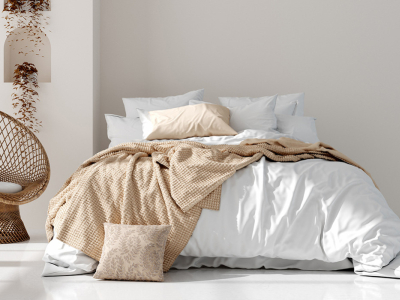
Duvet: description and uses
Duvet – Definition and history
Definition
‘Duvet’ is a feminine noun derived from the Latin ‘culcita’, which meant bedding made of feathers. Nowadays, a duvet is a blanket whose filling provides warmth. This item of bedding consists of a closed bag, the dimensions of which are similar to those of the bed. A duvet may be filled with goose feathers, eiderdown (down from a wild duck native to northern regions known as the eider), silk, wool, or plant-based or synthetic fibres.
By extension, the term can also refer to a simple duvet or foot cover made from down. Down refers to the first, very short feathers that appear on the bodies of eiders, swans and geese. Thanks to its softness and warmth, the duvet protects the sleeper from the cold. Today, duvets are increasingly replacing traditional bedding consisting of sheets and wool or cotton blankets. The duvet is protected by a removable, washable duvet cover.
History
Silk, which has long been used in bedding, was discovered in China in the 17th century BC. The technique for making it remained a secret for 3,000 years. The discovery of the benefits of down was linked to a tradition widespread in the Middle Ages in certain northern European countries such as Denmark and Norway. The aim was to help newlyweds keep warm in country houses with poor thermal insulation. To this end, they were given a bag stuffed with goose or duck down.
The manufacture of eiderdowns progressed from the 18th century onwards when wild ducks were domesticated. This bag quickly evolved into the duvet. At that time, wood-burning heating was not affordable for everyone. The duvet therefore quickly became established in rural areas and even in towns as an essential part of winter bedding. Thanks to its hypoallergenic properties, the natural silk duvet was always regarded as a luxury blanket.
After the allergenic effects of dust mites were highlighted, sales of goose- or duck-down duvets fell sharply during the second half of the 20th century. There was a return to traditional blankets. From the 1990s onwards, two developments brought the duvet back into the limelight.
The first was the production of duvets filled with synthetic fibres. Models made from hollow fibres or siliconised fibres have proven resistance to dust mites. The second concerned animal-down duvets. New scientific studies have shown that there is no automatic link between dust mites and goose or duck down. At the same time, new down duvets are treated to repel dust mites. The range of duvet fillings has diversified. In France, bedding consisting of sheets and blankets made of wool or cotton is no longer in fashion. The same is true in the United States, where an exhibition featuring more than 650 duvets dating from the period between 1880 and 1920 took place in New York in March 2011. The‘new look’duvet provides warmth and softness at night and acts as a decorative feature for the bed during the day.
Duvets – The different types
Duvets with natural fillings
Duvets filled with goose or duck down and feathers
Advantages
Down is harvested from beneath the belly and wings of geese and ducks. Its softness and fluffiness are unrivalled. With optimal thermal insulation (especially when the fill weight is high), a down duvet is warm in winter and cool in summer. With its natural ability to regulate bed temperature, thermal comfort is guaranteed even in polar regions. As air circulates easily through its clusters, down is breathable. Despite its natural warmth, it absorbs and wicks away moisture from the body, ensuring a healthy and comfortable night’s sleep.
Down is ideal for people who sweat at night. Extremely light, eider down has exceptional loft. This quality makes it possible to produce ultra-light duvets for regions with a mild climate, such as the Mediterranean coast. Naturally antibacterial, goose or duck down requires no chemical treatment. Duvets made from white goose down or Hutterite down (from waterfowl farmers in northern Canada), with large, springy clusters, represent the‘top of the range’. The minimum lifespan of a down duvet is 10 years, which is more than double that of a synthetic fibre duvet.
Disadvantages
Duvets made of down or feathers are not suitable for people with allergies to dust and dust mites. With certain quilting methods, the down clusters can clump together in one corner, particularly if the duvet is moved around frequently. In this case, the duvet loses its even distribution. Its thermal insulation will be reduced. Even distribution of the down can be achieved through box-stitching. Pure down duvets are very expensive. Hypoallergenic duvets contain down that has been treated against dust and dust mites. These are rarely found on the market.
Others consist of a combination of down and feather. Feather filling is heavier than down filling. The thermal and hygrometric performance, as well as the loft, of a feather duvet are inferior to those of a high-density down duvet. Mid-range feather duvets may lose some of their filling if the outer cover tears. They offer little resistance to moths. Duck down is less soft and less fluffy than goose down. It also has a stronger odour. The quality of down decreases as the age and size of the bird from which it comes decrease. Caring for down duvets is relatively difficult. They can only be washed in large washing machines (over 16 kg) on the ‘wool 40°’ cycle. To avoid the risk of tearing, it is advisable to have them dry-cleaned.
Natural silk duvets
Advantages
Natural mulberry silk duvets are handcrafted. Unlike other materials, natural silk requires no chemical treatment (pesticides, etc.). Buying a natural silk duvet protects you from the chemical fumes (odours) found in other products. Their hypoallergenic, antihistamine and anti-mite properties make natural silk duvets a good alternative to those made from goose or duck down. With a comfortable thermal balance to suit all needs, natural silk duvets provide warmth in winter and coolness in summer.
The absence of topstitching eliminates thermal bridges. It ensures a balanced distribution of heat across the entire surface of the duvet. With its moisture-wicking properties, the natural silk duvet provides complete and continuous coverage. It is recommended for those who toss and turn in their sleep. The filling of a duvet with high-density silk fibres (several layers) preserves its exquisite fineness. This dense fabric is evenly distributed across its surface. Whatever the circumstances, its uniformity remains unaffected. Every morning, you’ll find it easy to shake it out or spread it over the bed. Compact thanks to its PVC cover, the natural silk duvet can be taken anywhere.
Disadvantages
When buying a natural silk duvet, you need to be vigilant. Indeed, products that are not entirely filled with silk are still being sold at the price of 100 per cent natural silk. Other duvets are made from silk bourrette. This bourrette is derived from the waste produced during the carding and spinning of silk. Duvets made from doupion (double cocoons with irregular weaving) are of average quality. When faced with moisture released by perspiration, the absorbency of a natural silk duvet is limited to 30 per cent of its weight. Its drainage capacity is lower than that of a duvet filled with goose or duck down. In this respect, only small silk garments (such as shirts, etc.) are well tolerated by the body.
A natural silk duvet may cause discomfort for people who sweat heavily at night. They will need to change their duvet at least once every three days. Silk duvets cannot be machine-washed. Dry cleaning of this type of duvet must use certified organic products. A natural silk duvet must not be ironed or vacuumed either. In terms of appearance, the loft of a silk duvet is less than that of its goose or duck down counterpart.
Wool and organic wool duvets
Wool is a thermally insulating animal fibre. Its moisture-regulating properties mean it remains rot-proof despite absorbing a quantity of water equivalent to ? of its weight. Wool provides warmth in winter and coolness in summer. Wool prevents the proliferation of dust mites, the primary cause of respiratory allergies as well as those affecting the ENT area (allergic rhinitis, etc.). Chemical treatments applied to wool (dyeing, bleaching, etc.) do not directly affect its original qualities.
‘Bio Laine’ is a registered trademark in France. It represents wool that has been rigorously selected. Its GREENFIRST treatment, which repels dust mites, moths, mosquitoes and bedbugs, is carried out using only lemon, eucalyptus and lavender (100% natural products). This treatment gives it exceptional hypoallergenic properties. Organic wool is washed and dyed without the use of chemicals.
The organic wool is Oeko-Tex 100 certified, which means it can be used in the manufacture of baby blankets and duvets. This label guarantees the absence of substances toxic to the body or the environment. These high-end duvets, filled with 100% organic wool, have an outer cover made from 100% high-density organic cotton (over 190g/m²). Their fill power can reach 500g/m². The diamond-quilted pattern ensures the filling remains in place. Made predominantly from European wool, the organic wool duvet requires less energy to produce. It must be dry-cleaned. This natural duvet is packed in a cotton bag.
Plant-fibre duvets
Bamboo fibre duvets: bamboo fibre comes from an organic plant. It is absorbent, antibacterial and hypoallergenic. The bamboo duvet, ideal for children, is completely crease-resistant. Despite its reasonable price, it is soft and fluffy, very similar to goose or duck down. Available in three weight options, the bamboo duvet ensures thermal comfort tailored to the room temperature. Bamboo fibres improve the smell of the bed by absorbing odours from the body (sweat), medicines, paint, etc.
The filling of this natural duvet combines bamboo (80%) with polyester (20%). Natural bamboo is a renewable material, whilst polyester is 100% recyclable. Its outer cover is made from cotton (50%) and bamboo viscose (50%). However, if you decide to buy a bamboo duvet, it’s important to do your research. Some ‘bamboo’ products without a zip only have a bamboo outer cover. Even in fillings made from artificial fibres, there is a difference between bamboo fibre and bamboo viscose. The latter is treated with chemicals.
Duvets can be made from maize fibres, soya fibres and coconut fibres. Maize-fibre duvets are filled with 100 per cent maize fibres! However, the weight varies depending on the model. It is generally between 400 and 500g/m². The outer cover of a maize fibre duvet is made from 100 per cent naturally treated cotton. As well as being organic, this product is hypoallergenic and provides good thermal insulation.
Duvets made from soya or coconut fibres are less common on the market. Their filling is less uniform than that of their maize fibre counterparts. It is made by combining milk fibres (20 to 40 per cent) with very fine polyester fibres (60 to 80 per cent). The outer cover is identical: it is made from 100 per cent cotton.
Duvets with synthetic filling
Advantages
Compared to natural duvets, synthetic-filled duvets are the most economical choice. They are ideal for people with respiratory or skin allergies. Polyester is known for its resistance to moisture, mould, bacteria and dust. With a high fill weight, synthetic fibres provide thermal insulation very similar to that of down or goose or duck feathers.
There are three categories of synthetic duvets, depending on the nature of their filling. Duvets made from standard polyester fibres (Comforel, etc.) are filled with flocks. Their weight does not exceed 200 g/m². They are the cheapest on the market. Duvets made from hollow polyester fibres (Tergal, Hallofil, Quallofil) provide ideal thermal insulation thanks to the air they contain. Duvets made from siliconised hollow polyester fibres are the best option. They combine good thermal insulation with the loft of a down or feather duvet.
In this category, duvets made from siliconised hollow microfibres or nanofibres represent the top of the range. They regulate temperature according to body heat. Their weight exceeds 400 g/m² in microfibre gel. For added comfort, you can opt for a four-season synthetic duvet. This model consists of a summer duvet (100 to 150g/m²) and a thicker one that can be layered over the first in winter. Compared to feather duvets, synthetic duvets take up less space. They are easier to store.
Disadvantages
Compared to natural duvets, the lifespan of synthetic duvets is limited. It does not exceed 5 years in the best-case scenario. Ordinary polyester fibre duvets offer very little thermal insulation. They can cause various allergies. Furthermore, they can become misshapen over the years.
After 3 or 4 washes, the synthetic fibres lose volume. Mid-range models with a high fill density (over 300g/m²) are too warm. You quickly start to sweat under them. As well as potentially containing toxic substances, cheap synthetic duvets can sometimes have odours that are hard to tolerate.
Duvets with mixed fillings
Bamboo carbon duvets
Bamboo carbon powder is produced using the pyrolysis process. This involves burning bamboo in the same way as charcoal. The powder is then mixed with polyester fibres. The resulting material differs from that of synthetic fibres. Despite its considerable thickness (400 g/m²), it offers a very economical filling for a soft, light and voluminous duvet. This type of duvet is every bit as good as those made from down or feathers.
The main quality of bamboo carbon filling is that it gives off a very pleasant scent reminiscent of a bamboo grove. With this new type of duvet, you no longer smell cigarette smoke, excessive body odour or certain medicines. As well as its absorbent properties, bamboo carbon is anti-mite and antibacterial. Bamboo carbon fibres reflect the sleeper’s infrared rays. This property stimulates blood circulation in the skin’s capillaries, helping the skin retain its youthful appearance for longer. Furthermore, bamboo carbon releases negative ions that are beneficial for the brain (rapid eye movement sleep, etc.).
Duvets made from artificial and synthetic fibres
As well as bamboo fibre and bamboo viscose, other man-made fibres are used in duvet fillings. These include LYOCELL, TENCEL and INGEO. SUPRELLE FRESH-TENCEL synthetic duvets are classified as‘high-end’. Their filling is a blend: TENCEL, an artificial fibre made from eucalyptus wood, accounts for between 30 and 40 per cent depending on the model. The remainder consists of a high-performance polyester called SUPRELLE FRESH. The outer fabric is a 50–50 blend of TENCEL and cotton. The quilting pattern is hexagonal with two rows of stitching for reinforcement.
These ultra-comfortable duvets comply with European technical standards. They are considered eco-friendly products. In duvet manufacturing, cotton – the cultivation of which is highly water-intensive – is on the decline. Instead, we are seeing a rise in‘technical textiles’ or‘functional textiles’. These man-made fibres are produced from natural fibres. These include: wood-cellulose-based fibres such as LYOCELL, MODAL, MICROMODAL and TENCEL…; and maize-based fibres such as INGEO… . These new high-tech fabrics contain more air and ensure total comfort whilst sleeping.
Bioceramic duvets contain, as their base material, a powder made from volcanic rock with a high metal oxide content. This powder is then mixed with a thermoplastic polymer either by printing or by laminating a membrane. The final product is now used as the filling for bioceramic duvets. This product possesses physical properties that are beneficial to our health. Indeed, it is said to reflect far-infrared rays back towards the human body, from which they originate. This action stimulates blood circulation in the capillaries and gives the individual a sense of well-being.
Characteristics of a duvet
The filling and its loft
A natural duvet is filled with material of animal or plant origin. Filling made from animal-derived materials divides duvets into two categories. Duvets filled with goose or duck down and those filled with feathers are the most luxurious and the most expensive. Now that allergy concerns have been overcome, they are making a strong comeback on the market. Duvets made from animal fibres such as wool, silk, cashmere and alpaca still retain a certain customer base. Filling made from natural plant fibres is limited to cotton. Filling made from linen, jute or SISTAL remains very rare.
Duvets made from synthetic fibres fall into two categories. The best-selling synthetic duvets are made from polyester, acrylic and polyamide. Duvets made from artificial fibres are more common. They are increasingly sought after for the qualities of the plant-based material from which they are derived. In this category, bamboo fibre and bamboo charcoal offer the best value for money.
The fill power of a goose or duck down duvet is a figure that indicates the volume of one ounce of down per cubic metre. The quality of the down is proportional to the fill power. Large, mature waterfowl produce down with a high fill power. This type of down, with its exceptional qualities, is the rarest and most expensive. A down duvet with a high fill power will be warmer, lighter and more durable. Conversely, small birds produce down with a low fill power. Due to the fragility of their fibres, these duvets lose their shape quickly. To put this into perspective, it is worth noting that the fill power of a down or feather duvet varies between 375 and 800 cu in per ounce.
Thermal efficiency
The weight per square metre indicates the density of the material used to fill a duvet. The weight per square metre is a key technical specification. It expresses the weight of down in grams per square metre of duvet (g/m²). A duvet’s warmth is proportional to its weight per square metre. A high grammage guarantees comfort and durability. Air will circulate more easily, ensuring a sweat-free night’s sleep.
‘Mid-range’duvets have a fill weight of between 175 and 300 g/m². These duvets are considered light.‘Top-of-the-range’warm duvets have a weight ranging from 300 to 600 g/m². A very warm duvet has a weight ranging from 600 to 1,000 g/m². Some‘top-of-the-range’models feature a thermal insulation rating of British origin known as‘tog’. It is worth noting that a light duvet has a tog rating of 4.5. A medium-warmth duvet has a tog rating of between 9 and 10.5. A warm duvet has a tog rating of between 12 and 13.5.
The cover and quilting
The cover
The quality of a duvet’s cover is determined by the quality of its fabric. The best covers are made from 100 per cent certified organic cotton (cotton percale). For a duvet with natural filling, the cover is the only guarantee of its leak-proofness. To ensure a duvet is completely leak-proof against down and feathers, two conditions must be met.
The weave of the cover must be tight, with a thread count of between 85 and 91 threads per cm², or very tight, with a thread count of between 91 and 120 threads per cm². Ultra-tight weaves can reach up to 140 threads per cm². These are reserved for luxury models.
The outer cover must be made of batiste (a very fine, tightly woven linen fabric) or cotton that has undergone an ‘anti-down’ treatment to fill the gaps between the threads. The tight weave of the outer fabric makes the duvet very thin and very soft against the skin. This has no effect on its warmth. However, a very tightly woven fabric, made from very fine threads, limits the duvet’s durability (its resistance to wear and tear). A fabric with thicker threads and a thread count of 110 to 120 threads per cm² will result in a duvet that is more resistant to wear and tear, dust and dust mites. It is important to note that the degree of tightness of a duvet cover is measured in millimetres. 10 is the average tightness for a duvet with natural filling.
Quilting
Quilting is essential for retaining the duvet’s filling and warmth. Inadequate quilting can lead to heat loss. There are five types of quilting available on the market:
- Traditional quilting produces parallel bands running lengthways along the duvet. The cross-stitching is not reinforced. This type of duvet loses its shape quickly (becoming uneven). The filling can clump together at the ends. If, on top of this, the outer fabric is not tightly woven, the duvet may lose down or feathers.
- Tufted quilting improves the duvet’s loft and reduces heat loss.
- Karo-Step involves stitching two large, discontinuous longitudinal lines enclosing three equidistant transverse bars. The perimeter of the duvet is secured with a frame-stitching pattern.
- Checkered, square or diamond-patterned quilting is more effective. With closed squares or diamonds, the quilting runs vertically across the entire surface of the duvet. This optimises the loft and ensures the down is kept firmly in place. The duvet will remain perfectly stable.
- ‘Spacer’ quilting involves sewing pieces of fabric inside the cover. The filling is distributed in separate zones with individual closures. Without a doubt, the last two types (checkerboard quilting… and spacer quilting) are the best in terms of the duvet’s appearance, loft, durability and warmth. They are found in‘high-end’models.
Dimensions
To ensure a comfortable and attractive bed, the duvet should not be the same size as the mattress. Before choosing the size of a duvet, you should start with the bed’s dimensions and add 30 to 50 cm to each of the four sides. A single bed 0.90 m wide can be covered by three duvets of slightly different sizes: the first measuring 1.40 m × 2.00 m, the second 2.00 m × 2.00 m and the third 1.35 m × 2.00 m.
A double bed can have three different dimensions:
- For a width of 1.40 m, there are three options. The first is 2.25 m × 2.20 m, the second is 2.40 m × 2.20 m and the third is 2 × (1.35 m × 2.00 m).
- For a width of 1.60 m, there are three further options: the first is 2.40 m × 2.20 m, the second is 2.60 m × 2.20 m and the third is 2 × (1.35 m × 2.00 m).
- For a bed width of between 1.80 m and 2.00 m, two sets of dimensions can be used: the first is 2.40 m × 2.20 m and the second is 2.60 m × 2.40 m. Customers always have some flexibility depending on their tastes and needs.
Duvets – Requirements, standards, sustainability, care and cost
The buyer’s needs
Buying a duvet is not something to be done on a whim. It must be considered in light of the following criteria. To ensure adequate warmth, there are three options. Choose a duvet with at least 50 per cent down, a woollen duvet or a synthetic hollow-fibre duvet. A very warm duvet (over 400g/m²) will meet the needs of a bedroom that does not receive direct sunlight or is situated in a valley. Its average temperature is 13 to 18°. This type of duvet is also suitable for a country bedroom without heating and for those who feel the cold. A warm duvet (200 to 400g/m²) is suitable for a bedroom with an average temperature of between 18 and 22°. A light duvet (between 150 and 200g/m²) will suit a sunny bedroom with average temperatures close to 26°. A versatile four-season duvet or a woollen duvet are ideal choices. For added flexibility, you could opt for a double duvet. ‘Twin’ duvets can be easily joined and separated depending on the season and the temperature in the bedroom. This way, buying a duvet will be a worthwhile investment.
The specific needs of the user(s) must be taken into account. Beds differ from one user to another. Their dimensions (length, width and height) may vary. You should measure the bed’s dimensions carefully and add an extra 40 to 50 cm on all three sides to ensure a comfortable duvet. Sleeping habits are also a factor. An additional 20 cm should be added to the original dimensions if the sleeper moves around frequently. To accommodate these movements and ensure the duvet retains a certain uniformity, it is advisable to opt for a grid-quilted or baffled design.
European standards for the manufacture of duvets
Standards for adult duvets
Regardless of its brand or the materials used in its manufacture, an adult duvet must meet four requirements. Its loft is tested using a random 20g sample of the filling. This test aims to assess the degree to which the NF EN 12130 standard is met. The results are given as ‘loft’ or ‘density’ in cubic inches per ounce. They may also be expressed as ‘LORCH loft’.
The identity of the duvet must be clearly stated on a label. In accordance with standard NF EN 12131 dated July 1998, the label attached to the product must include details of the manufacturer’s address, the filling material(s) and their respective percentages. Tests are carried out to calculate the rate at which fire spreads through the duvet to determine whether it is highly flammable or not.
Through careful observation, it is also possible to determine how the fire spreads. It is worth noting that a duvet made of down or feathers takes longer to burn than a synthetic duvet. Counterfeit products catch fire very quickly. They are unlikely to pass this test. You should therefore behave responsibly in bed. Avoid smoking or lighting a birthday candle.
Bacteriological tests carried out on duvets aim to determine the presence (within tolerated limits) or absence of pathogenic germs in the fabric. The 1,000,000 CFU/g standard relates to ‘mesophilic aerobic flora’. The 100 standard relates to faecal streptococci and sulphite-reducing anaerobes. To meet the standards, there must be no salmonella in a 20g sample of the filling.
Standards for baby and children’s duvets
As part of initiatives aimed at reducing the number of bed-related accidents in this age group, two standards have been set for duvets. As a baby’s or child’s body is still fragile, it is particularly susceptible to the heat of its surroundings. To avoid this problem, there must be a significant difference between the temperature of the bedroom and that of the duvet. Buying a very warm duvet for a child’s bedroom where the average temperature is 27° would be a serious mistake. The body temperature could then exceed 37° without the baby or child being unwell. The ‘conditions of use’ standard is binding on the manufacturer. The purchaser is also required to comply with these conditions.
To promote their products, manufacturers sometimes try to decorate them. The European standard restricts the decoration of duvets with buttons or other parts that a baby might be tempted to put in their mouth. It requires that straps and cords be very small to prevent babies from becoming strangled. Bedding products, including duvets, are subject to Decree No. 2000-164, which came into force on 1 March 2001, concerning their cleanliness and fire resistance. Before making a purchase, the buyer must carefully read the label sewn onto the duvet or affixed to its packaging. It must bear one of the following two statements: NF EN ISO 12952-61, NF EN ISO 12952-2 or ‘complies with Decree No. 2000-164’.
Duvets and sustainable development
To contribute to sustainable development, a duvet must meet several criteria. In terms of production, manufacturing a duvet using a local natural or synthetic material consumes less fossil fuel than one made from imported materials. If the consumption of local products increases, new jobs will be created. Choosing a duvet made from local wool will stimulate the development of sheep farming. Choosing one made from locally sourced, sustainably managed wood fibres will improve living standards in forested areas and boost the timber industry.
The use of a renewable resource that helps preserve the balance of ecosystems is an act of sustainable development. To achieve this objective, the rearing of birds whose down or feathers are used to make duvets must be regulated. This is the case with the rearing of geese and ducks in Hungary. Down and feathers must be harvested from birds slaughtered for their meat. The harvesting of down and feathers from live birds must be condemned. A duvet made from bamboo fibres or bamboo charcoal is 100 per cent eco-friendly, particularly as bamboo is abundant in Europe and regrows in record time.
Over 50 per cent of duvets on the market are made from recycled materials, which helps reduce the environmental impact of waste. Recycling plastic waste has three key benefits. By collecting bottles, containers, plastic bags and even synthetic duvets discarded in the countryside, we can create a healthy environment and improve our quality of life. Recycling this waste helps small and medium-sized enterprises create new jobs. Increasing the consumption of recycled products helps to conserve non-renewable resources.
The authenticity of the supply chains and the traceability of the manufacturing stages for a duvet must be known. From start to finish, the certificates issued by those involved must be genuine. For imported materials or products, it is important to ensure they are not part of illegal trade. The origin of any local wool used to make a natural duvet must be known (name and contact details of the farmer). The products used in its washing and processing must not contain any toxic substances.
The duvet’s energy balance must specify two elements. The amount of energy consumed in its manufacture indicates the volume of CO₂ released into the atmosphere. The warmer a duvet is, the less energy is consumed to heat the bedroom. Pollution linked to heating will also be reduced. The health benefits of a duvet: these benefits stem from the nature of its filling and the treatments it has undergone. To be environmentally friendly, these treatments must not contain toxic substances harmful to health. Its components must be hypoallergenic. A synthetic duvet must not give off unpleasant odours. Here again, duvets made of wool, cotton or bamboo come out on top.
Care
Caring for a natural duvet
At the factory, down, feathers and other materials (wool, organic wool, etc.) are thoroughly washed, dried, sterilised at 130° and sorted. They then undergo several treatments: anti-mite, antibacterial, antifungal, anti-mosquito, anti-odour and stain-resistant. Once purchased, a natural duvet must not be vacuumed. Every day, you should fluff it up, shake it out, air it and, if possible, lay it out in the sun. If you choose to machine-wash it, you must follow the manufacturer’s instructions to the letter to preserve the duvet’s uniformity and quilting. In this case, use only a mild, natural detergent and avoid using fabric softener.
An unsuitable detergent can destroy the natural oils in the down, thereby negatively affecting the duvet’s original qualities (absorbency, breathability, etc.). Machine-washing a natural duvet is safer if you add some tennis balls to the drum. This will help flatten the damp clumps of down. After washing, it is essential to use a tumble dryer. Large-capacity washing machines and tumble dryers offer better results. However, it can be washed by hand provided it is dried thoroughly and immediately. If it remains damp, mould will grow in it.
When dried in the sun, the duvet must be flattened out. Once dry, it must be shaken out thoroughly so that it regains its usual loft. You can also opt for dry cleaning. In any case, a down or feather duvet should be washed once every five years. It is advisable to have this done by a professional. For other types of filling, the intervals will be shorter (from 1 to 3 years). To reduce how often you need to clean the duvet, remember to cover it with a suitable duvet cover. The cover protects it from dust and stains.
Caring for a synthetic duvet
A synthetic duvet should be shaken out several times before spreading it on the bed or putting it away. It can be machine-washed once a year or every six months, depending on its condition (stains, etc.). To ensure effective cleaning, follow the manufacturer’s instructions. Use a suitable detergent without fabric conditioner. A synthetic duvet should be spun at a low speed (for one hour).
A high-speed spin cycle can cause the duvet’s filling and quilting to break down. Large duvets should not be washed at home. It is recommended that you take them to a dry cleaner or a launderette that uses machines with large drums. To protect the duvet from stains and dust, it can be wrapped in a duvet cover.
The cost of duvets
The cost of natural duvets
The cost of a natural duvet depends on four factors. The proportion of down in the total filling is the first distinguishing factor. A duvet filled with 90 per cent down and only 10 per cent feathers will be more expensive than one filled with 60 per cent down and 40 per cent feathers. The type of down and the age of the bird are also taken into account. A duvet filled with goose down will be more expensive than one filled with duck down. The fill weight (in g/m²) is the third factor.
It is easy to understand the price differences between very warm, warm, lightweight, adjustable and split duvets. The quality of the outer cover depends on the type of fabric, the weaving technique (number of threads per cm²) and the type of quilting. A duvet with a double outer cover made from 100 per cent cotton percale and featuring a checkerboard quilting pattern will be more expensive than one made from 50 per cent cotton and 50 per cent polyester with a wave-pattern quilting. . .
The cost of synthetic duvets
The cost of a synthetic duvet also depends on three factors. The origin and quality of the fibre influence the cost of a duvet. A duvet made from artificial fibres is more environmentally friendly than one made from synthetic fibres. A synthetic duvet made from siliconised hollow fibres will cost more than one made from ordinary polyester fibres. The thread count will make a difference to the duvet’s weight and its performance (warmth, breathability).
The outer cover and the quilting also contribute to the final cost of a duvet. Indeed, they directly affect its durability and ease of care. Customers will make their decision based on these factors, the level of comfort they are seeking and their available budget.