
Your cart
There are no more items in your cart
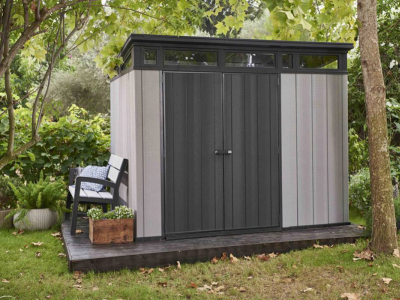
Garden shed – Definition
Garden shed - Description
The word ‘shelter’ refers to a place of refuge. It is a place where one seeks protection from danger (war, floods, etc.) or from the elements, such as rain, snow or the sun. Expressions such as ‘to find shelter’, ‘makeshift shelters’ and ‘used as a shelter’ convey this meaning. On the other hand, ‘to protect oneself from something’ means taking precautions to avoid potential problems in the future. Words related to ‘shelter’ include garage, refuge, lair, hiding place and asylum.
The expression ‘garden shed ’ refers to a small structure that a homeowner chooses to build in their garden. This structure, which is entirely separate from the main house, can be used to store garden equipment such as lawnmowers, insecticide and pesticide sprayers, watering cans, pickaxes, spades and wheelbarrows. . . It can also be used to store seeds, fertiliser or other products used for garden maintenance. Sometimes, it can be converted into a garage for motorbikes and bicycles. The garden shed protects all these items and products from heat and bad weather.
In other homes, a garden shed is designed from the outset as a living and leisure space. It can then house your garden furniture, parasols, children’s toys and sports equipment. It’s a place to entertain friends or guests. It can also be turned into a small DIY workshop. Surrounded by greenery, it’s even possible to pursue other activities there, such as music, painting or sculpture.
Garden sheds – History
Ancient History
During prehistoric times, the human species went through four major stages: the vegetarian Australopithecus, Homo habilis who lived by hunting and fishing, Homo erectus who used fire, and Homo sapiens (modern man) for around 40,000 years. The first cultivated gardens appeared around 10,000 BC with the advent of agriculture (the Neolithic Revolution). Caves served as shelters for farmers and their tools, which were first made of stone and later of metal.
In the 14th century, the word ‘cabane’, commonly used in Provence, referred to structures situated some distance from family homes. Rural huts served as shelters for farm labourers, for agricultural equipment or for animals. Consisting of a single room, the huts were built by hand and in a hurry using natural wood (branches) and stone. Urban waste (sheet metal, plastic, cardboard) was later added to these original materials. Dry-stone huts were also known as ‘baraques’. These huts or shacks served as temporary dwellings for various groups of rural dwellers who made their living from farming, forestry or livestock rearing. Today, only a minority – consisting of hunters, fishermen and the like – still build such huts…
The first botanical gardens were established in Mainz (Germany) in 1530 and then in Montpellier in 1596. Mobile metal shelters covered with glass protected plants imported from the ‘New World’ from sunlight and sea spray. Movable wooden awnings and glass greenhouses for winter crops appeared in the early 18th century. In 1851, Paxton built the famous Crystal Palace in London. Garden sheds began to be fitted with shelves on which gardeners placed a variety of equipment, including pumps, sprayers and misters, most of which were made of copper. At that time, the term ‘garden shed’ – definition – was not yet in use.
Modern history
The transition from the country cottage to the garden shed took place in the early 1950s. Demand for garden sheds grew steadily in France during the ‘thirty glorious years’ of economic prosperity. The early 1990s marked a decisive turning point: with the proliferation of sources of pollution in major cities and a growing awareness of the dangers threatening our environment, more and more people began to prefer living in the countryside. They acquired main or holiday homes with gardens.
Manufacturers have responded to this trend by investing in the production of various garden fixtures and fittings, such as swimming pools, children’s play equipment, sports facilities and garden sheds. In addition to traditional materials (wood, sheet metal and steel), thermoplastic polymers (PVC) are now being used in the construction of garden sheds. At HABITAT ET JARDIN, you will find a wide selection of garden sheds at very competitive prices.
Copyright protected under Articles L. 111-1 and L. 123-1 of the Intellectual Property Code.