
Your cart
There are no more items in your cart
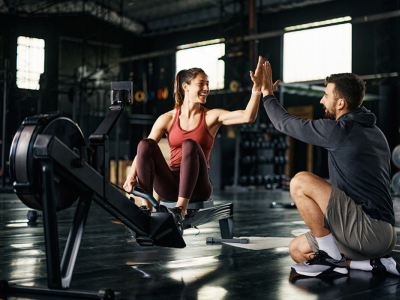
Rowing machine – description and uses
Rowing machine – Definition and history
Definition
The rowing machine is also known as an ‘ergometer’. It is a machine designed to replicate the rowing motion, which involves pushing with the feet whilst pulling on the oars with the arms. This movement is known to engage almost the entire body and helps to improve breathing by inhaling and exhaling at a regular, steady pace.
The rowing machine operates using a resistance system. This resistance can be increased or decreased to suit the user. The higher the resistance, the harder it is to row. This requires the user to exert greater physical effort.
History
The patent for the first rowing machine was filed in 1871 by William B. Curtis, who founded the New York Athletic Club. This first rowing machine was fitted with a flywheel and a ratchet system that created resistance comparable to that of an oar in water. William B. Curtis even went so far as to set up a club dedicated to training on his invention.
The first hydraulic rowing machine was developed in 1900 by the Narragansett Machine Company. This company continued to manufacture hydraulic rowing machines until the 1960s. Originally, this machine was very well known and popular for indoor training amongst rowing teams.
In 1981, Dick and Peter Dreissigacker developed a rowing machine using compressed air resistance technology. Rowing machines became easier to use and more affordable. This type of rowing machine is the one found in gyms, homes and rehabilitation centres. Thanks to this invention, indoor rowing became a sport in its own right and, in 1982, the first World Indoor Rowing Championships were established, attracting indoor rowers from all over the world.
Rowing machine – Users and components of the rowing machine
Users
The rowing machine was originally designed to allow rowers to train indoors. It then quickly became widespread in rehabilitation centres and fitness centres. Nowadays, many people own a rowing machine at home as it allows them to keep fit and enjoy a full-body workout whilst staying at home.
Although using a rowing machine may seem fairly straightforward, it does require good body coordination, particularly between the arms and legs. To avoid any risk of incorrect movement or injury, people who have never used a rowing machine before are advised to start at a moderate intensity. People often buy a rowing machine after having used a simpler piece of kit, such as an exercise bike or a treadmill.
The components of a rowing machine
Glide and resistance systems
The glide system is a very important part of the rowing machine. This allows the seat and pedals to glide along the rail, enabling the movement to be performed correctly. It is important to check the glide system when purchasing to avoid ending up with a poor-quality rowing machine with a short lifespan.
Resistance determines the amount of effort required to perform the movement. The higher the resistance, the greater the effort required. Resistance can be piston-based, pneumatic, water-based or magnetic.
The seat and pedals
The seat is a more important component of a rowing machine than one might think. Indeed, it is essential to have a good seat, especially if you are doing long sessions, as it is the seat that determines the overall comfort of the rowing machine. A poor-quality seat is likely to cause back pain, which is why it is advisable to test the seat when buying a rowing machine.
The pedals The pedals provide support. You should therefore ensure they are large and sturdy enough not to give way under pressure, and non-slip to prevent you from slipping during sessions, thereby enabling you to perform the movement correctly. Ideally, the pedals should be fitted with straps to keep your feet secure.
The console
There are many different types of control panels, ranging from the most basic to the most sophisticated. The simplest control panels display information such as calories burnt, speed and distance covered, and allow you to carry out basic workouts.
Sophisticated consoles, on the other hand, allow you to set up more comprehensive training programmes. This makes it possible to best meet users’ needs. Some rowing machine consoles even simulate real races and use the internet so that users can compete against one another.
Rowing machines – The different types of equipment
Resistance
General information on resistance systems
Rowing machines can be categorised according to their resistance system and the stroke they provide. There are four types of resistance: piston resistance, compressed air resistance, magnetic resistance and water resistance. We will examine the principles behind these types of rowing machine resistance below.
Piston resistance
Piston resistance is achieved using hydraulic cylinders connected to the rowing machine’s arms. Piston rowing machines are fairly compact, so they can be stored away easily. They are generally cheaper than rowing machines using a different type of resistance.
The disadvantage of piston resistance is that it is not as precise or smooth as other rowing machines, although the results achieved are very good. They can also be prone to leaks after a certain amount of time. Eventually, such leaks will render the rowing machine unusable.
Compressed air resistance
The resistance on an air-resistance rowing machine can be adjusted using a lever on the side of the flywheel. This gives the user complete control over the intensity of the resistance. The resistance produced by compressed air is similar to the resistance of water on a boat.
These rowing machines generally cannot be folded away. They must therefore be stored in a suitable place, as they take up more space. These rowing machines are also quite noisy. The higher the resistance, the more noise the rowing machine will make.
Magnetic resistance
In a magnetic resistance rowing machine, very powerful magnets are used to provide resistance. This resistance can be adjusted to suit the user’s needs. These rowing machines are similar to piston-based rowing machines but allow for a much smoother motion and are very quiet.
Magnetic resistance rowing machines cannot, however, be stored as easily as piston rowing machines. They must therefore be stored in a suitable place, just like air-resistance rowing machines. Nevertheless, their advantages are highly valued.
Water resistance
Water resistance is provided by the pressure of the water in a cylinder and can be adjusted by adding or removing water from the tank. Furthermore, as the pace increases, so does the resistance. This type of resistance provides a sensation similar to rowing, due to the fluidity of the movement and the sound of the water with each stroke.
Although water rowing machines are not as noisy as those using compressed air resistance, they still make quite a bit of noise. They are also very expensive and very heavy. Water rowing machines cannot therefore be moved easily because of the water tank.
Rowing Stroke
Central pull and Scandinavian pull
The centre-pull rowing machine differs from other rowing machines in its unique, unguided pull. The movement is back and forth, and this type of rowing machine is recommended for those seeking a cardiovascular workout. Those wishing to follow toning or weight-loss programmes will also prefer a central-pull rowing machine.
The Scandinavian pull is a two-arm pulling technique that is straight and controlled, meaning it is guided. Scandinavian-style rowing machines effectively work the user’s shoulders, arms and back, so they will be popular with those who prefer to build upper-body strength.
Latin-style pull
Latin-style rowing machines are the ones that best replicate the true rowing motion. With a Scandinavian-style rowing machine, the stroke is guided. In contrast, with a Latin-style rowing machine, the oars are pulled in a criss-cross motion.
Latin-style rowing machines have been specially designed to strengthen the user’s back. In this respect, they are therefore more beneficial than other types of rowing machines. The choice of rowing style will depend on the user’s fitness goals.
Handlebars
Description
The training console is a key feature of the rowing machine as it allows the user to manage their effort perfectly. This enables them to tailor their workouts to their specific goals. In particular, they can see which programme they are following, their speed, the distance covered, the duration of the workout and the calories burnt.
The most advanced consoles not only help you manage your effort, but also allow you to create personalised training programmes. These are highly valued by elite and experienced athletes as they cater precisely to their needs. For beginners, high-tech consoles help to reduce the risk of accidents.
Practicality of the consoles
Rowing machines are generally quite practical as they can be easily set up at home. They can therefore be used whatever the weather, which is particularly useful in winter. You can also listen to music or watch television whilst rowing.
Standard rowing machines used in gyms or fitness centres are generally quite large. However, for home use, there are rowing machines that can be folded away and easily stored. Exercisers can choose the equipment that suits them best depending on their goals and any practical constraints (such as storage space…).
Rowing Machine – Advice
Buying advice
Weight of the rowing machine and the user
It is strongly recommended that you choose a rowing machine that is fairly heavy. Admittedly, this can be a bit of a hassle if you need to move it around frequently, but it will enable you to train effectively. Indeed, it will prevent the rowing machine from shifting as you move, which is often the case with lightweight, poor-quality machines.
It is also important to ensure that the model you are considering is capable of supporting the user’s weight. It may be worth buying a rowing machine designed for heavier users. This way, the machine can be used by several people and will be easier to resell.
Sliding system and adjustable rowing machine
The glide system must be stable and run quietly. It is therefore advisable to opt for a ball-bearing system. The seat must be comfortable, as must the pedals, which should also be sturdy and wide so as not to give way under pressure.
Before buying a rowing machine, it is also very important to check that the seat and pedals are adjustable. This feature is particularly important if you share your rowing machine with someone of a different height. This will allow other people to use the rowing machine, rather than it being for personal use only.
Tips for use
Before exercising
Before you start using the rowing machine, there are a few precautions you should take. This is essential to ensure your session goes as smoothly as possible. It is therefore advisable to open the windows to let in fresh air (to improve oxygenation) and to wear sportswear (to allow for easier perspiration).
From a technical point of view, you should also check that the rowing machine is correctly adjusted to the user’s height. This is very important, as it prevents incorrect movements and the risk of injury, or counter-productive exercises. These points are essential for getting the most out of your sessions.
During the exercise
Warm-up
It is not advisable to start rowing at high intensity right from the start of the session. This is because, at this stage, the muscles are not warmed up. This can lead to injuries such as muscle strains or pulls.
That is why it is advisable to row at a gentle pace for the first eight minutes. This is the warm-up. After 8 to 10 minutes, you can begin the session by increasing the pace, whilst constantly ensuring you are performing the movement correctly and monitoring your heart rate.
Intensity of the workout
Beginners on the rowing machine tend to train at too high an intensity. However, this is not the aim of the sport. Indeed, the focus should not be on high intensity, but rather on finding the right balance between strength and consistency, as this is a sport that demands and develops endurance.
To help you control your pace and gradually build up your endurance over the course of your sessions, you can use the information displayed on the console. This provides you with details of your heart rate, speed and number of strokes. This is precisely the benefit of having a high-tech console.
Movement
The rowing motion must be performed as correctly as possible to avoid muscle injuries, as well as injuries to the back and the joints of the arms and legs. It is therefore very important to ensure that your back is always straight and that your knees and arms are slightly bent rather than fully extended. People who are not used to using a rowing machine tend to arch their backs backwards. This position is incorrect, as it increases the risk of back pain. Furthermore, the tendency to fully extend the arms and legs can lead to joint problems.
If back pain occurs despite the user maintaining correct form, this may be due to the seat or pedals being incorrectly adjusted. In this case, you can lower the height of the pedals to avoid lower back problems or adjust the seat correctly. It is therefore essential to ensure the correct positioning from the very first time you use the rowing machine.
Breathing
Breathing is very important during physical activity. This is also true when using a rowing machine, as it ensures the muscles are properly oxygenated. Generally, you should breathe out during the forward stroke and breathe in as you return to the starting position. This is the optimal synchronisation resulting from your body position and breathing rhythm.
The key is to maintain a steady breathing rhythm to oxygenate the muscles and gradually build up your endurance as you progress through your sessions. As mentioned earlier, good ventilation in the room is essential for healthy oxygenation. Adequate ventilation makes the exercises more enjoyable.
After exercise – Recovery
After using the rowing machine, it is advisable to allow for a recovery period. This phase is important as it enhances the enjoyment of the exercise. It also allows you to wait until you have finished sweating and serves as a transition between the workout and a refreshing shower.
Using the rowing machine is also recommended for recovery after other sporting activities. This could be a football match, a tennis match or any other sport, as it helps to relieve muscle soreness. In fact, a half-hour rowing session after strenuous exercise will help the body process toxins and lactic acid by increasing blood flow to the muscles. However, in this case, to be fully beneficial, the rowing machine should not be used at high intensity.
Number of sessions
The ideal number of rowing sessions for beginners is two per week, lasting at least twenty minutes. For those who are used to exercising, the duration of the session can be extended. In this case, it is advisable to row gently for 20 seconds and intensely for 20 seconds, for 20 to 40 minutes. Sessions can be repeated three times a week.
For more experienced rowers, it is recommended to warm up for five minutes and then row at a good intensity for 40 to 60 minutes. For them, this exercise can be repeated four times a week. However, each individual can adapt the number of sessions to suit their goals, current fitness level and the time they have available. The important thing is to combine the useful with the enjoyable.
Rowing machine – Advantages and disadvantages
Advantages
Physical health benefits
Regular physical exercise isn’t just good for young people. In fact, it’s recommended for people of all ages. It’s even strongly recommended for older people (seniors), who can regain up to 50 per cent of their lost physical capacity.
According to a report by a Quebec scientific committee, regular physical exercise reduces the mortality rate from cardiovascular disease by approximately 20 to 40 per cent. Regular use of a rowing machine will therefore help reduce the risk of developing cardiovascular diseases by stimulating the heart. The effort required by rowing stimulates not only the heart but also the muscles, helping to reduce the risk of high blood pressure, diabetes and arthritis.
Regular use of the rowing machine helps to improve muscle tone as well as lung capacity, and does so to a greater extent than activities such as cycling or running. The rhythm required by rowing increases the user’s lung capacity by around 10 per cent, thereby helping to reduce asthma symptoms by improving bronchial ventilation and reducing shortness of breath.
The movement performed on a rowing machine engages around 82 per cent of the body’s muscles. It is one of the most comprehensive pieces of kit, as the upper body works just as hard as the lower body. This is not the case with a bike or a treadmill, where the lower body does most of the work.
Mental health benefits
The rowing machine is therefore an ideal piece of equipment for losing weight and lowering cholesterol levels, as it burns more calories than other exercise machines over the same duration of use. For example, during a 25-minute rowing session, you burn as many calories as you would during a cycling session lasting around 40 minutes. Physical exercise, and rowing in particular, is the healthiest and safest way to lose weight in the long term. This weight loss helps the user feel better about their body.
Furthermore, aerobic activities are known to be the most effective at reducing stress and anxiety, even if they are not practised regularly. However, it is recommended to exercise regularly as this will maximise the benefits. Regular use of the rowing machine will therefore be beneficial not only physically but also mentally.
Benefits for sleep
According to a reputable study, regular physical activity promotes better deep sleep. Indeed, regular exercise (using a rowing machine, for example) is thought to increase the duration of this type of sleep. Deep sleep is vital for human beings because it is during this phase that the body truly rests and physical and mental recovery takes place.
Regular rowing sessions will therefore help you enjoy full nights’ sleep, uninterrupted by waking up in the middle of the night, as can happen on days when you are inactive. It will also help combat problems linked to irregular working hours, as well as jet lag. It therefore appears that rowing offers benefits in terms of physical health, mental well-being and better, restorative sleep.
Disadvantages
Risk of injury
As with all physical or sporting activities, the main disadvantage of a rowing machine is the risk of injury. Indeed, although it works almost the entire body, there is a risk of injury if the rowing machine is not used correctly or if it is overused. It is therefore advisable to read the instructions carefully to ensure you use the rowing machine correctly and perform the movements properly. When starting out or returning to exercise, it is advisable to keep sessions light and reduce their duration.
The rowing machine is not the ideal piece of equipment for people with back problems, particularly in the lower back and spine, as the movements involved require significant effort, which increases the risk of injury and may exacerbate pain in these areas. Not only is it possible to injure your back and knees, but you can also put strain on your heart if the effort required is too great. It is therefore important not to push yourself too hard and to stop once you feel sufficiently tired, as this can prove counterproductive.
The risk of monotony
Just like the exercise bike, the rowing machine can quickly become a monotonous, even boring, activity. Regular sessions of 30 to 40 minutes can, in the long run, become tedious. Varying the intensity and duration of your workouts is one way to avoid this risk of monotony.
It’s important to remember that to stick with a sport, you need to enjoy it. Exercises or sessions that cause discomfort should therefore be kept to a minimum. Indeed, only by sticking with rowing over the long term will you achieve your goals. That is why it is advisable to make rowing sessions more enjoyable by listening to music or watching television. In this way, the enjoyment of listening to music or watching television will complement the enjoyment of rowing. Time will also pass more quickly.
Other considerations
Before you can use the rowing machine, you need to assemble it piece by piece. This may prove to be a drawback for those who are not particularly handy, although rowing machines nowadays come with an assembly guide, which makes the process much simpler. As we’ve already mentioned, for models that aren’t foldable, storage can be a bit of a hassle.
The rowing machine allows you to exercise even when the weather outside is inclement. However, exercising indoors will never quite replace the breath of fresh air you get from working out outdoors in the woods or by a lake. A rowing machine is therefore particularly useful during the winter months.
Rowing machine – Price
General Information
It is very important to know how much you are willing to spend on a rowing machine before buying one. To get a good-quality rowing machine, you’ll need to be prepared to spend between 400 and 600 euros. Such an investment isn’t all that expensive for a good machine. Let’s not forget, however, that quality comes at a price.
Some rowing machines are much cheaper and available from as little as 150 euros. Top-of-the-range rowing machines can cost over 2,000 euros. Everyone can invest according to their goals and budget.
The price of rowing machines varies depending on several factors. The main ones are: the resistance system, the quality and the materials used in their manufacture. The technology used, particularly in the consoles, will also be an important factor in determining the price.
Resistance
Piston rowing machines are the cheapest as they are smaller. However, they do not provide as realistic a rowing experience as other types of rowing machine. Magnetic and air-resistance rowing machines are mid-range models that are generally of fairly good quality.
Water-resistance rowing machines are the most expensive and luxurious models. They use a water tank to simulate the resistance of water in a lake or river. Professionals and rowing enthusiasts who want to experience the same sensations are prepared to spend significant sums on a rowing machine of this type.
Quality and materials
Most rowing machines are made from metal to offer good value for money, as this material is inexpensive, fairly durable and requires little maintenance. Their prices generally range from 150 to 1,000 euros. The type of metal used to make the main body of the rowing machine also affects its price.
The most luxurious models are partly made from high-quality wood. This gives them a polished, high-quality finish that will delight those who value the appearance and design of their equipment. This is a matter of taste that is open to individual preference.
The technology used
Most rowing machines are fitted with high-tech consoles. These allow you to measure and monitor a wide range of parameters. The information provided includes: speed, distance and calories burnt.
Simple consoles, using basic technology, will be considerably cheaper than sophisticated ones. The latter can be connected to the internet, making it possible to simulate real races. There is no doubt that technological advances will make consoles even more appealing and rowing machines more enjoyable.
As we have seen, the rowing machine is a piece of fitness equipment accessible to everyone. Ideal in winter, it can be used all year round. Those considering such a purchase will find a wide selection of rowing machines at unbeatable prices on the Habitat et jardin.com website.
Copyright protected under Articles L. 111-1 and L. 123-1 of the Intellectual Property Code.