
Your cart
There are no more items in your cart
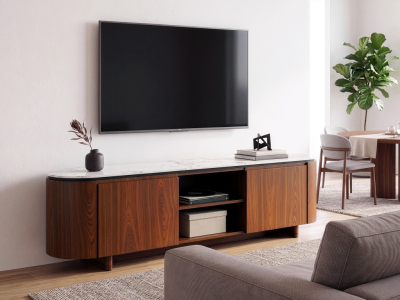
The right TV stand – 5 key points
Categories :
Interior furniture
, Practical Guides
, TV stands
The key criteria include screen size, the dimensions of the TV stand, height, storage space, materials and location, so that you can find a designer TV stand that complements your living room and your equipment.
What size TV stand should you choose based on your screen size?
Screen size remains the primary consideration. Making the right choice depends on striking a balance between the television, the width of the unit and the available space: a TV stand that is too narrow disrupts the visual harmony of the whole, whilst a model that is too bulky will quickly make the living room feel cramped.
Standard dimensions for each screen size
To choose the right size for your TV stand, follow this simple rule: the width of the stand should exceed that of the screen by around 20 per cent, or 15 to 20 cm on each side. This margin improves visual stability and leaves a little space around the television.
- 55-inch screen (approximately 123 cm wide): a TV stand measuring 140 to 160 cm in length will ensure good proportions.
- 65-inch screen (approx. 145 cm wide): aim for a TV stand between 160 and 180 cm.
- 75-inch screen (approx. 168 cm wide): the right size for a TV stand starts at 180 cm wide.
- Small living room: with less space available, the TV stand is generally between 100 and 153 cm wide.
Habitat et Jardin offers models ranging from 120 to 140 cm in length, with a depth of 39 to 40 cm. The Hugo designer TV stand, measuring 140 x 40 x 50 cm, is well suited to the typical needs of a medium-sized living room.
| Screen size | Screen width | Recommended unit width |
| 55 inches | ≈ 123 cm | 140 to 160 cm |
| 65 inches | ≈ 145 cm | 160 to 180 cm |
| 75 inches | ≈ 168 cm | ≥ 180 cm |
| Small living room | Variable | 100 to 153 cm |
| Large lounge | Variable | 160 to 180 cm |
Depth and width for perfect visual balance
The dimensions of the unit are also important in terms of depth: they affect stability, cable management and the actual space it takes up in the room.
In practice, a depth of 38 to 50 cm is suitable in most cases. In confined spaces, 30 cm may be sufficient; conversely, a large room can accommodate up to 60 cm, depending on the room’s size.
The difference often comes down to one specific detail: the depth of the unit must be at least the same as that of the TV stand. A few extra centimetres also make it easier to install the cables without them being squashed.
Adapt the dimensions to the available living room space
Finally, the size of the TV stand must be considered in relation to the space needed to move around the television: a length of 160 cm or more is preferable wherever space allows, whilst a more compact model is the best choice for smaller spaces.
When deciding on the location, you need to take into account the space required to step back and move around the unit. Allow for approximately 1 metre of clear space at the front and on either side: this ensures you can move around freely and prevents the unit from compartmentalising the room.
The ideal height for comfortable viewing in the living room
The height of the TV stand has a direct impact on viewing comfort. If the television is positioned too high or too low, neck strain can quickly set in, even with a high-quality picture. In a living room, the right choice comes down to striking a balance between the position of the screen and your seating position.
Align the centre of the screen with eye level
For long-term viewing comfort, the centre of the screen should be between 100 and 110 cm from the floor, i.e. at eye level when seated. The ideal height therefore corresponds, in most cases, to a TV stand between 40 and 55 cm high: around 40 cm for a low sofa, and between 45 and 55 cm for standard seating.
This depends as much on the height of the TV stand as on that of the sofa. The models offered by Habitat et Jardin measure between 50 and 56.5 cm, which allows the television to be positioned naturally within a range that promotes visual comfort.
With or without legs – how does this affect the final height?
The height of the TV stand does not depend solely on the unit itself. Once installed, the final look changes significantly depending on whether it has legs. The Iguane Scandinavian TV stand rests on five 15 cm compass-style legs: this height adds a retro touch and works well with low-seated sofas.
Conversely, a model without legs sits directly on the floor and pairs more easily with high or deep seating.
Storage and functionality: what to consider
A suitable TV stand does more than just hold the screen. It defines the layout of the living room, centralises your devices and reduces visual clutter. Thinking ahead about your needs before you buy will prevent you from having to add scattered storage units later on, which often clash with the overall look.

Open shelves or closed doors, depending on your needs
The right choice comes down to striking a balance between quick access and a tidy appearance. Open compartments are ideal for equipment used every day, such as set-top boxes or games consoles: air circulates better and access remains immediate. Conversely, closed compartments conceal accessories and maintain a more understated look, which works well in a minimalist living room.
The difference often comes down to how each area is actually used. A single piece of furniture can therefore combine both formats, provided the layout is decided before purchase. Glass shelves can also complement the design if you wish to display a few items without making the furniture look too cluttered.
In addition, cable management should be incorporated from the outset: it minimises visible wires and enhances the perceived quality of the setup. This approach only makes sense if movement around the room remains unobstructed: allow at least 1 metre between the TV unit and the coffee table, where space permits.
Centralise your equipment for a tidy living room
A single unit can house the television, hi-fi, DVD player and games consoles in a clear, cohesive arrangement. This centralised storage avoids the need for multiple side tables, which is particularly useful in a compact living room. Depending on the layout of your space, the TV unit should accommodate your equipment without any wasted space or a shortage of room.
Materials and style to harmonise the living room
The choice of materials influences both durability and how well the unit blends into the living room. The way the TV unit’s material complements existing pieces – such as the sofa, coffee table and shelves – determines both the aesthetic coherence and the TV’s presence within the overall scheme.

Wood, metal or glass, depending on the desired atmosphere
Among the most common materials for TV stands are solid wood, metal, glass, MDF and plywood. Solid wood brings a sense of warmth and stands the test of time, making it well-suited to classic or Scandinavian interiors. MDF and plywood, on the other hand, remain good options for keeping costs down without compromising on style.
Glass and metal create a more contemporary look, suited to minimalist or industrial styles, with a clean, light appearance in the living room. On the other hand, their surfaces require more regular maintenance. A combination of materials – for example, wood and metal or wood and glass – often helps to strike a balance between the living room’s style, stability and everyday practicality.
Matching the TV stand to the rest of the living room
A black frame paired with natural wood creates a subtle contrast, well-suited to contemporary interiors. Depending on the layout of your space, warmer wood tones enhance a classic and welcoming atmosphere, whilst matt finishes, brushed metal or light-coloured wood are better suited to a more minimalist aesthetic.
Wicker and wood: a winning combination in Scandinavian style
The combination of wood and cane remains a hallmark of Scandinavian style. Cane fronts make the TV stand appear lighter, allow the appliances to be partially visible and contribute to a soft aesthetic, whilst the wooden frame provides the stability needed to support a television securely.
The Iguane TV unit from Habitat et Jardin perfectly illustrates this balance between natural charm, functionality and durability. A well-chosen material must withstand everyday use, support the weight of the equipment and retain its appeal over time.
Positioning your TV stand correctly in the living room
The position of a TV stand in the living room affects viewing comfort, ease of movement and the room’s overall aesthetic. It’s best to decide on this position before making a purchase: this way, you’ll avoid having to make awkward adjustments once the television has been installed.
Viewing distance and lighting: the key criteria for choosing
When choosing a TV stand, the first thing to consider is the distance between the screen and the main seating area. As a general rule, this should be around six times the diagonal length of the television, which works out at between 2 and 5 metres depending on the screen size and resolution. The right choice comes down to this simple balance: being able to watch comfortably, without sitting too far back or too close, which can be tiring.
Natural light is just as important. Avoid placing the unit opposite a west-facing window, as this often causes glare in the late afternoon. In addition, take electrical sockets into account from the outset: good cable management minimises the number of visible extension leads and preserves the unit’s appearance.
You mustn’t compromise on space for movement. Allow for around 1 metre between the TV unit and the coffee table to ensure easy access in everyday life. In practice, leaving this space significantly improves the ease of movement in daily life.
In a small room, a low, light-coloured TV stand visually lightens the overall look. Depending on the layout of your space, a wall-mounted model may also be suitable, especially when every centimetre counts. The difference often lies in the impression of freed-up space, which is very useful in a compact living room.
In an open-plan living room, the unit can serve a purpose beyond simply holding the TV. It also acts as a transition between the relaxation area and the dining area, without blocking the view.
Adapt the placement to the layout of the living room
Choosing a TV stand that fits in well means taking the living room’s overall proportions into account. A unit that is too bulky will make a small room feel cramped; conversely, a model that is too understated will look out of place next to a large screen. Your choice of TV stand must therefore be in keeping with the actual size of the space and your practical needs.
Size alone is not enough: everyday use, available storage space, viewing height and the presence of additional equipment are all equally important factors. Aligning these criteria with a single objective will help you make a choice that is consistent with your actual needs, your layout and the visual balance of the room.
This approach can also incorporate a more sustainable dimension. The ADEME guide on choosing a sustainable television encourages you to consider the energy consumption and durability of the appliances. Once the room layout has been thought through as a whole, this approach helps to better coordinate the unit, the screen and everyday uses.

Frequently Asked Questions
What is the right size of TV stand for a 55-inch screen?
For a 55-inch television, which is approximately 123 cm wide, the right size for a TV stand is generally between 140 and 160 cm. The difference often comes down to the space available in the living room: this margin allows the unit to extend 15 to 20 cm on either side, which improves the look and enhances the visual stability of the whole arrangement. As for the unit’s dimensions, a depth of 38 to 50 cm is suitable to support the screen properly without cluttering the available space.
What height of TV stand should you choose for your sofa?
The right choice depends on your line of sight when seated. The ideal height is to position the centre of the television between 100 and 110 cm from the floor. In practice, for your living room, a TV stand height of 40 cm is suitable for a low sofa, whilst a standard-height sofa is better suited to a height of 45 to 55 cm. Models with 15 cm Scandinavian-style legs offer a useful adjustment, whilst a TV stand without legs works better with a higher seat. Checking your actual sitting position before buying remains the most reliable way to confirm the TV stand’s dimensions.
How do you choose a TV stand to suit your interior style?
To choose a TV stand that blends in, match the material, colour and lines of the unit to those of the sofa, coffee table or shelving already in place. For a Scandinavian look, wood and rattan work well with a black frame. Conversely, for a contemporary or industrial décor, glass and metal create a cleaner aesthetic. Depending on the layout of your space, the finish should, above all, create a lasting visual connection with your existing furnishings.