
Your cart
There are no more items in your cart
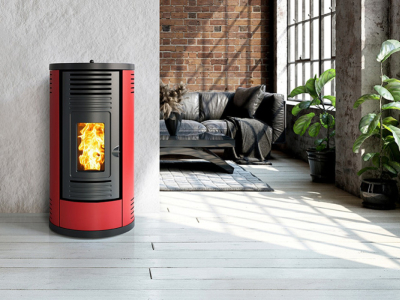
Wood-burning stove – buying guide
Are you looking for warmth, authenticity and a friendly atmosphere? Do you long for the open fires of days gone by, where it was lovely to warm up and spend time together? Why not combine style with practicality by choosing a wood-burning stove? Whether with friends or family, it’s simple, cosy, convivial and enjoyable! So don’t hesitate any longer – choose this attractive, economical and eco-friendly heating solution! With Habitat et Jardin, find the perfect wood-burning stove to suit your tastes in the blink of an eye and rekindle the flame in your home! With an ever-expanding range on offer, are you unsure how to choose your wood-burning stove? Don’t panic – just follow the guide!
1. Types of wood-burning stove
Do you know what a wood-burning stove is and how it works? A wood-burning stove is an enclosed heating appliance in which the fuel (wood or other materials) is contained, and which heats the room by radiation. Flue gases are expelled via a pipe (flue). The combustion chamber, often made of cast iron or steel, gives the stove thermal mass, which continues to give off heat once the fire has gone out. The combustion process is adjustable. Energy efficiency can reach up to 85 per cent, meaning that 85 per cent of the wood’s energy is converted into heat.
Traditional wood-burning stoves:
Traditional wood-burning stoves are the most common type. Low-cost, traditional wood-burning stoves do not use any special technology. Please note: this type of wood-burning stove will not qualify you for the tax credit as its energy efficiency is too low.
Post-combustion wood-burning stoves:
Post-combustion wood-burning stoves are rather complex and feature secondary air inlets: the gases produced by the combustion of the wood are, in turn, burnt! These wood-burning stoves therefore offer higher efficiency!
Turbo wood-burning stoves:
Turbo wood-burning stoves are similar to post-combustion wood-burning stoves, but this type of stove does not have a post-combustion chamber. Turbo wood-burning stoves are less expensive than conventional post-combustion wood-burning stoves, but their efficiency and burning time are more limited.
Heat-storage wood-burning stoves:
The efficiency of heat-storage wood-burning stoves is very high: up to 90 per cent! The materials used in these types of wood-burning stoves have a special feature: they can store heat and then release it for hours on end! But be warned: due to their heavy weight, this type of wood-burning stove cannot be installed on upper floors of a building!
Pellet stoves:
Pellet stoves offer great autonomy and are less of a hassle: with this type of stove, the chore of chopping wood is a thing of the past! Another option is that you can programme the temperature and when the stove switches on for whatever time you like!
2. Types of wood-burning stoves based on the different materials used in their construction
Traditional cast-iron wood-burning stoves:
Traditional cast-iron wood-burning stoves are heavy, but this type of stove is capable of heating a large room in winter.
Steel wood-burning stoves:
Steel wood-burning stoves are lighter. The advantage of this type of wood-burning stove? The temperature rises quickly!
Tiled and terracotta wood-burning stoves:
This type of wood-burning stove has the advantage of high efficiency. Tiled and terracotta wood-burning stoves are able to store heat and release it gradually, whilst using wood sparingly. It takes quite a long time for this type of wood-burning stove to heat up, but you’ll enjoy exceptionally cosy warmth!
3. Wood-burning stoves by type of firewood
There are several types of firewood for wood-burning stoves;
Logs:
The wood must be thoroughly dry and must not be reclaimed.
Logs differ according to:
their species:
These include hardwoods (such as oak) and softwoods and soft-leaved hardwoods (larch, fir, willow, etc.)
their moisture content:
The drier the wood, the better! We therefore recommend that you buy logs with a moisture content of less than 20 per cent.
Their size:
These vary between 25, 33, 50, 100 and 200 cm. As a guide, the smaller the logs, the better the efficiency of your wood-burning stove! Not sure where to get wood? Have a look at the Bois de Chauffage .Net website: it’s a directory of wood fuel suppliers!
Briquettes:
Shaped like logs and approximately 20 cm long, they are made from compacted sawdust.
Pellets:
Wood pellets about 1 inch long; they’re stored in a hopper built into the wood-burning stove, allowing the stove to run for longer.
Wood chips:
These are wood chips. Wood chips are cheaper than pellets because they are less dense. The only drawback is that they require a large storage silo.
4. Performance indicators for wood-burning stoves
Heat output:
This is the volume that the wood-burning stove is capable of heating. The volume varies depending on your home’s insulation and the desired temperature. As a guide: a wood-burning stove with a heat output of 10 kW can heat a volume of 250 m³, which is roughly equivalent to an area of 100 m² if the ceiling height is 2.5 m. Bear in mind our advice: to avoid any unpleasant surprises, such as excessive fuel consumption, opt for a smaller wood-burning stove that will run at full capacity rather than a more powerful one that will run at a lower output.
Efficiency:
This is the amount of energy converted into heat. It is expressed as a percentage. Remember this: your wood-burning stove should achieve an efficiency of at least 60 per cent.
CO emissions:
Fine particles are released into the air when wood burns. It is important to find out how your wood-burning stove performs in this regard, to avoid any issues arising from regulations.
5. Safety
To use your wood-burning stove safely and enjoy its comfort and warmth, here are a few basic rules: Although wood-burning stoves are simple and easy to install, it is strongly recommended that you call in a professional. It is essential that the wood-burning stove complies with safety standards. Ensure that the wood-burning stove is positioned upright and on a stable surface. Avoid placing the wood-burning stove near flammable materials and do not leave the door open: otherwise, watch out for sparks! Proper maintenance of the flues also contributes to safety. Bear in mind that maintaining a wood-burning stove requires two chimney sweeps each year: this is a legal requirement to prevent the risk of fire and carbon monoxide poisoning. Not sure where to find a chimney sweep near you? Visit the following website: http://www.alloramonage.fr To ensure it remains fully efficient, remember to clear the ashes from the wood-burning stove. Keep an eye on your children: they could burn themselves if they get too close to the wood-burning stove!
6. Practicality
Is the wood-burning stove I’ve chosen practical? Do think about this, as it’s a factor people often overlook when buying a wood-burning stove!
Ask yourself the right questions:
Is the wood-burning stove I’ve chosen practical in terms of the size of the logs it requires? Is it practical in terms of its weight when it comes to installing it? Does it have a cool-touch handle? … All the questions you can think of will help you determine what constitutes a practical wood-burning stove according to your own criteria and expectations.
7. Pollution
It is possible to minimise pollution whilst still enjoying the warmth of a wood-burning stove! Bear in mind that: it is recommended to opt for a modern stove when you’ve decided to buy one; ensure that your wood-burning stove does not run at idle speed and thatit operates at a high temperature the wood-burning stove’s air intakes are not obstructed to prevent poor ventilation the wood being burnt is thoroughly dry to achieve the best efficiency
8. Good reasons to buy a wood-burning stove
Wood-burning stoves are efficient and practical:
energy efficiency is at least 60 per cent and can reach up to 85 per cent.
It’s simple and easy:
No special skills are needed to install a wood-burning stove! What’s more, you can change its location.
The government encourages clean energy:
wood is recognised! A tax credit of up to 40 per cent is available on the cost of materials and equipment (excluding labour costs for installation or replacement of equipment). However, the wood-burning stove must be supplied and installed by the same company and there must be only one invoice: this means your wood-burning stove costs half as much! The result: a wood-burning stove costs the same as a paraffin stove or a oil-fired stove, which are much more expensive to run. From the most traditional to the most stylish, find the wood-burning stove that suits you best from our wide range at Habitatetjardin.com! Practical, attractive, economical and eco-friendly, a wood-burning stove is sure to find its place in your home!