Your cart
There are no more items in your cart
Liner – description and uses
Categories :
Pool liner guides - Habitat et Jardin
General description
Definition and characteristics of a liner
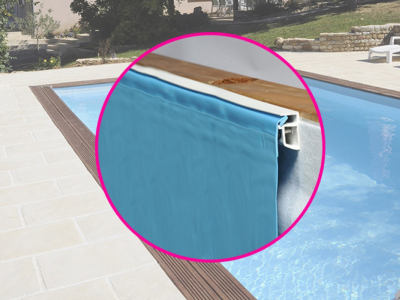
A liner is a flexible, stretchy and watertight PVC covering. It is fitted to the bottom and against the walls of the swimming pool to ensure it is watertight. It can be fitted over a concrete, timber or metal structure. This structure, whatever its composition, must be permeable, as the liner causes condensation; water therefore seeps in between the liner and its substrate and must be drained away. If the water does not drain away properly, it may be necessary to install a drainage system to facilitate the removal of condensation. A liner has a lifespan of over 10 years if maintained correctly. A swimming pool fitted with a liner must always be filled with water, as it is the water that holds the liner against the substrate; the liner is therefore not glued to the substrate, which makes renovating a pool fitted with this type of lining all the easier. The liner is assembled in the factory and supplied to fit the shape of the pool.
History of the liner
Polyvinyl chloride was discovered by accident in 1838 by Henri Victor Regnault. The first PVC membranes, meanwhile, appeared in the south-west of the United States in the early 1950s. These PVC membranes were initially used to ensure the watertightness of ponds and lakes, as well as canals. The rise in popularity of PVC liners is partly due to the 1973 oil crisis, when the cost of petroleum-based products rose dramatically. Indeed, the rise in oil prices led to a decline in the use of bitumen membranes, which were gradually replaced by PVC membranes, which were much cheaper. These PVC liners were very quickly adapted for use in swimming pools, as their waterproofing properties, speed of installation and low cost soon won over builders and private individuals alike.
Types of swimming pools
PVC liners can be used for above-ground wooden or steel swimming pools, in-ground concrete, wooden or metal swimming pools, as well as for natural swimming pools. In the case of the latter, the term ‘waterproofing geomembrane’ is more commonly used. Liners are therefore products that are suitable for all types of swimming pools, which is an advantage as this has enabled their growth in the swimming pool market, alongside their affordable prices and very quick installation time.
Price
The prices of liners vary according to various factors:
The surface area of the swimming pool in m²
The price of a liner depends on its dimensions. Indeed, the larger the pool, the larger the liner will be; consequently, more material and energy are consumed during the manufacture of large-sized liners, and their price will therefore be higher.
The shape of the pool
The price will also depend on the shape of the pool. Some pools have quite complex shapes, featuring steps, unusual angles or even slopes; therefore, the more complex the shape of the pool, the more difficult it will be to manufacture and install the liner, and the higher the price will be. In such cases, the liner will inevitably have to be made to measure.
The quality or thickness of the liner
The thickness of commonly used liners ranges from 20 to 85 hundredths of a millimetre. Thinner liners tend to be chosen for smaller pools, such as above-ground pools, whilst thicker liners are preferred for larger pools, such as in-ground or semi-in-ground pools. The thicker a liner is, the more durable it is, which explains the price difference between the various types of liners. There is also a much thicker liner, measuring 1.5 millimetres, known as a ‘reinforced liner’, which is therefore more durable but also more expensive.
Treatments applied to liners
Not all liners undergo treatments during manufacture. However, it may be worth buying a treated liner, as these treatments help to extend the liner’s lifespan and improve its durability thanks to anti-UV and anti-algae treatments. Liners that have undergone specific treatments are therefore more expensive than untreated liners, as their manufacture involves the use of additional products.
Prices for the most commonly used liners range from around 10 to 20 euros per m² for 0.75-millimetre liners and from 15 to 30 euros per m² for 0.85-millimetre liners. As for reinforced liners (1.5 millimetres), their prices range from 25 to 50 euros per square metre.
The liner’s warranty
Most manufacturers generally guarantee their liners for 10 years, with a 10 per cent reduction in the guarantee value each year. Some even offer guarantees of up to 15 years. However, you must pay close attention to the conditions under which these guarantees apply, as they generally require rigorous maintenance of the liner. Some manufacturers offer warranties that do not cover holes, tears or snags, nor do they cover stains or dirt.
Advantages of the liner
Waterproofing of the liner
The main advantage of the liner is that it ensures a perfect watertight seal. It is made up of several strips of flexible PVC welded together, making the liner a completely watertight membrane. There is therefore no need to waterproof the surface on which the liner is laid.
The cost of the liner
The liner is the cheapest type of swimming pool lining. Tiles and polyester are more expensive options because the materials used cost more, the installation technique is different, and the installation time can be longer. A square metre of polyester costs between 80 and 100 euros and a square metre of enamel costs between 50 and 150 euros, whereas a square metre of a 0.75-millimetre liner costs between 10 and 20 euros. The low cost of liners has fuelled the boom in private and family swimming pools, as even those on an average budget can now have a swimming pool at home.
Liner maintenance
Maintaining a liner is fairly straightforward and primarily involves maintaining water quality. Simply keep the water’s pH between 7 and 7.5 and maintain its temperature below 28°C to prevent the PVC membrane from warping or algae from forming.
It is also necessary to treat the water with chlorine, bromine or via electrolysis to keep it clean, just as with other types of swimming pools.
The bottom and walls of the liner must be cleaned weekly. This task can be carried out by pool cleaners such as electric, pulse or hydraulic suction cleaners, which allow you to offload this chore for a fee. Finally, the pool’s filtration system must be cleaned once a week, just as with any other type of pool.
Ease of liner installation
A liner is very easy to install or replace as it is factory-made to the exact dimensions of the pool. It takes about a day to fit a liner; it is one of the quickest pool liners to install. This ease and speed of installation is due to the fact that the liner is supplied to fit the exact dimensions of the pool into which it is to be fitted. For simpler pools, such as small above-ground pools with a straightforward shape, it is not necessarily essential to hire a professional; in other words, a homeowner can fit the liner themselves provided they follow the steps carefully and do not rush the process. When it comes to in-ground or semi-in-ground pools, it is preferable to call in a professional, as these pools are generally larger and the basins are often more complex, featuring slopes, steps and different angles.
Liner lifespan
The liner has a lifespan of 10 to 15 years but can last longer if it has been fitted correctly and if weekly maintenance is carried out properly. This is a more than acceptable lifespan given the price of the liner; although its lifespan is shorter than that of other pool linings, its cost is also lower, so the price-to-lifespan ratio of liners is much better than that of most other pool linings.
Choosing a liner
There is a wide choice of colours and patterns available for liners. This allows those choosing a liner as their pool lining to select one that suits their tastes and preferences. They can also personalise their pools by incorporating patterns onto the liner, whether on the walls or the bottom; this is an advantage as not all pool linings offer this level of customisation.
Liner material
As liners are made from very flexible PVC, they provide a soft pool lining that is very pleasant to the touch. This offers a level of comfort that other linings, such as tiles, do not provide. Furthermore, as it is smooth and free from rough edges, the liner is safer than other pool finishes. Indeed, owners of pools with liners run no risk of grazes or cuts, unlike with tiled or concrete surfaces.
Disadvantages of the liner
Discolouration of the liner
The liner may start to discolour after a certain amount of time. Discolouration above the waterline may be caused by UV rays damaging the part of the membrane that is not submerged, whilst discolouration below the waterline is caused by excessive levels of treatment chemicals such as chlorine. A border can be added to the non-submerged part of the liner to conceal the discolouration.
The fragility of a liner
A standard swimming pool liner is a fragile component. Indeed, this membrane deteriorates more quickly than other types of surfacing, such as tiles, reinforced liners or even polyester shells. This deterioration can take the form of stains or even holes in the liner. Care must therefore be taken to ensure that no debris or animals enter a pool fitted with a liner. Furthermore, the liner is not compatible with water temperatures above 28°C. If the water is too often above this temperature, the liner may shrink; and if the pH is below 7, the membrane may swell and form creases.
Pool size and shape
Another drawback is that it will not be possible to manufacture the liner in a factory if the pool basin is too large or too complex. Those wishing to have a good-sized swimming pool with very complex shapes will therefore need to choose a different type of lining, which will almost certainly be more expensive, more difficult and take longer to install. Nevertheless, with advancing techniques, liners can now be adapted to almost all types of swimming pools.
Fitting the liner
To install the liner correctly, it is necessary to follow several steps, which are the same whether you are a professional or a private individual.
Cleaning the pool
Before installing the liner, it is important to clean the pool – whether it is made of concrete, steel or timber – to remove any impurities such as grains of sand, gravel or concrete debris, which could damage the liner in the future and cause leaks. This cleaning is extremely important because, if it is not done properly and leaks occur, the pool owner will be forced to locate and seal these leaks or replace the liner entirely, which will incur additional costs.
Fitting a protective underlay
This step is optional but nonetheless important for the liner’s long-term preservation. This protective felt is a synthetic material that is rot-proof, antibacterial and contaminant-resistant. It therefore prevents contact with concrete, wood or steel, thus providing additional protection for the liner, which is less likely to be damaged by the rough surface of the substrate. It also helps prevent the spread of fungi and bacteria beneath the liner. Please note, however, that you must not secure this protective felt using adhesive tape; instead, it is advisable to fix it with dots of adhesive specifically designed for this purpose.
Fitting the liner
To install the liner, the temperature should ideally be between 15 and 20°C and it must not be raining. It is important to adhere to these conditions as failure to do so may result in the liner being fitted incorrectly, making it more likely to shift or form creases. Once these conditions are met, installation can begin. Start by unrolling the liner in the pool, then secure it to the pool edges, beginning at one corner. There are three ways to secure the liner
- UNI BEAD fixing:
- This fixing method is for above-ground pools: it allows the liner to be cut to the size of the pool and secured to it using special T-shaped fittings.
- OVERLAP fixing:
- This fixing method is suitable for all types of swimming pools (above-ground, semi-inground and inground). The liner is larger than the pool basin, and the ends of the PVC membrane are folded over and secured to the pool edges using special clip-on fittings.
- HUNG fixing:
- This fixing method is the most common and is used only for in-ground pools. The liner is sold with a PVC bead welded all the way round it, which allows it to be hooked onto the pool edge within a PVC or aluminium rail.
Once the liner has been secured, any air trapped between it and the pool structure must be removed to eliminate creases and press it flat against the pool wall. To do this, a vacuum cleaner with sufficient suction power is essential.
Filling the pool
Once the liner is properly fitted and any creases have been removed, the pool can be filled. If any creases remain, they must be removed as the pool is being filled with water. When the water reaches sealed fittings such as return jets or skimmers, sealing flanges must be fitted to the respective joints and the liner must be cut to size with a craft knife. Once the sealing flanges and fittings are in place, the pool can be filled to the top.
Pool ladders
Ladders designed for liner-lined swimming pools are not fixed directly to the liners. Instead, they are fixed to the coping or the pool deck and rest on the liner via rubber feet. These rubber feet prevent damage to the liner and can be replaced once the rubber has worn out. The ladder can therefore be easily removed, which is handy when winterising the pool, and can also be moved to a different location.
Liner maintenance
General maintenance
Proper maintenance of the liner depends first and foremost on daily water maintenance. Indeed, to ensure the liner’s longevity, the pool owner must maintain the water’s pH between 7 and 7.5. If the pH is consistently below 7, the liner membrane will swell and cause creases; conversely, if the pH is consistently above 7.5, algae will form. The pool owner must also keep the water temperature below 28°C to prevent the liner from shrinking. Finally, solid treatment products must not be thrown directly into the pool.
Rust stains, orange stains
Rust stains and orange stains are caused either by the presence of dead algae or by iron oxide in the pool water. To remove these stains, simply brush the pool walls, lower the temperature (as high temperatures encourage algae growth), lower the pH level to make the water more acidic, and vacuum up the debris left behind by brushing. It may also be advisable to use a metal flocculant. This flocculant will help trap particles of iron or other metals in the pool filter.
Brown stains caused by algae
The presence of dead algae may be due to an insufficient level of disinfectant, an excessively high level of stabiliser – which limits the action of the chlorine – or poorly filtered water. You should therefore start by adjusting the pH to between 7 and 7.5, as mentioned previously, carry out a shock treatment to properly disinfect the pool water, scrub the walls and run the filtration system continuously for at least 48 hours. Be careful, however, as repeated shock treatments are likely to damage the liner and accelerate its ageing.
Green stains around the waterline
These stains are caused by limescale deposits which trap algae and grease. Simply apply a descaling agent to these stains and scrub them away. This will remove the stains in the short term but will not protect the liner from the build-up of new limescale deposits. It is therefore recommended that you carry out a treatment to stabilise the calcium level in the water.
White or grey stains on the bottom and walls of the liner
These stains are also caused by limescale deposits; you must therefore drain the entire pool and clean these stains with an acidic cleaning product, refill the pool and stabilise the pH using an anti-limescale treatment.
Pink stains
These stains indicate the presence of bacteria beneath the liner. Simply lower the water temperature, adjust the pH to 6, carry out a shock treatment using a disinfectant and filter the water continuously for at least 48 hours. To prevent bacteria from attacking the liner, the substrate on which the liner is laid must be treated during construction.
Black stains
Black stains indicate the presence of metal particles such as iron sulphide, copper sulphide or manganese sulphide. In this case, a metal flocculant should be used, and the metal particles will be trapped by the filter. It is best to use mains water for the swimming pool rather than well or borehole water when filling the pool to avoid the presence of these particles.
Repairing a liner
As the liner is a flexible PVC membrane, leaks can occur as a result of poor maintenance or due to sharp objects such as small stones or animal claws. This is why it is essential to identify these leaks and seal them fairly quickly.
The leak detector can identify holes, even the smallest ones, in the liners of in-ground swimming pools. As the liner is a perfect electrical insulator, there is no electrical connection between the water and the ground. If the liner has a hole in it, a small current may pass through it. The detector therefore analyses the electrical currents present in the water, which are stronger near any holes. This detector makes it easier to locate leaks so that they can be found more quickly and repaired where possible. Leaks in the liner can be repaired using repair kits consisting of adhesive and plastic patches to be applied over the holes. If the leak is too severe, it is advisable to call in a professional, who may need to replace the liner.
Pool liner maintenance products
Products for regular liner maintenance
Chlorine treatment
Chlorine is used to disinfect the pool water. It helps to eliminate bacteria, algae and fungi. It is available in several forms. Chlorine can be bought as tablets, granules or in liquid form. It is not recommended to add chlorine directly to a linered swimming pool.
Advantages
Price
Price is the main advantage of chlorine. It is one of the least expensive products for disinfecting a swimming pool, which is why many people use chlorine to combat the bacteria, algae and fungi that can grow in their pools.
Ease of use
Chlorine is also easy to use, as you simply need to calculate the dose of chlorine to add to the pool using chlorine test kits. If there is too much chlorine, you simply need to wait a few days and retest; if there isn’t enough, simply add a little more chlorine to the pool water.
Effectiveness
Last but not least, it is the most effective disinfectant. In fact, it is the only disinfectant that is effective against almost all microorganisms.
Disadvantages
Unpleasant side effects
One of the most significant drawbacks is the occurrence of unpleasant effects associated with chlorine. Chlorine can irritate the eyes, causing a burning sensation, redness and watery eyes. Furthermore, chlorine can sometimes give off a rather strong odour, which can quickly become very unpleasant.
Space requirements
A chlorine-treated swimming pool usually requires large quantities of chlorine to ensure the water is treated properly. The pool owner will therefore need plenty of space to store all the chlorine required for this treatment.
pH
The final drawback of chlorine is that it causes the pH of the pool water to fluctuate. This can be problematic because, for a liner-lined pool, it is essential to maintain the pH between 7 and 7.5. It is therefore essential to pay very close attention to the treatment used and the pH level when carrying out regular chlorine treatment.
Bromine treatment
Bromine is also a disinfectant and oxidiser that eliminates bacteria, fungi and algae, just like chlorine. It is available in tablet form as well as in pellets.
Advantages
Effectiveness
One of the advantages of bromine is its reactivity and effectiveness. Bromine dissolves quickly in water and is much more resistant to the sun’s UV rays than chlorine. It is therefore advisable to use bromine in swimming pools with relatively high water temperatures.
No unpleasant odour
Another advantage of bromine is that it does not give off an unpleasant odour like chlorine does. Many people prefer this product for this reason, as the smell of chlorine can quickly become a nuisance.
Disadvantages
Cost
The main disadvantage of bromine is its cost. Indeed, the absence of unpleasant side effects comes at a price, as bromine is around 30 to 40 per cent more expensive than chlorine. Furthermore, using it requires the installation of a brominator. This installation will therefore incur an additional cost.
Hazards
Although it does not have an unpleasant odour once dissolved in water, bromine remains a highly hazardous substance that must be handled with care and stored in a dry place, protected from the elements and out of reach.
Maintenance using active oxygen
Active oxygen is an extremely powerful oxidant, meaning it eliminates algae very quickly and effectively, but it is also a good disinfectant that kills germs. It is therefore necessary to use this product in combination with a disinfectant. Active oxygen is available in granule or liquid form.
Advantages
No side effects
Unlike chlorine and bromine, the use of active oxygen has no side effects such as an unpleasant odour or irritation of the eyes and mucous membranes, as it is generally environmentally friendly. People who do not like handling chemicals that are harmful to health will tend to choose this type of product for treating their swimming pool.
pH
Active oxygen also has no effect on the pH of the swimming pool water, unlike chlorine. The pH therefore remains stable, which helps prevent algae growth caused by a pH that is too high, as well as swelling of the liner or water that is irritating to the skin caused by a pH that is too low.
Compatible with other treatments
Active oxygen is compatible with chlorine or bromine treatments. If necessary, it is therefore possible to add chlorine or bromine whilst using active oxygen, for example to carry out a shock treatment.
Disadvantages
Temperature
When the outside temperature or the water temperature is high enough, active oxygen loses all its effectiveness, meaning that it no longer disinfects or acts as an oxidising agent, as sunlight and heat will break it down before it can fulfil its role.
Standard pools
Its effectiveness is limited in large pools. It is therefore best to use it only in standard-sized pools that are not particularly large. People with large swimming pools will therefore need to use another product to ensure their water is properly treated.
Maintenance using PHMB (Polyhexamethylene Biguanide)
PHMB is a disinfectant that eliminates microbes, bacteria and fungi, but it has no algicidal effect; in other words, it will not eliminate algae, so it will be necessary to use an algaecide in addition to PHMB, such as active oxygen. Furthermore, when treating your swimming pool with PHMB, it is necessary to drain the pool approximately every three years.
Advantages
Effectiveness
PHMB is a powerful disinfectant that remains effective at high pool water temperatures, just like bromine. Furthermore, PHMB is a product that remains effective for a long time.
No side effects
Unlike bromine and chlorine, PHMB has no side effects such as the strong odour given off by chlorine or irritation to the eyes and mucous membranes. This allows you to enjoy your swimming pool with complete peace of mind and without any discomfort.
Disadvantages
Incompatible with other treatments
One of the disadvantages of PHMB is that, unlike active oxygen, it is incompatible with other treatments. It cannot therefore be used in combination with chlorine or bromine, as these would negate the effect of the PHMB.
Price and availability
PHMB is a fairly expensive product compared to chlorine and bromine. It is therefore more costly and does not possess the algaecidal properties of those substances. Furthermore, it is harder to find PHMB in shops – whether specialist or not – than it is to find chlorine or bromine. Those who prefer simplicity will therefore opt for a product other than PHMB.
Hazards
Although it does not cause any unpleasant effects, PHMB remains a hazardous product that must be stored in a dry place, protected from the elements and out of reach of others. It must also be handled with care to prevent any accidents.
Maintenance with cleaning gel
Cleaning gel is a product used to descale and degrease the walls of swimming pools at the waterline – the area where limescale deposits, sediment and algae accumulate. Waterline cleaning gels are generally designed to be applied to all types of pool surfaces, such as liners, tiles and polyester shells.
Anti-algae maintenance
Anti-algae products are designed to eliminate algae that may appear in the swimming pool. There are both chemical and natural algaecides available. Anti-algae products are generally used in conjunction with chlorine or bromine treatment.
Benefits
Reduced chlorine consumption
Using an algaecide alongside a chlorine treatment will help reduce chlorine consumption, as the algaecide will eliminate the algae instead of the chlorine. This reduction in chlorine consumption helps to prevent the unpleasant effects associated with chlorine, such as unpleasant odours and irritation to the eyes and skin.
Filtration system
Using an anti-algae product will also help to better preserve filtration systems, as algae growth can cause filters to become blocked. When algicides are used, algae will not grow and the filters will therefore not become blocked.
Disadvantages
Stains
If used in excessive quantities, copper sulphate-based algaecides tend to stain liners. For swimming pools with a liner, care must therefore be taken when using algaecides, or natural anti-algae products should be preferred.
Maintenance using flocculants
Flocculation is a chemical process during which dirt and small particles clump together to form flocs.
The role of the flocculant is therefore to cause the small particles present in the pool water – which cannot be filtered out – to clump together, making them larger so that the filter can trap them. Flocculants are available in cartridge form, as a powder and also as a liquid. This product is recommended for swimming pools fitted with sand filters as it improves filtration efficiency; however, it must not be used with other types of filters as this may damage them.
Advantages
More effective disinfection
Using a flocculant will eliminate all microorganisms present in the swimming pool water, making regular treatment with chlorine or bromine much more effective.
Water clarification
When using a sand filter, the water can become cloudy as this type of filter does not capture all impurities and microorganisms. The flocculant helps to bind these impurities together, thereby clarifying the pool water.
Compatible with all treatments
Compatibility with all types of treatments, such as chlorine or bromine, is another advantage of flocculants. This allows you to continue with your regular treatment routine, thereby keeping the water clean and disinfected.
Disadvantages
Filter maintenance
Flocculation causes the filter to become blocked much more quickly, which means the pool’s sand filter will require more frequent maintenance. Whilst this can be a bit of a hassle, it ensures the water remains clean, disinfected and clear.
Disinfectant
The flocculant is not a disinfectant but rather a complement to the sand filter; this is why it is necessary to use standard treatment products such as bromine or chlorine to properly disinfect your pool water.
Maintenance with pH Adjusters
pH adjusters come in two forms: pH Plus and pH Minus. When the pH level is too low, this can cause the liner to swell, damage the filtration system and result in more acidic water, which can irritate the eyes and skin. It is therefore necessary to use the ‘pH Plus’ product to raise the pH level and thus avoid these unpleasant effects. Conversely, when the pH level is too high – creating conditions favourable for algae growth – it is necessary to use the pH Min product to adjust the level to between 7 and 7.5, which is ideal for swimming pool water.
Winterising products for liner pools
When actively winterising the pool, you should use the same products as for routine maintenance. This means you need to use a disinfectant such as chlorine, bromine or active oxygen, but you may also need to use an algaecide.
For passive winterising, only one maintenance product is required: the winterising agent. This product is poured into the pool before it is covered, meaning you no longer need to worry about the pool during the winter. This product is often multi-purpose. In fact, it combats the build-up of limescale as well as the growth of algae.
Expert advice and tips
Fitting a liner
General
When installing the liner, the seals and gaskets should only be fitted when the water is a few centimetres away from the relevant fitting to be sealed, such as the brush socket or skimmers, for example. Furthermore, during this process, it is not advisable to use an electric screwdriver as there is a risk of electric shock due to the water in the pool.
Once the vacuum cleaner has been used to remove the air between the liner and its support, the hose must be removed, and the liner must then be repositioned in its channel. If the weight of the water creates tension and therefore prevents the liner from fitting into the rail, it may be necessary to use a hairdryer. Indeed, the hairdryer will heat and relax the PVC membrane of the liner in the affected area, allowing it to be fitted into the rail without difficulty. This procedure should only be carried out as a last resort, as there is a risk of electric shock from the combination of the pool water and the hairdryer.
Some swimming pools require the coping stones to be removed when the liner needs replacing. When buying a swimming pool, it is therefore best to opt for one that does not require the coping stones to be removed, as this will save time and, of course, be less of a hassle.
Stairs
When filling the pool, it may be a good idea to place sandbags on the steps to hold the liner properly against them and prevent creases from forming. Furthermore, it is advisable to use a second vacuum cleaner around the steps to ensure that the air is properly removed from the corners where the liner meets the steps.
Filling the pool
When filling the pool, it is recommended that you use mains water rather than water from a borehole or spring. Although this is considerably more expensive, it will help to prevent certain future problems, such as the presence of metal particles in the water, which can cause stains on the liner.
Maintaining the liner
Draining and cleaning
A pool fitted with a liner must always remain filled with water; if it is necessary to drain it completely, the pool must only be left empty for a very short time, as the liner may shift and its fixings may cause creases when the pool is refilled.
When draining the pool completely, it is advisable not to use brushes or high-pressure washers to clean the liner, as this may damage it or cause it to become dislodged. Instead, it is advisable to use a sponge to clean the liner more gently and avoid applying too much pressure.
Finally, to clean the waterline of the liner, a sponge soaked in hot water and white vinegar may suffice and can save you money, as products sold specifically for cleaning the waterline are quite expensive. This white vinegar cleaning should be carried out regularly, as if you wait too long, it becomes ineffective and you will then need to use a much stronger product available from swimming pool specialists.
Water treatment
Water treatment using granules is not recommended, as solid treatment products can damage the liner. To avoid damaging the liner, it is advisable to dilute these granules in a bucket filled with water. Once diluted in the bucket, the water can be poured into the pool. Finally, it is recommended that you stir the pool water to ensure the product is evenly dispersed.
Winterising
Full winterising
For the full winterisation of a linered swimming pool, it is recommended that you carry out a thorough cleaning of the pool before adding the winterising product. This involves removing any impurities and debris from the pool water, draining and descaling the filtration system, cleaning the pipes and drying out the accessories. Once these steps have been completed, winterising floats must be installed. These will accommodate the expansion of the water as it freezes, thereby ensuring the pool walls remain undamaged. Finally, the winterising treatment can be added to the pool and the winterising cover fitted. This cover will prevent debris from falling into the pool. A pool with a liner should never be drained for winter storage.
Active winterising
During active winterisation, the pool owner continues to carry out the usual maintenance. This means they must run the filtration system as soon as the temperature drops below freezing, or for at least 3 hours a day. If the water temperature is below 10°C, there is no need to use the usual treatment products as bacteria and algae cannot grow at this temperature.
Pets
Some pets, such as dogs, love water and may jump into the pool, which is why you need to keep a very close eye on your pet if you have a pool.
Pet safety
Pets that love water will therefore tend to jump into the pool. Although it is easy for them to jump into the water, they cannot climb back onto the pool coping like humans can; after a while, the animal will therefore become tired and there will be a risk of drowning. To avoid this sort of problem, there are rescue ramps available that allow pets to get out of the pool. This means you don’t have to keep a constant eye on your pet and can have greater peace of mind.
Protecting the liner
Pets with claws will tend to scratch the pool liner, thereby damaging it or even puncturing it. This is why you should, as far as possible, prevent pets from entering pools fitted with liners. To prevent this, it may be a good idea to install barriers around the pool or even a cover to completely block access to the pool. This will also help to prevent the risk of drowning, as mentioned earlier.