Your cart
There are no more items in your cart
Metal carports: aluminium or steel, prices, installation and maintenance
Categories :
Carport
, Practical Guides
, Sheds & Garages
In the face of increasingly frequent extreme weather events, keeping your car under cover is no longer a luxury, but an absolute necessity. With extreme summer heat and harsh winters, leaving your vehicle exposed to the elements accelerates the wear and tear of external components and the bodywork. This is where a modern and highly popular alternative comes in: the carport.
Among the various options available on the market, the metal carport clearly stands out as the most durable and aesthetically pleasing solution for your home. By choosing a metal carport, you’re opting for a robust structure capable of withstanding the seasons without faltering. In this comprehensive guide, discover in detail why this structure has become an essential feature for effectively and durably protecting your vehicle on a daily basis.
Why choose a metal carport to protect your vehicle?
When it comes to creating a covered parking space on their property, buyers often ask themselves the following question: should they opt for a metal or wooden carport? Whilst traditional timber offers undeniable rustic charm, it remains a living material that requires time-consuming and very regular maintenance (sanding, applying varnish, protective wood stain) to combat damp, mould and wood-boring insects. In contrast, metal stands out for its almost total lack of maintenance requirements and its exceptional durability over the decades.
A foolproof barrier against the elements
The primary function of your outdoor structure is to shield against the vagaries of the weather. A severe storm can quickly scratch or dent your car’s bodywork. In this respect, installing a metal car shelter offers the best protection against hail for a vehicle parked outdoors.
Furthermore, the quality of the roofing plays a key role. Opting for a UV-resistant polycarbonate roof allows natural light to pass through whilst filtering out the harmful ultraviolet rays that fade the exterior paintwork and cause the plastics inside the passenger compartment to crack. In winter, you’ll greatly appreciate the wind and snow resistance offered by this type of frame, which has been specially designed and tested to withstand severe weather conditions.
Finally, the natural circulation of air beneath an open structure allows the vehicle to dry quickly and helps prevent rust. You’ll simply need to ensure you avoid condensation under a metal roof by choosing a covering fitted with an integrated anti-condensation absorbent felt. This clever feature captures night-time moisture before it condenses into droplets on your bonnet in the early morning.
.jpg)
Choosing materials: aluminium vs steel carports
Not all metals used in construction are created equal. When designing a durable metal carport, the outdoor furnishings industry primarily offers two leading materials, each with its own advantages.
Aluminium: the choice for design and lightness
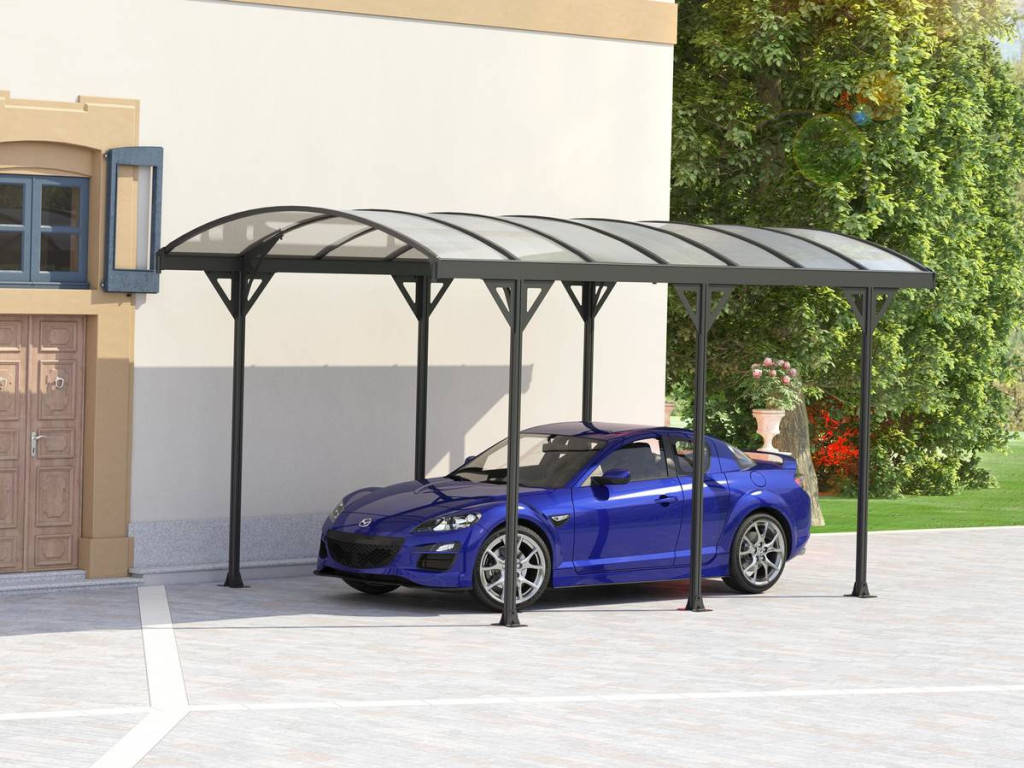
Aluminium is undoubtedly the king of modern outdoor spaces. Completely rust-proof, it is unaffected by rust or salty environments (such as those near the coast). Investing in a bespoke aluminium carport guarantees clean lines and a very high-end look. This malleable material lends itself perfectly to the concept of a designer carport, with the option to incorporate ultra-slim posts and a wide range of powder-coated colours to match your joinery. Although it is lightweight, its internal structural design gives it exceptional rigidity. Furthermore, aluminium is a fully recyclable material. Choosing this option is therefore also part of an environmentally friendly approach, without compromising on durability.
Steel: strength and the best value for money
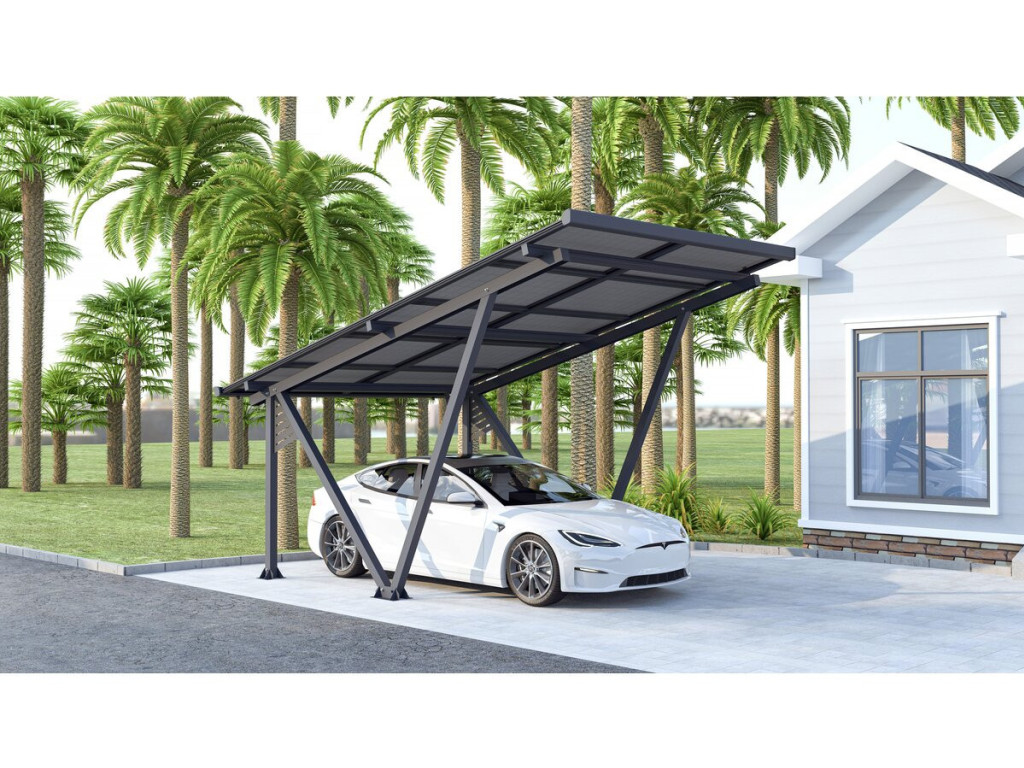
Much heavier and more robust, steel is the ideal choice for large-scale structures. A galvanised steel car park structure is extremely popular in mountainous regions or areas particularly exposed to strong winds, thanks to its solid ground anchoring. In regions prone to heavy snowfall, steel prevents any risk of the roof buckling under the weight of the snow, ensuring complete peace of mind throughout the winter. Galvanised steel is hot-dip coated with a thick layer of zinc, which provides effective protection against corrosion. This material is also often the go-to choice when looking for an affordable carport, as steel models sold as standardised factory-made kits are often more affordable than extruded aluminium and custom-profiled aluminium.
Design and dimensions: from standard to bespoke
One of the huge advantages of a metal carport lies in its architectural flexibility. Unlike a brick-built garage, where the walls are fixed, you can adapt the structure to your exact space requirements.
Adapting the carport to your fleet of vehicles
If you own a single standard city car, a standard model of around 15 m² will be more than enough to manoeuvre in. However, households often have several vehicles or large SUVs. In this scenario, the ideal solution is to opt for a standard-sized two-car carport, which is generally around 6 metres wide by 5 to 6 metres deep. This ensures plenty of room to open the car doors comfortably on a daily basis. Here are a few guidelines to help you: a 3 x 5-metre space is perfect for a city car, whilst a 4 x 6-metre space will be absolutely essential for parking a utility vehicle with sufficient room to reverse.
If the layout of your garden is unusual (sloping ground, an asymmetrical space, or a roof height required for a motorhome), a bespoke carport becomes the only viable option. You can choose to have it built directly against the front of your house (ideal for unloading shopping in the dry) or as a fully self-supporting structure installed independently at the back of the garden.
Technical installation: the key steps for a long-lasting foundation
Although many modern carports are sold as ready-to-assemble kits with instructions, the installation requires precision and some technical DIY knowledge. You’ll need at least two people to lift and assemble the heavy frame, as well as the appropriate equipment: a spirit level, a hammer drill, spanners and a chalk line.
Foundations and assembly
The most critical stage in assembling a self-supporting carport kit is undoubtedly the preparation of the ground. The metal framework will be subjected to significant environmental stresses, including uplift (caused by wind pressure beneath the roof) and compression. To ensure absolute stability and safety, it is essential to set the posts in a concrete slab or, failing that, in deep, solid concrete footings dug to a depth of at least 50 to 80 centimetres (below the frost line). The use of galvanised steel anchor plates, securely fixed using metal expansion bolts or chemical anchors, is an essential requirement.
Managing rainwater runoff
The large surface area of the roof will collect a very large volume of water during heavy downpours. A system designed by professionals always includes a rainwater drainage system comprising gutters. On high-quality contemporary models, these gutters and downpipes are, in fact, completely hidden from view, as they are integrated directly into the hollow aluminium support posts. This ingenious system channels water efficiently to an underground drainage system or a rainwater harvesting tank, thereby protecting your foundations from ongoing erosion and keeping your paved driveway free from muddy puddles.
Legislation and procedures: what you need to know before building
Installing a new permanent structure in your garden is not without legal constraints when it comes to dealing with the authorities. The most common question asked by homeowners is: what prior declaration for a carport do I need to submit to my local council?
French regulations in this area are based primarily on town planning rules relating to floor area:
- Footprint of less than 5 m²: no administrative procedures are required. However, such an area is clearly unsuitable for parking a car.
- Footprint between 5 and 20 m²: you must prepare and submit a prior declaration of works (DP) to the town planning department.
- Footprint greater than 20 m²: an official application for planning permission is required. Please note that this threshold may be raised to 40 m² in geographical areas covered by a Local Urban Development Plan (PLU), if and only if the carport is physically attached to the main house.
Always take the time to check the local PLU before ordering your materials. Some local authorities require specific roof colours or severely restrict the use of certain external materials, particularly if your property is situated near a listed building or within a protected area.
How do you maintain your metal structure?
The longevity of your significant investment depends on a few very simple maintenance steps. First-time buyers often wonder how to maintain an external metal frame to preserve its original shine. Rest assured, the workload is negligible over the course of a year.
Unlike timber, which requires sanding and costly fungicide treatments, a powder-coated metal structure only needs a quick and simple surface clean. Once or twice a year (in spring and autumn), gently wipe the posts and the roof edge with a soft sponge soaked in lukewarm soapy water. This is sufficient to remove atmospheric pollution, bird droppings (which are particularly corrosive to paint) and ingrained dust. Then rinse thoroughly with clean water using a standard garden hose. However, the use of a high-pressure washer is strongly discouraged, as the high pressure could chip away the protective paint finish or seriously damage the waterproofing seals fitted to the roof. Also remember to climb onto a secure stepladder to manually remove any dead leaves that have accumulated in the gutters, to ensure water can always drain away freely. Finally, at the end of winter, take the opportunity to visually check that the anchor bolts are tight and that the fastenings are intact, to prevent any looseness in the structure caused by winter winds.
Conclusion
Opting for a metal outdoor structure is undoubtedly one of the best possible decisions you can make to secure, shelter and enhance the value of your vehicles on a day-to-day basis. Thanks to its resilience to the vagaries of the weather, its architectural flexibility and its wonderful lack of demanding maintenance, the metal carport far surpasses all traditional wooden models. Whether you opt for a standardised, affordable framework to keep initial costs down, or a top-of-the-range aluminium model that perfectly complements the design of your house, this installation adds real value to your property. Do not hesitate to compare the various options available on the market and to engage specialist tradespeople to ensure a technically flawless installation, guaranteeing that you can enjoy this new, comfortable parking space with complete peace of mind.