Your cart
There are no more items in your cart
Sauna - Model
Categories :
Practical Guides
, Sauna
, Swimming Pool & Spa
Saunas – The different types
Outdoor or indoor sauna
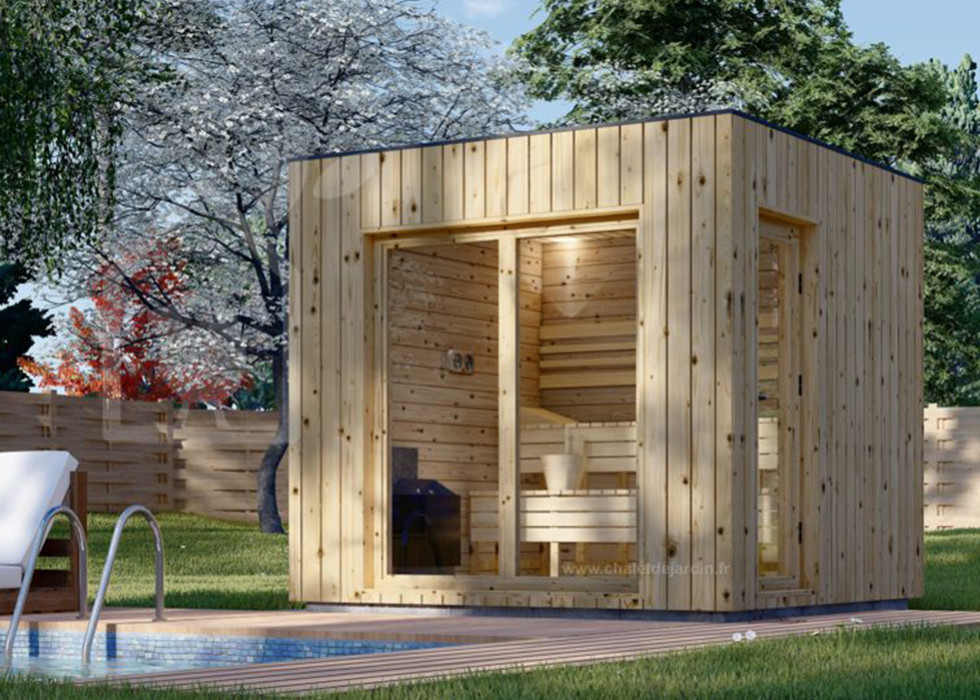
Installing an outdoor sauna offers both relaxation away from the house and a special treat if you have a swimming pool nearby. A refreshing dip in the pool after a sauna session will be a real treat. Outdoor saunas are available as prefabricated units, making them fairly easy to assemble. If you have a large garden, building a proper sauna becomes a viable option. However, building an outdoor sauna requires a planning permission if its floor area exceeds 20 m². If the floor area is less than this, a declaration of works must be submitted to the local council.
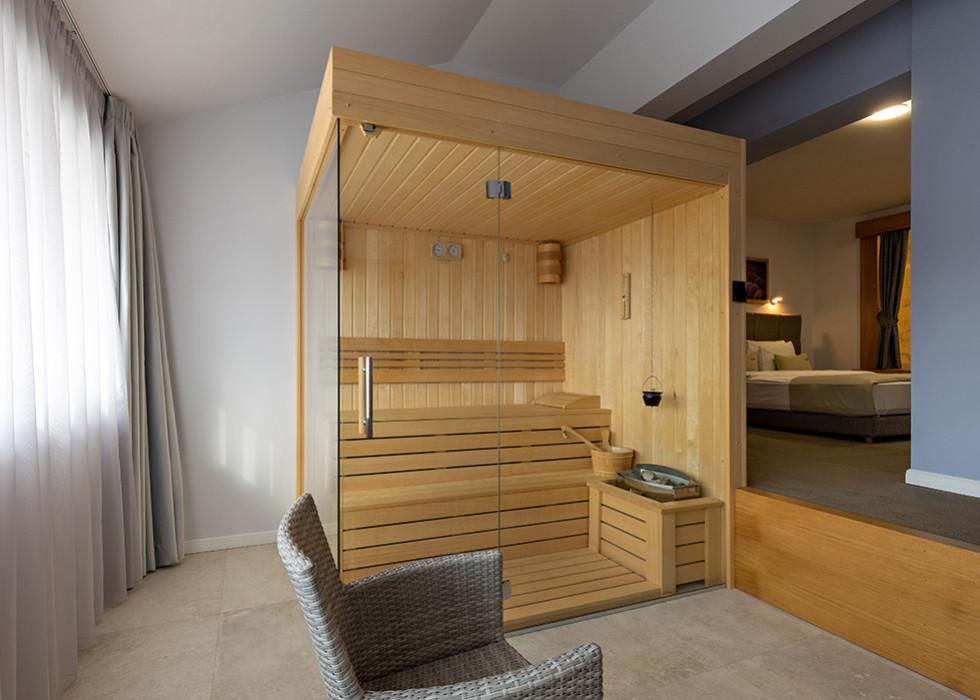
An indoor sauna can be designed if you do not have a garden. Installing an indoor sauna requires some modifications, particularly with regard to ventilation. This ventilation is essential for renewing the air inside the sauna. Consequently, an opening of 25 cm² per person is recommended to ensure a comfortable sauna experience. A ventilation system is not required provided the sauna is adequately ventilated. No planning permission is required for the construction of an indoor sauna.
Public sauna
A public sauna is intended for anyone wishing to enjoy a steam bath outside their own home. However, a public sauna must have a sufficiently spacious cabin, fitted with multi-level benches. These multi-level benches are installed so that everyone can choose the temperature that suits them and move about without disturbing others.
The public sauna is also fitted with several showers. A cold water basin, or a water tap, allows the body to cool down. There is a relaxation room equipped with armchairs or long chairs for relaxation. The public sauna will also feature toilets, changing rooms and possibly a set of scales.
Private sauna
Traditional sauna
Earth sauna
The rudimentary underground sauna, or ‘maasauna’, is a hut made of logs. It is partially buried in the ground. The earth-buried sauna is constructed by digging out a few square metres of ground to form a cavity. This cavity is then lined with logs, upon which birch bark is laid. The whole structure is covered with earth. The door is very basic.
The underground sauna provides thermal insulation, which is why it is used in the depths of winter. The temperature in this underground sauna can reach 110 to 120°. The relative humidity is quite low, at around 10 per cent. The underground sauna is still used by Finns today for training courses or to preserve the tradition.
Gas or smoke-fired sauna
Gas-heated saunas are heated by a stove connected to a gas supply. They are much more common than wood-fired saunas. However, their installation is quite complex. Major building work is required to install the stove-to-gas connection. The soaring cost of gas is not conducive to the development of this type of sauna.
The smoke sauna, or ‘étuve’, is fitted with a stove filled with stones weighing around a hundred kilos. Before the session, a wood fire is lit for several hours (around 10 hours) beneath the stove. Once the sauna cabin has heated up, the ashes and embers are removed to the outside. The sauna door is left wide open. When the stones are no longer emitting volcanic gas, the door and the sauna chimney can be closed. A designated person is responsible for pouring a ladleful of water onto the hot stones in the sauna stove. This technique produces waves of dry steam.
Traditionally, men enter the sauna first. Until the heat has subsided, women and children wait their turn. Alder wood or birch bark is most commonly used for this smoke sauna. This type of sauna is found on old farmsteads and in leisure centres. The smoke sauna is one of the few traditional saunas still in use today. The wood fire gives off a distinctive smell that some people enjoy. However, despite the low cost of wood-fired heating, the smoke sauna poses health risks. Using a smoke sauna leads to the build-up of soot, which is difficult to clean.
Modern sauna
Infrared or electric sauna
The infrared sauna cabin first appeared in Japan in 1967. It was used for therapeutic purposes. Infrared radiation, invisible to the naked eye, comes from the sun’s rays. However, this radiation is not the same as ultraviolet radiation, as it does not cause sunburn. It has the property of heating any solid object in its path. The wavelength of infrared radiation is measured in nanometres (nm). Electric heaters emit infrared rays, similar to those of the sun, inside sauna cabins. This radiation is regulated so that the human body can absorb 95 per cent of it. The radiation in the sauna acts on muscle tissue and internal organs. It penetrates deep into the skin and causes an increase in body temperature. This effect leads to detoxifying perspiration.
The infrared sauna provides constant heat, which is less intense than that of a traditional sauna. As a result, the infrared sauna is more energy-efficient. It is also renowned for the fact that it does not heat the air, but only any solid objects present in the sauna cabin. Infrared saunas do not require the use of water, as is the case with traditional saunas. They are easier to install than traditional saunas and the risk of mould contamination is minimal.
Despite the advantages of the infrared sauna, it does, however, have a few drawbacks. A sauna is normally characterised by a steam bath. The absence of this steam in an infrared sauna is a particular cause for concern. Indeed, unlike a traditional sauna, this type of sauna offers no benefits for respiratory problems.
Electric saunas are amongst the most commonly used, as they only need to be plugged into a socket to operate. The heater used is also electric. Installation is quick and straightforward.
Portable or foldable sauna
As the name suggests, a portable sauna is a movable cabin, and therefore comes as a ready-built unit. The portable sauna is also known as a flat-pack kit and is constructed by assembling panels. Installation is quick and easy, as it can be put together in around 30 minutes. The portable sauna can accommodate around 5 to 6 people. It can be fitted with benches. The heat source used is infrared light. It only requires a mains power connection to operate. However, the portable sauna has a certain drawback in terms of heat retention, due to its thin, non-airtight walls.
The foldable sauna is a lightweight, portable PVC cabin. When unfolded, it can only accommodate one person; when folded, it is quite compact, resembling a suitcase. It is therefore fairly space-saving. Infrared heat is still the energy source used to heat the sauna, and it requires only a mains connection. It comes with a steam generator, into which a little water is poured before the sauna session begins. The foldable sauna can be taken anywhere. However, this type of sauna is less effective than a traditional sauna. Furthermore, it is more akin to a hammam than a sauna, due to the release of moist heat.
Combined sauna
The combined sauna features a sauna, a shower and a hammam. Hence its name: three-in-one. The shower is used before and after the sauna or hammam. It can be fitted with massage jets. Unlike a sauna, a hammam provides a humid heat experience. The combined-type heater allows for the alternation between dry and humid heat. A special control, located outside the cabin, enables you to select the desired option.
The combined sauna saves space. It also has an attractive design. The combined sauna can have the following standard dimensions: 2.15 m high, 1.55 to 1.70 m long and 0.90 to 1.30 m wide.
Examples of saunas
Traditional Finnish sauna
Many manufacturers offer a wide range of sauna models. Below are a few examples of Finnish saunas with their essential fittings. Depending on the model, this type of sauna can accommodate 2, 3 or 4 people at a time.
Variations relate to the materials used for the panelling. The doors may also vary in sophistication. Heating is generally electric. The power output ranges from 3.5 to 7.5 kW. Spotlights provide lighting for the sauna. The sauna may also be fitted with a bench and a headrest. The controls are often external.
Infrared sauna
Infrared saunas are beginning to win over sauna enthusiasts. As a result, retailers are bringing a wide range of infrared saunas to the market. Here are a few examples of infrared saunas with their various accessories.
The infrared sauna can accommodate between 1 and 3 people at a time. It incorporates modern technologies such as:
- Carbon and ceramic emitters;
- Internal lights that provide both illumination and chromotherapy for users;
- 8 mm thick tinted glass insulates the cabin;
- The sauna can be fitted with an ioniser and/or a CD player;
- Power output ranges from 1,300 to 2,000 watts, operating at 220 volts;
- Panels made of solid or profiled spruce;
- Insulation of varying materials and thicknesses;
- Temperature control;
- Uniform or multicoloured lighting.
Sauna – Installation
Installation criteria
Some people wish to install their own sauna, which is a good thing. In the case of flat-pack saunas, they can indeed do so, following the manufacturer’s instructions. However, for saunas that require building from scratch, there are numerous factors that contribute to a successful installation. In this case, it is best to call in the professionals to avoid any disappointment and to ensure the long-term durability of the installation.
Any sauna installation begins with a site survey. You must decide between an outdoor or indoor sauna. An outdoor sauna is more expensive than an indoor one, as the work involved is more extensive.
Next, the sauna’s position in relation to the wider building must be determined. Its ventilation, natural light, electricity supply and maintenance are all factors that need to be discussed in detail with a professional. Finally, you must choose the type of sauna, its shape, dimensions, options, accessories, the equipment it contains and the materials used in its construction.
The sauna should not be too large, but designed for a specific number of users. In particular, its height must be reasonable. Users must be able to lean back, lie down and stretch their legs. The remaining space in the centre of the room will be used solely for moving about. Its size will be determined accordingly. It would be best to have wide benches to ensure users’ comfort.
A good sauna is characterised by a draught that starts beneath the stove and flows through the rear section. Sauna-goers will not be affected by the cool air entering through the floor. Instead, they will feel the warm air. Air will be continuously vented from the upper part, through the wall or ceiling. Air renewal in a sauna is very important. It helps prevent discomfort caused by carbon dioxide. It is advisable to provide an opening of 25 cm² per person in a sauna. Ideally, an adjustable opening should be designed, which can be adapted according to the number of users.
The type of sauna should be chosen from one of two main categories: traditional or modern. Its shape will be determined by the space available for it. It must fit in with the overall aesthetic. The designer will assess the feasibility of the chosen options. They will advise on the type of stove, as well as its electricity supply.
The fittings and materials, as well as the ancillary structures – such as the shower and relaxation room – must meet the owner’s requirements. However, it will be the designer’s responsibility to provide advice to facilitate the installation. Once the sales contract has been signed, the materials delivered to site will be inventoried and thoroughly checked by the fitter.
Installation procedure
In the case of an outdoor sauna, the floor will be laid. It will be raised by a screed, which may subsequently be covered with a floor covering. Next, the walls – made of brick or timber – and the partitions will be erected, in accordance with the agreed plan. The partition walls must be fully erected before work begins on other parts. The sauna roof will complete the structural work.
The fitter must not forget to mark out the positions for the electrical cable outlets, which will supply power to the lights and any heating system for the sauna. The cross-section of the electrical cables must be suitable for the required power rating. The type of cable used in accordance with safety standards is U 1000 R2V. The routes for the pipework to the bathrooms must also be planned in advance. Generally, these routes consist of pipes laid beneath the formwork. The sauna floor is then finished – with tiles, for example – whilst ensuring the correct gradients are maintained to prevent any puddles from forming.
The interior layout remains largely the same for both outdoor and indoor saunas. Insulation must be fitted in accordance with standards to prevent any heat loss through the walls and roof. Glass wool or rock wool will be installed in the walls. For the ceiling, expanded polystyrene is more than adequate. On this point, the battens used to fix the panelling are fitted after the insulation. Particular attention must be paid to elements likely to create thermal bridges, and appropriate solutions must be implemented.
The vapour barrier must be installed in accordance with the manufacturer’s recommendations. Before covering the insulation behind the panelling battens, ensure that the required ventilation gap between the wall and the vapour barrier is maintained. The panelling and insulation must not touch the floor. They must be stopped 8 or 10 cm above the finished floor level. This will allow the floor to be washed without wetting the panelling.
The highest point of the sauna – model must have an opening to allow hot air to escape. An internal frame must be carefully fitted here, ensuring that rock wool or glass wool is secured within it. If necessary, an extractor fan can be installed here. Next, the access door must be fitted. This will be a door without an internal locking mechanism, designed specifically for safety reasons. This is because anyone using the sauna who feels unwell must be able to leave the sauna quickly simply by pushing the door open.
Finally, the interior fittings must be installed, both for the sauna and the washrooms. The stove will be placed in its designated position. The benches will be fitted in their respective positions. The electrical connections will be made last. Care must be taken to check that the light windows and various switches are properly sealed.
The sauna heater must be installed in accordance with the manufacturer’s instructions. Particular attention must be paid to whether a protective barrier needs to be fitted. Once the lower and upper benches have been installed, they must be tested by sitting in the bathing position to detect any potential space constraints. The fitter will closely monitor the rigidity of the supports and carry out a practical check of any possible movement inside the sauna.
Once the sauna has been fully assembled, the fitter will switch on the electrical appliances. They will check that each component is working correctly. Adjusting the stove temperature, checking the positioning of the light fittings, verifying the readings on the temperature and humidity gauges, and setting the timer or hourglass must be carried out in a systematic, step-by-step manner. The key will be handed over to the owner once both parties have accepted the installation.
Sauna – Maintenance
General Information
Proper maintenance of the sauna helps to extend its lifespan and ensure good hygiene. A minimum level of maintenance should be carried out after each session. As the sauna is a hot and humid environment, it requires regular maintenance to guarantee good hygiene and keep it in perfect condition.
Certain precautions must be taken when maintaining a sauna. Detergents can discolour the wood, leave marks and residues, and give off irritating odours. The amount of water used for cleaning must be limited to prevent the wood from turning black. The use of a garden hose inside or outside an infrared sauna should be avoided. The use of paint, chemical treatments or sealants is strongly discouraged. Furthermore, infrared heat can overheat the treated surface and cause the release of a toxic gas.
Maintenance
Physical and chemical maintenance
The wood in the sauna must be easy to maintain to ensure its longevity. To preserve its original characteristics and appearance, several coats of a marine-grade wood varnish should be applied. The areas requiring this treatment are the threshold, the step and the decking.
The timber used for certain external parts of the sauna can be treated with standard products such as varnish, oils and other treatment products. Some sauna designers use wooden panels 5 to 7 cm thick for the walls. These panels are interlocked and require no special insulation.
In the sauna’s ancillary rooms (toilets, showers and changing rooms), regular, daily cleaning and disinfection are essential as humidity levels are high. This helps to reduce the risk of skin conditions. The use of disinfectants is recommended. It is important to combat damp and ensure these areas are adequately ventilated. In particular, it is advisable to leave the sauna door open to allow moisture to escape from the wood and from corners.
At the end of each sauna session, the slatted boards on the floor should be lifted and leaned against the benches. The floor should be cleaned with a damp mop to remove salts, sweat residue and any dust from various sources. A sponge dampened with warm water, to which a little bleach has been added, should be used to scrub the benches. From time to time, you can scrub the wood with a wire brush to remove any dirt build-up in the corners of the sauna.
In an infrared sauna, you can sweep the room and run the hoover. This will remove dust and any loose hair. People may touch the walls, in which case they should be wiped down. The same procedure can be followed for the benches, door frames and partitions. These should be rinsed with lukewarm water, without any harmful or toxic products.
Maintenance using essential oils
For benches and seating, wooden armrests and the slatted bases that raise feet off the tiled floor, sauna oil is used. The woodwork, walls, partitions and ceiling of the sauna should also be coated with essential oils. These will restore their colour and infuse them with fragrance, much to the delight of sauna-goers. All essential oil aromas are suitable for this purpose. Natural pine or turpentine oils may be used for this purpose. The choice of oil will depend on its price and the owner’s preference.
Anyone wishing to personalise the treatment of their sauna should take the appropriate steps. Depending on the type of wood used in the sauna, they may choose fir, cedar or sandalwood. These impart a certain exotic atmosphere to the sauna. Essential oils of thyme, rosemary or eucalyptus will provide lighter, fresher scents. These oils are particularly valued for their powerful antibacterial properties.
These oils are applied to the wood with a cloth before the stove is even lit. They should be used undiluted and in small quantities to avoid saturating the wood. As a guide, a volume of approximately 20 to 40 cc will be more than enough to treat a sauna designed for 3 to 4 people. To make the oils last longer, you could store the dampened cloth in a metal tin. You would simply need to lightly soak it in oil the next time you use it.
Readers wishing to find out more about saunas are invited to refer to the other articles on this subject on this website.
Copyright protected under Articles L. 111-1 and L. 123-1 of the Intellectual Property Code.