Your cart
There are no more items in your cart
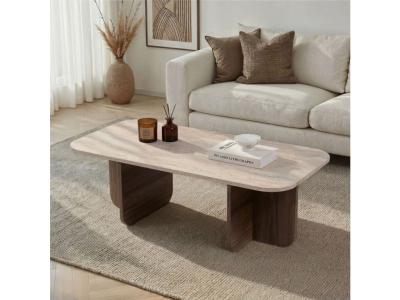
Coffee tables: buying advice and décor tips
Categories :
News & Updates
Finding the perfect coffee table for your living room means keeping a few key rules in mind: the proportions in relation to the sofa, a height suited to the seat, a shape that suits the size of the room, and a material that complements the existing style.
Choosing the height of a coffee table
Height is the first thing to check before buying a coffee table: a tabletop that is too high creates visual and practical discomfort, whilst one that is too low forces you to lean forward excessively. Depending on the layout of your space, the seat height of your sofa serves as the main reference point for determining this measurement accurately.

Matching the table to the sofa
To find out how to choose a coffee table that suits your sofa, the basic rule is simple: the tabletop should be at the same height as the seat or slightly lower, ideally 2 to 5 cm. As a standard seat height ranges from 38 to 45 cm, it is within this range that the majority of versatile models on the market are found.
- Standard sofa: a coffee table between 35 and 42 cm in height matches the usual seat height, ensuring comfort in everyday use without straining your arms.
- Low sofa (lounge, Scandinavian, futon): choose a coffee table between 30 and 35 cm to maintain the right proportions and preserve the visual harmony of the ensemble.
- High sofa: a coffee table between 40 and 50 cm is more suitable; below this height, reaching items placed on the table becomes uncomfortable.
- Dorset model (55 cm): this height exceeds the standard range; compare it carefully with the seat height of your sofa before finalising your choice.
Under no circumstances should the coffee table exceed the height of the sofa’s seat: beyond this height, visual harmony is disrupted and ergonomics are compromised. This factor directly determines the success of the overall arrangement in the living room.
Check the balance with the TV stand
The TV stand serves as a second height reference point that is often overlooked when choosing a coffee table. If it is low – around 40 to 50 cm – the coffee table should not be higher: a higher tabletop disrupts the horizontal coherence of the entire living room wall and visually accentuates any clutter.
The distance between the coffee table and the TV stand also plays a key role in ensuring a clear path: allow at least 60 cm between the two pieces of furniture to move around freely. In addition, a passageway of at least 70 cm between the table and the surrounding armchairs ensures smooth movement in everyday life.
The white rectangular Dorset coffee table with gold legs measures 120 x 51 x 55 cm, offers two storage compartments and fits perfectly into a modern living room thanks to the choice of a coffee table suited to contemporary furnishings. Its 20 cm gold-coloured metal legs add a sophisticated finish whilst providing ample space beneath the tabletop.
Determining the size of the coffee table
The size of the coffee table depends directly on the size of the sofa and the overall area of the living room. Ensuring the right proportions between these two pieces of furniture prevents the table from looking too overwhelming or, conversely, from appearing lost in the centre of a large space.
Calculating the length based on the sofa
The two-thirds rule is the starting point for determining which type of coffee table to choose based on the length of the sofa: the table should measure approximately two-thirds of this length to create a balanced proportion. For a 210 cm sofa, aim for a table of around 140 cm; with an 180 cm sofa, a length of 120 cm fits in naturally without dominating the space.
The distance between the edge of the table and the seat of the sofa should be between 40 and 50 cm: if it’s less than 35 cm, the table becomes an obstacle when getting up; if it’s more than 60 cm, it’s too far out of reach.
| Sofa length | Recommended length of the coffee table | Recommended depth |
| 150 cm | 90 to 100 cm | 50 to 55 cm |
| 180 cm | 120 cm | 55 to 60 cm |
| 210 cm | 140 cm | 60 to 70 cm |
| 240 cm | 160 cm | 65 to 70 cm |
Identifying standard dimensions
The market offers lengths ranging from 60 cm for the most compact models to 100 cm for medium-sized living rooms, and up to 160 cm for large spaces. The ideal depth is between 50 and 70 cm, depending on the length of the sofa, to ensure a comfortable seating area without obstructing movement around the room.
- Compact size: less than 100 cm in length for a rectangular model; best suited to small rooms of less than 15 m².
- Standard size: around 100 x 60 cm; this size is suitable for most medium-sized living rooms and fits a sofa measuring 150 to 180 cm.
- Large size: over 120 cm in length, this size suits sofas longer than 180 cm and living rooms larger than 25 m².
- Dorset model: with a tabletop measuring 120 x 51 cm, it offers generous surface space, suitable for a standard to large sofa.
A selection of over 313 coffee tables, in a range of materials and styles, allows you to find the exact size to suit any interior layout: choosing a coffee table becomes easier when standardised dimensions are identified in advance.
Matching the coffee table to your living room
Beyond the raw dimensions, integrating a coffee table into the living room depends on how it relates to the other elements in the room: available floor space, a defining rug and, possibly, several modular surfaces. The difference often lies in these subtle adjustments, which are best considered before purchase rather than after installation.
Which coffee table for a small space
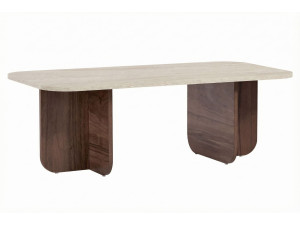
In a living room measuring less than 15 m², the choice of size and shape directly determines the sense of space. A round table measuring 50 to 60 cm in diameter offers the most unobtrusive solution for movement around the room, whilst a rectangular model measuring 80 to 100 cm long by 40 to 50 cm wide remains a compact and functional alternative. In a medium-sized room of 15 to 25 m², slightly larger sizes can be accommodated without overwhelming the space.
- Less than 15 m²: a round table between 50 and 70 cm in diameter, or a rectangular table 80 to 100 cm long – both shapes ensure that essential circulation routes are maintained.
- From 15 to 25 m²: a round table 70 to 90 cm in diameter or a rectangular table 100 to 120 cm long by 50 to 60 cm wide to structure the space without overloading it.
- Over 25 m²: a round table over 90 cm in diameter or a large rectangular table over 120 cm long by 80 cm wide is the natural choice.
A round table less than 70 cm in diameter falls into the small-format category, whilst one over 100 cm in diameter stands out as a large centrepiece. As soon as the living room’s floor area exceeds 25 m², this type of coffee table makes a statement without overwhelming the room, provided the recommended walking space around it is maintained.
Matching the coffee table and rug
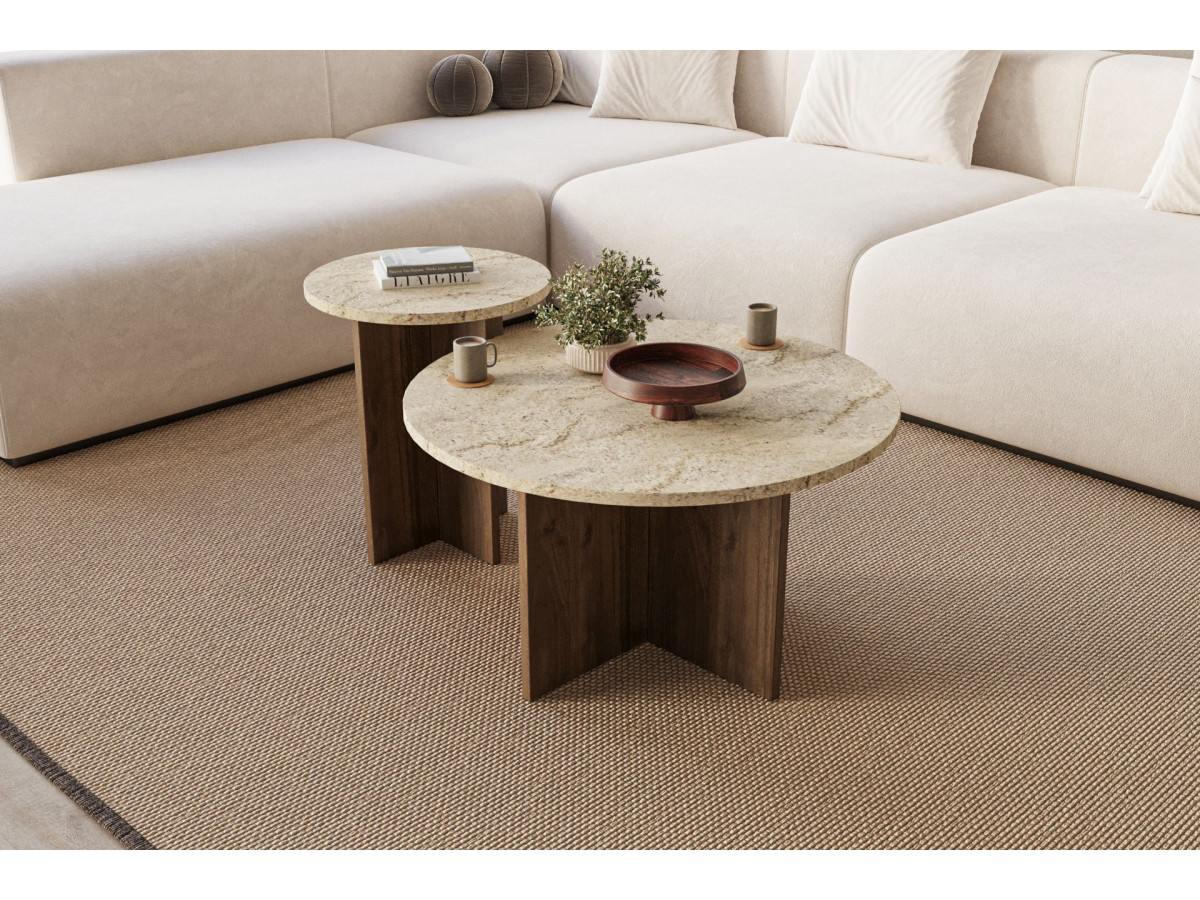
The rug plays a key role in structuring the living room layout: it should be larger than the coffee table and extend at least 20 to 30 cm beyond each side to visually define the living area. With a table measuring 120 x 60 cm, a rug of at least 160 x 100 cm will help to structure the space around the sofa effectively.
An undersized rug makes the coffee table appear to float in the centre of the room and disrupts the overall decorative coherence. Conversely, a correctly proportioned rug visually anchors the piece, unifies the living area and enhances the depth of the décor without any extra effort.
The shape of the rug can mirror that of the coffee table or create a deliberate contrast: a round rug beneath a rectangular table, for example, softens the lines and adds movement to the composition. This interplay of shapes is a simple yet effective decorative technique, even in a room with modest dimensions.
Adapting the space with nesting tables
Nested tables sold in sets of three offer a modular solution particularly well-suited to living rooms whose uses vary depending on the occasion. When separated for everyday use, they provide several small surfaces for placing items around the sofa; when stacked together, they form a compact unit that frees up space for movement in the room.
This solution is particularly appealing in spacious living rooms or combined living-dining areas where the coffee table sometimes needs to make way. In practice, when furnishing your indoor garden, nesting tables also allow you to adapt the available space for informal meals in front of the television without having to invest in a second large piece of furniture.
The same principle applies to pairs of matching tables: two surfaces of slightly different heights create a decorative composition whilst offering greater storage and placement options. This approach works equally well in small living rooms and large spaces where you wish to visually enliven the centre of the living area.
Comparing coffee table shapes
The shape of the coffee table influences the flow of movement within the room and the overall style of the living room. Each shape suits a specific sofa layout and a different way of moving around the room.
Choose a shape based on movement
Among the coffee table trends for 2026, soft, oval and round shapes are becoming popular in living rooms where ease of movement is a priority. Conversely, the clean lines of rectangles or squares are best suited to clearly defined spaces where the surface area remains the priority. Choose the shape based on how you actually move around the sofa.
- Round table: with no corners, it makes it easier to move around and takes up little space in walkways, making it suitable for small living rooms or layouts with several armchairs.
- Rectangular table: this classic shape follows the lines of the sofa and maximises the table top area; it is suitable for long or narrow living rooms as well as for straight or corner sofas.
- Square table: its clean lines emphasise the piece’s character, but it requires more space on either side; it remains versatile when placed in the centre of a U-shaped sofa.
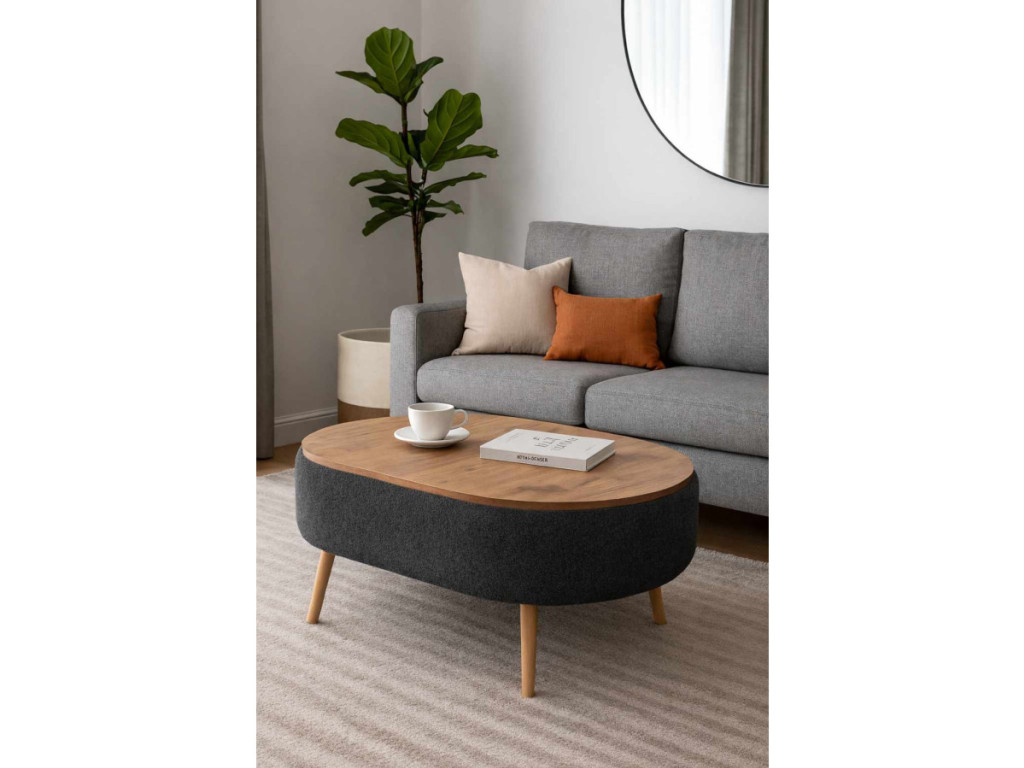
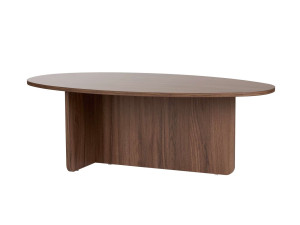
The oval coffee table occupies a middle ground: its flowing lines reduce the risk of bumping into it whilst offering an elongated surface area similar to that of a rectangle. It works well with both straight sofas and curved layouts, and its elongated shape makes it a good choice wherever the living room space allows.
Which table to choose with a corner sofa
With a corner sofa, rectangular, oval or square shapes prove to be the most suitable: they fit naturally into the interior space formed by the sofa without creating a break in the line. It is also possible to combine several small round tables of different heights to create a more free-flowing and contemporary decorative effect.
Experimenting with unusual shapes
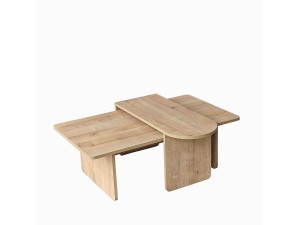
Unconventional shapes, such as triangles, tree-trunk-style tops or arrangements of several tables stacked or offset from one another, enhance the contemporary feel of a living room and become real decorative features.
The coffee tables in the Habitat et Jardin range stand out for their modern materials and designs, crafted to complement your living room furniture, with a selection of over 313 models. Choose a table that harmonises with the overall style rather than clashing with it: an original shape should blend in with the existing lines of the living room.
Choosing the style and materials
The material of the coffee table determines how it is looked after, its durability and how well it fits into an existing décor style. Wood, glass, metal or melamine: each material interacts differently with the other pieces of furniture in the living room and suits different everyday uses.
Wood and glass to suit the atmosphere
To guide your choice of material, a modern coffee table with a glass or plastic top allows you to play with shapes and colours in a contemporary interior, whilst bringing a sense of lightness to a room already rich in furniture. Wood, on the other hand, is better suited to understated, minimalist interiors where natural materials bring warmth and depth.
- Wood and bamboo: natural materials to favour for minimalist or Scandinavian interiors; wood adds warmth and texture without visually weighing down the room.
- Glass: its transparency allows it to suit many different interior styles; it creates a sense of lightness and ages well in contemporary spaces.
- Metal, dark wood, combined: a trio of raw materials for a bold industrial style, where the visual robustness of the materials forms part of the living room’s decorative identity.
Melamine, as seen on the Dorset table, offers a durable and low-maintenance alternative: its 16 mm-thick coating withstands daily use well. This material should be dusted regularly with a soft cloth and must not be cleaned with abrasive products, which will damage the finish. The Dorset model is manufactured in Europe, ensuring controlled quality standards, with a 24-month warranty on the construction.
A modern coffee table with storage
A modern coffee table with built-in storage meets a common need in living rooms where storage space is at a premium. The Dorset table is a prime example: its two spacious compartments, accessed via hydraulic lift doors, allow you to store books, magazines and everyday items within easy reach, without creating any additional visual clutter.
The white finish and 20 cm gold-coloured metal legs complement contemporary living room furniture, whilst the 120 x 55 cm tabletop offers sufficient space to accommodate a meal tray, cups or remote controls. When choosing your coffee table with storage, ensure that the opening mechanism does not encroach on the space needed to move around in front of the sofa.
Frequently Asked Questions
What height of coffee table should I choose for my sofa?
The height of the coffee table should match that of the sofa seat or be slightly lower, by between 2 and 5 cm. For a standard sofa, a coffee table between 35 and 42 cm is suitable. A low, Scandinavian-style sofa works well with a table between 30 and 35 cm, whilst a high sofa is better suited to a table between 40 and 50 cm. The table should never extend beyond the seat height.
Which shape of coffee table takes up the least space?
A round table takes up the least space in walkways: the absence of corners reduces the risk of bumping into it and makes it easier to move around the furniture. In a living room smaller than 15 m², a round model with a diameter of 50 to 70 cm is the most suitable choice. For a small rectangular space, a round table is still preferable to a square one.
How do you find a coffee table with the right proportions for your sofa?
To find a coffee table with the right proportions, apply the two-thirds rule: the length of the table should be approximately two-thirds that of the sofa. For a 180 cm sofa, aim for a table of around 120 cm; for a 210 cm sofa, a 140 cm table. Then allow 40 to 50 cm of clearance between the edge of the table and the seat of the sofa to make it easier to move around. These tips apply to rectangular and oval shapes; for a round table, base your choice on the recommended diameter according to the size of your living room.