Your cart
There are no more items in your cart
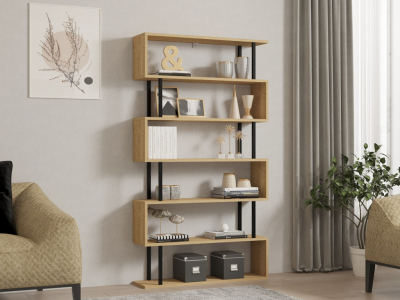
Choosing a library – How to make the right decision?
Categories :
Interior Furniture
, News & Updates
Choosing a bookcase that suits your home involves balancing practical considerations with a genuine focus on aesthetics.
The dimensions and available space for your bookcase
Before making a purchase, deciding on the dimensions is the first step. Depending on the layout of your space, a simple measurement error can complicate the installation of the unit and throw the whole room out of balance.
Measure your space before choosing a bookcase
To choose a bookcase without any unpleasant surprises, take each measurement accurately: ceiling height, wall width and the actual usable depth. You should also take into account any fixed features, such as skirting boards, electrical sockets or a nearby window, which can sometimes reduce the usable space.
Depth and height depending on what you’re storing
The right choice depends on the type of items to be stored. The dimensions of a bookcase will vary depending on whether you’re storing novels, comic books or coffee-table books, and the depth of each shelf must be appropriate for its intended use.
- Paperbacks: a depth of 15 to 20 cm and a shelf height of 20 to 25 cm are sufficient.
- Comic books and large-format books: allow for a depth of at least 30 cm and a shelf height of 30 to 35 cm.
- Art books and photo albums: a depth of 40 to 50 cm is required, with a height of at least 40 cm to prevent the books from sticking out.
The difference often lies in the structure of the unit. Where books are heavy or numerous, shelves at least 2.5 cm thick minimise the risk of warping over time.

Two sizes to suit every layout
In a hallway or bedroom, a compact model is often the best choice. The ‘Lotus’ designer wooden bookcase measures 75 cm wide, 21 cm deep and 161 cm high, with 11 shelves in a walnut finish.
Conversely, a large room such as a living room or study allows you to opt for a more spacious piece of furniture. The ‘Manco’ model measures 122 cm wide, 25 cm deep and 188 cm high, with 15 shelves, which significantly increases storage capacity and visual impact.
In practice, make a list right from the start of what you want to store: books, vinyl records, decorative items. Planning ahead like this prevents you from buying a unit that’s too small and helps you choose a piece of furniture that’s truly suited to the room.
| Model | Width | Depth | Height | Number of shelves | Recommended use |
| Lotus (compact) | 75 cm | 21 cm | 161 cm | 11 shelves | Hallway, bedroom, small space |
| Manco (large size) | 122 cm | 25 cm | 188 cm | 15 shelves | Living room, study, large room |
Which type of bookcase to choose depending on the room
Choosing a bookcase first requires assessing the room, the layout and the type of storage required. The choice depends on the available space, the size of your collection and the dimensions that can actually be utilised, not just on the desired visual effect.

Wall-mounted, freestanding or modular bookcases
A wall-mounted bookcase frees up floor space and makes the most of the ceiling height, whilst maintaining a light visual presence: however, the fixings must be suitable for the wall surface and the expected load on the shelves.
- Wall-mounted bookcase: ideal for small spaces, it makes the most of vertical space and creates a sense of lightness in the room. Before installation, you must check the type of wall.
- Freestanding bookcase: simpler to install, it can be easily moved as your layout changes. For tall units, stability must be carefully checked, especially where children are present.
- Modular bookcases: this type of bookcase allows for easy customisation thanks to modules of varying sizes. The shelving can be rearranged as needed, without a fixed structure.
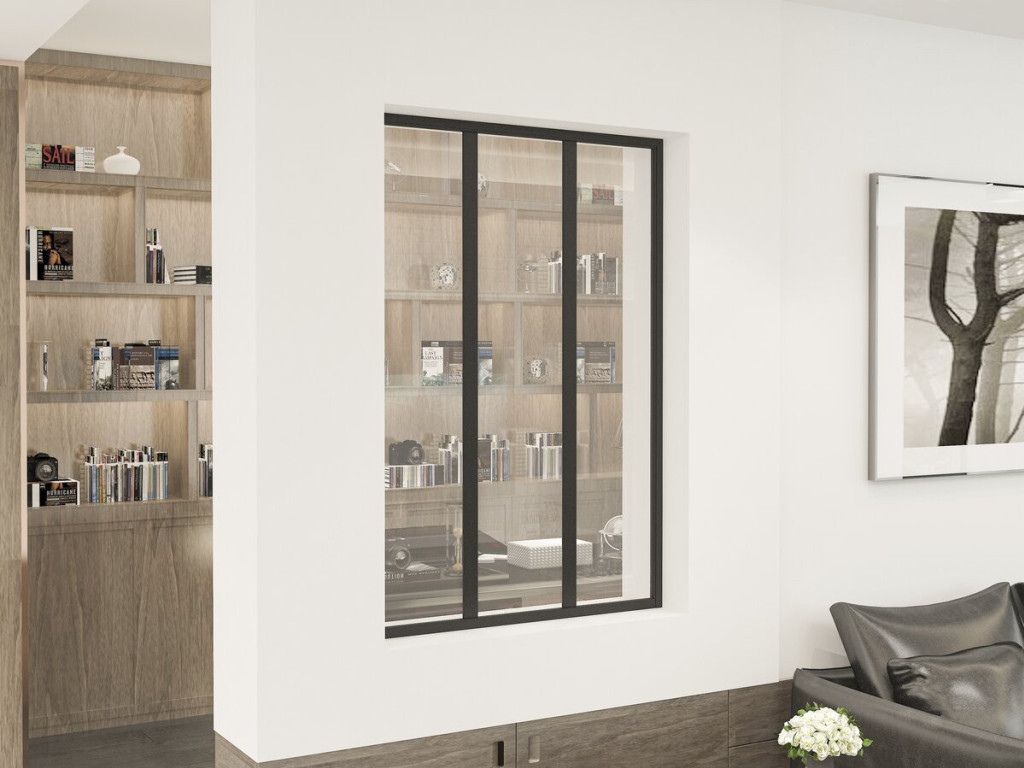
Depending on the layout of your space, a bookcase without a back panel can also serve as a room divider between two areas, for example between the living room and the dining room.
Choosing the right shelving for every room in the house
A modular shelving unit is well suited to awkward spaces: sloping ceilings in a bedroom, an office alcove, or a hallway with unusual dimensions. In practice, a low bookcase blends in more discreetly in a bedroom, whilst a larger unit is ideal for the living room, provided the space allows for it.
Éduscol’s guide to choosing a school bookcase offers a structured method for designing a suitable school bookcase, based on the same criteria of capacity, access and use.
Open or closed spaces for personalised storage
The choice between open shelving and closed units depends mainly on how the space will be used. An open bookcase showcases books and other items, whilst providing immediate access to the storage space. Conversely, glass or solid doors offer greater protection from dust and conceal less decorative contents.
The most flexible solution is often to combine the two in a single piece of furniture.
Style and materials for a bookcase that lasts
Once the location and dimensions have been decided, the right choice comes down to the material, finishes and style of the bookcase.

Choosing the right material for your bookcase
Wood creates a warm and versatile look, whilst metal lends itself more to an industrial or contemporary design.
Depending on the layout of your space, choosing a solid wood bookcase remains a suitable option when you have a large number of books and sturdiness is more important than lightness. Conversely, a model made from chipboard is better suited to moderate use, provided you pay attention to the quality of the surface, the finishes and the construction.
- Solid wood: a robust and durable material, recommended for heavily laden shelving; the oak and walnut finishes on the Lotus and Manco models offer a understated and timeless aesthetic.
- Particle board: a lighter and more economical solution, suitable for everyday use; its strength depends largely on the finish and assembly.
- Combined wood and metal: this combination of two materials creates a bold style, well suited to loft or contemporary interiors.
- Plexiglas or designer materials: best reserved for occasional shelving or decorative purposes, as their weight-bearing capacity is more limited.
There is also a technical point worth noting: the thickness of the shelves. If they are less than 2.5 cm thick, the risk of sagging increases significantly under the weight of books, regardless of the material used.
Matching the style of the furniture to your interior décor
The materials and finishes should complement the other furniture to create a cohesive whole, without stifling the atmosphere.
An oak or walnut finish adapts easily to a range of styles, from classic to contemporary. Whether in a living room or elsewhere in the home, the difference often lies in the shade, the arrangement of the shelves and the position of the piece within the space.
If you’re looking for a bookcase designed to last, the ‘Manco’ oak bookcase combines solid wood, 15 practical shelves and a size suited to large rooms.
If you wish to make the bookcase the centrepiece of the room, a contrast in colour or a more pronounced silhouette is often all that’s needed. To maintain an uncluttered visual flow, it’s best to leave around 30 cm of space on either side of the unit.
Showcase your shelves with accessories and lighting
Once in place, the bookcase takes on a whole new dimension with a few well-chosen accessories: lighting, bookends and decorative objects add structure to the shelves without making the whole look too cluttered.
- Clip-on wall lights: these illuminate each shelf and make it easier to read the titles at the end of the day.
- Stylish bookends: as well as being useful for holding books in place, they also add visual structure to the shelves.
- Decorative items and plants: just a few well-placed pieces are enough to add variety in terms of volume and texture.
In addition, the two-year guarantee offered on Hanah Home models, distributed by Habitat et Jardin, provides a clear indication of the quality of the build.
Frequently Asked Questions
What size bookcase should you choose for a small space?
When choosing a bookcase for a small space, the key is to opt for compact dimensions and a simple layout. A model 75 cm wide and 21 cm deep is well-suited to a hallway or bedroom, as it takes up minimal space whilst offering storage capacity up to a height of 161 cm.
Before buying, check the ceiling height, the width of the wall and the space around the unit. Depending on the layout of your space, these measurements will help you avoid a unit that is too deep or too tall to allow for smooth daily movement.
What are the different types of bookcases available?
There are three main types of bookcases: wall-mounted, freestanding and modular.
Wall-mounted models free up floor space and create a minimalist look. In contrast, a freestanding model is easier to move and can be set up without complex fixing. Modular bookcases, for their part, allow you to combine several units depending on the layout of the wall, the desired depth or how your needs change over time.
How do you choose the right material for a durable bookcase?
For heavy use, solid wood remains the material of choice. It can withstand heavy loads, ages well and retains a consistent visual appearance over time.
An oak or walnut finish complements most interior styles. Also check the thickness of each shelf: a minimum of 2.5 cm minimises the risk of warping under the weight of books, whatever style you choose.