Your cart
There are no more items in your cart
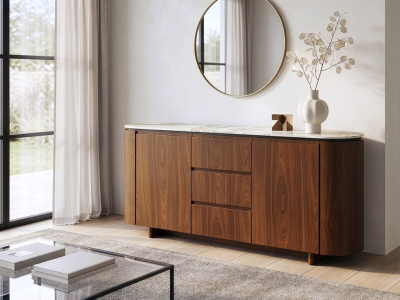
The perfect sideboard – 5 tips for choosing the right one
Categories :
Interior Furniture
, News & Updates
Take accurate measurements before choosing your living room sideboard
Before browsing the available living room sideboard models, there’s one essential step: measure the intended location accurately. Habitat et Jardin has organised its range to suit a variety of uses, from compact sideboards to sideboards designed for more spacious rooms.
The key dimensions for a successful sideboard
The right choice depends on three dimensions: the available wall length, the depth and the height. To maintain a balanced composition, the length of the unit should generally be between two-thirds and three-quarters of the wall in question.
As for depth, the most common dimensions range from 45 to 60 cm: a reliable baseline for ensuring there’s enough space to move around. Height, meanwhile, depends on the intended use, with a low sideboard typically measuring around 80 to 100 cm and a tall sideboard reaching up to 180 cm in a traditional crockery cabinet style.
- Wall length: choose a sideboard proportionate to the wall to avoid it looking too bulky or too inconspicuous.
- Height: a low sideboard makes the space appear lighter, whilst a tall sideboard requires more space around it.
Before finalising your choice, also check the passageways: doors, corridors and staircases. This step is just as important as the dimensions of the living room sideboard once it is in place.

Low sideboard, tall sideboard or buffet: choose the right size for your room
A sideboard or low living room sideboard opens up the view, lightens the wall and is well suited to both a dining room and a contemporary living room.
Conversely, a tall sideboard primarily meets a need for vertical storage. The difference often comes down to the available floor space: if the room is compact, this type of furniture can quickly appear more imposing, even if it takes up less floor space.
Movement, doors and proportions
Once you’ve chosen your piece of furniture, leave a passage of 60 to 70 cm in front of its doors to ensure comfortable use. In practice, this 60 to 70 cm clearance ensures the doors can be used comfortably and makes it easier to move around the room on a daily basis.
Depending on the layout of your space, a narrow living room sideboard fits easily into a long, narrow room, whilst a longer model provides better structure to a large dining area.
In addition, a low living room sideboard is often suitable for open-plan rooms, whilst a tall model is preferable whenever space allows and storage requirements increase.
Choosing the right sideboard style for your interior
It’s worth deciding on the style before the colour and even before the dimensions. By looking at the room as a whole – the table, chairs, floor and lighting – you’ll find it easier to identify the sideboard that will blend seamlessly into the dining room or a living room that opens onto the lounge. Taking this holistic view helps you choose a piece of furniture that is consistent with the existing ambience, whilst still providing well-thought-out storage.

Why is style still the number one criterion?
The right choice depends on how well the style of the sideboard complements the existing décor. A living room sideboard that looks good on its own can throw the room off balance if it doesn’t complement either the materials or the lines of the other furniture. Conversely, a sideboard that fits in enhances the feel of the space: tone-on-tone for a calm atmosphere, or subtle contrast to add depth.
The main styles are easy to distinguish. The Scandinavian style favours light wood, white, grey or beige tones and slender legs, for a bright, airy look. The industrial style combines dark metal and untreated wood for a more assertive look. The country style relies on solid wood – often oak, pine or walnut – with visible doors, drawers and shelves. Finally, the vintage style is recognisable by its rounded lines, soft tones and retro charm.
Which style of sideboard suits which type of décor?
In a contemporary interior, a modern dining room sideboard fits in naturally with its understated lines and combination of materials: wood, metal or glass, depending on the layout of your space. This type of design works well when the piece needs to provide storage whilst maintaining a light visual presence. The design of the fronts, the number of doors and the layout of the drawers are just as important as the finish.
For a more classic or cosy atmosphere, solid wood remains a safe bet. The difference often lies in the finish: matt for a subtle look, or satin to catch the light better. A walnut sideboard adds depth, whilst a light-wood model retains a softer feel, sometimes verging on Scandinavian style even in a traditional room.
| Decorative style | Recommended material | Characteristic colours |
| Scandinavian | Light wood (pine, birch, beech) | White, grey, beige |
| Industrial | Metal and untreated wood | Black, grey, brown |
| Rustic | Solid wood (oak, walnut) | White, beige, brown |
| Vintage | Lacquered wood | Pastel, soft shades |
| Contemporary design | Glass, metal, melamine | Bright or contrasting colours |
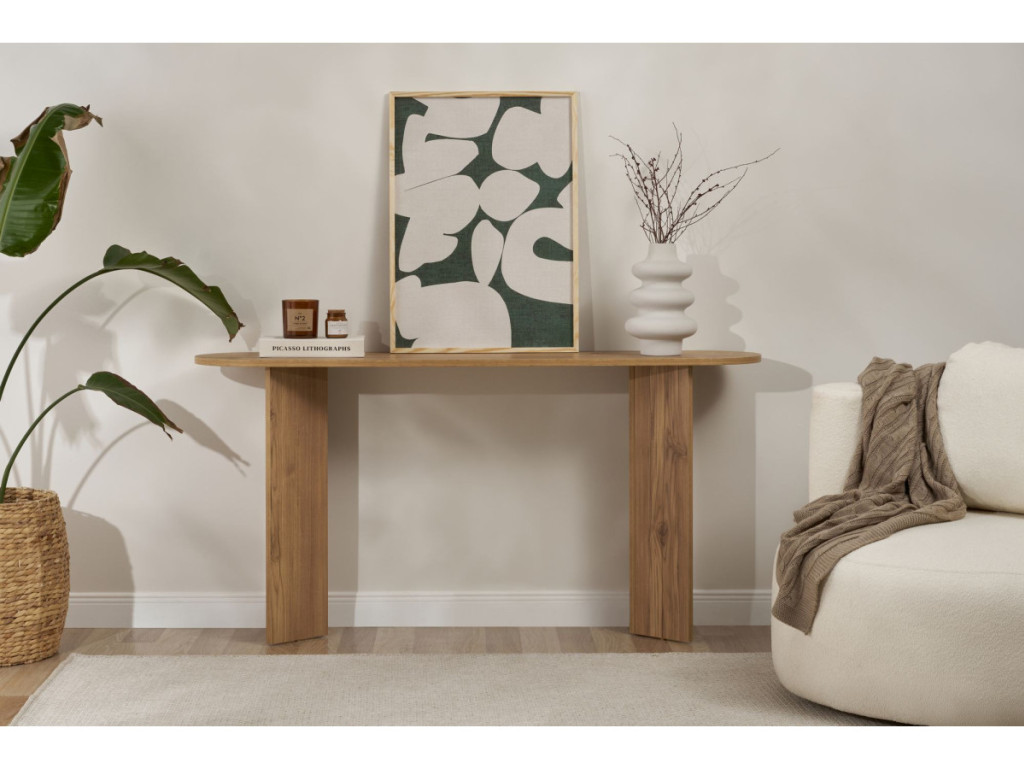
A well-proportioned sideboard adds structure to the dining room without making it feel cluttered and can also serve as a divider between two living areas. To complement this, a few decorative elements above the sideboard – such as a mirror, a picture frame or a wall display – extend the perspective and highlight its design.
Materials and storage: how to make the most of your sideboard
Choosing your sideboard is not just a matter of style. The right choice hinges on two interlinked factors: the materials and the internal organisation. Together, they determine the piece’s durability and how easy it is to organise your belongings on a day-to-day basis.

Doors, drawers or open compartments – which layout should you choose?
Depending on the layout of your space and what you wish to store in it, a sideboard offers different advantages. From crockery to everyday accessories, the size of the items you’re storing directly influences the choice between doors, drawers and open compartments.
- Solid doors: suitable for bulky or rarely used items, they also protect table linen or small electrical appliances from dust.
- Drawers: useful for organising small items and keeping everything in its place, from cutlery to stationery.
- Open shelves: ideal for displaying decorative items or objects of varying sizes, with immediate access.
- Glass-fronted doors: recommended for showcasing crockery or glassware without leaving them on open display.
In practice, a sideboard with doors and drawers is often the most versatile solution for the living room. These details matter just as much as the aesthetics: discreet hinges, smooth runners, soft-close mechanisms. For a living room sideboard used every day, they enhance the ease of use once it’s in place.
What materials make for a durable and attractive sideboard?
The materials used in a sideboard influence both its durability and its overall appearance. Walnut appeals for its depth and warm appearance, whilst light-coloured wood blends easily into a Scandinavian or more minimalist décor. Conversely, combining glass with wood or metal makes the sideboard appear lighter and is well suited to contemporary interiors.
To help you choose your sideboard with confidence, Habitat et Jardin recommends considering the materials, reparability and finishes before making a purchase. Additionally, bear in mind the furniture’s end-of-life: reuse, donation or exploring the solutions outlined here under ‘choosing living room furniture’.
Frequently Asked Questions
How do you choose a sideboard to suit the size of your living room?
To choose the right sideboard for your space, start by measuring the available wall space: the length of the sideboard should be around two-thirds of this width. The right choice depends on striking a balance between the size of the sideboard, the ceiling height and the space around it.
In a small living room, a low sideboard, 80 to 100 cm high, is often more suitable than a tall sideboard. It lightens the visual composition, allows more light through and prevents the space from feeling cramped. Finally, allow 60 to 70 cm of clearance around the sideboard to ensure it remains comfortable to use on a daily basis.
What advice is there for choosing the right sideboard to suit your interior style?
First, take a look at the room as a whole: the table, chairs, floor, lighting, but also the rhythm of the lines and materials. The difference often lies in a few design details, rather than colour alone.
A Scandinavian-style interior pairs easily with a light-wood sideboard and neutral tones. Conversely, an industrial-style décor works better with metal and untreated wood, whilst a vintage aesthetic works well with more rounded shapes and pastel shades. In the living room, the style should be consistent with the piece’s function and your storage needs.
How do you choose a sideboard whilst taking your storage needs into account?
When choosing a sideboard, start with your actual needs: crockery, table linen, cutlery or decorative items. Depending on the layout of your space, the usable volume isn’t determined solely by the width, but also by the depth, the internal height and the organisation of the compartments.
Models combining doors and open shelves offer greater flexibility, especially if the sideboard is to be used both for storage and for displaying certain items. Glass-fronted doors are ideal for displaying crockery or glassware; for a more understated look, solid or sliding doors remain a simple solution.