Your cart
There are no more items in your cart
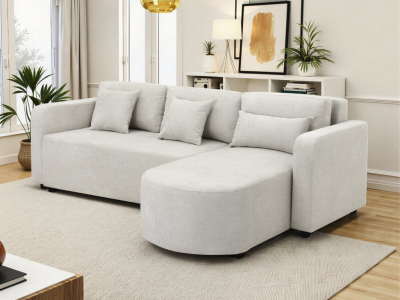
Choosing a corner sofa to suit your living room
Categories :
Interior Furniture
, News & Updates
Choosing a corner sofa that suits your home involves balancing several factors: size, orientation, comfort, and also how it will be used on a day-to-day basis. This guide helps you choose a corner sofa in a systematic way, from taking measurements to selecting the upholstery, not forgetting reversible corners, storage and the right layout for your living room.
Choosing your corner sofa based on the size of your living room
The first step is to consider the available space. Before choosing your corner sofa, measure the area where it will be placed accurately, taking into account doors, windows, sockets and walkways. Habitat et Jardin offers a comfortable corner sofa to suit every space and every layout.
Essential measurements before buying a corner sofa
Choosing the right corner sofa starts with the actual dimensions of the room and the intended location. A corner sofa is generally between 250 and 300 cm in length, and the three delivery parcels must be able to fit through doors measuring 80 to 90 cm, as well as through corridors and up and down staircases.
The difference often lies in the shape chosen. Depending on the layout of your space, a model placed in a corner frees up the centre of the living room: movement remains more fluid and the layout leaves more room for a coffee table or side table.
- Living rooms under 20 m²: a compact corner sofa measuring up to 200–220 cm is easier to fit in, paired with a short chaise longue of around 120 cm.
- Spacious living rooms: a corner sofa can define the space and create a clear division between two different areas of the living room.
- Check access: some models weigh around 87 kg in total, so it’s worth checking that they’ll fit through the entrance, up the stairs and along the corridors.
- Walls of different lengths: position the shortest side against the shortest wall to maintain a balanced shape.
Left- or right-hand corner sofa: how to decide
To decide between a left- or right-hand corner sofa, stand facing the living room with your back to the main wall. If the long side is on the left, it’s a left-hand corner sofa; if it’s on the right, you’re looking at the other configuration.
The right choice depends on the layout of the room and how you enter the space. A well-positioned corner avoids blocking the flow of traffic as soon as you enter and fits in more naturally with the arrangement of the other furniture.

Making the most of a corner in a small living room
In a more compact living room, a reversible corner sofa offers real flexibility. The chaise longue can be moved from the left to the right depending on the chosen layout, which simplifies the initial set-up and allows you to change the configuration later on. Opt for this whenever space allows: a modular sofa makes it easier to adapt to a move or a reorganisation of the room.
Once in place, a well-positioned corner sofa minimises visual clutter and keeps walkways clear. The same principle applies to layout: in a small space, a model with built-in storage maximises practicality without making the room feel cluttered.
Types of convertible sofas and corner configurations
Corner sofas now come in a wide variety of styles to suit very different needs. From fixed corner sofas designed for everyday comfort, to convertible sofas intended to provide an extra bed, and modular versions, the choice depends on your lifestyle, the number of seats you require and the layout of your living room.

Convertible or fixed corner sofa: which to choose?
A convertible corner sofa combines everyday seating with a sofa-bed function. The pull-out mechanism often comes with a storage compartment under the chaise longue, which is useful for storing bed linen. Conversely, a fixed model prioritises a simple structure and continuous use, depending on the layout of your space.
- Fixed corner sofa: seat depth of 60 to 80 cm, sturdy frame, everyday comfort, without a built-in bed.
- Convertible sofas: built-in sleeping area, up to 192 × 136 cm on some models, with storage space of up to 200 litres.
- Modular model: components that can be rearranged to changethe angle, extend the sofa or reverse the layout.
Before buying, fully extend the sleeping surface to check the actual level of support. A sleeping height of 44 cm, as on the Sidonie model, is suitable for regular occasional use. In practice, Habitat et Jardin also offers a reversible convertible corner sofa suitable for a variety of room layouts.
Reversible chaise longue and modular corner design
A reversible chaise longue allows you to adjustthe corner configuration without replacing the furniture. This setup makes it easier to fit into a new home or a refurbished living room, especially when the layout of the room means you need to change the side on which the chaise longue is positioned.
Where space allows, certain panoramic U-shaped designs are worth considering, as they add two relaxation areas to increase seating capacity. Others go a step further with a separable chaise longue, sometimes combined with a footstool, making the whole arrangement even more flexible depending on the situation.
Comfort, ergonomics and materials of a corner sofa
Once the layout has been finalised, it all comes down to how the sofa will actually be used. When choosing your corner sofa, the seat, frame and upholstery must all work in harmony.

Ergonomic criteria for a corner sofa that’s comfortable for everyday use
The comfort of a corner sofa depends first and foremost on simple, reliable guidelines. A seat depth of between 50 and 60 cm, with a seat height of between 40 and 50 cm, suits most body types and promotes a balanced posture. The Sidonie model falls within this range, with a depth of 53 cm and a height of 44 cm.
The frame then enhances this feeling of comfort. S-shaped springs combined with 30 kg/m³ foam provide firm support for everyday use, whilst a eucalyptus wood base ensures the sofa’s durability over time. The right choice comes down to striking a balance between comfort, support and durability.
| Criterion | Recommended value | Sidonie model |
| Seat depth | 50 to 60 cm | 53 cm |
| Seat height | 40 to 50 cm | 44 cm |
| Foam density | 30 to 35 kg/m³ | 30 kg/m³ |
| Base structure | Reinforced solid wood | Eucalyptus wood |
| Seating capacity | Depending on use | 4 seats (3 main seats) |
It’s still worth trying it out in-store to confirm the figures. Take the time to sit down, then lie down on the chaise longue: this will allow you to check the height, the flexibility of the backrest, the position of the armrests and the balance between relaxation and support.
Which upholstery should you choose for your corner sofa?
The upholstery affects both the care requirements and the atmosphere of your living room. A bouclé fabric creates a soft and cosy feel, full-grain leather develops a natural patina over time, whilst technical fabrics are better suited to heavy use.
- Terry cloth and textured fabrics: a cosy feel, a pronounced visual texture, a neat tufted appearance and neutral colours that are easy to incorporate into different styles.
- Full-grain leather: simpler to maintain, develops a distinctive look over the years, and adds an elegant touch to a classic or industrial-style living room, particularly when paired with curved armrests.
- Microfibre and technical fabrics: good resistance to wear and tear, water-repellent properties depending on the product, suitable for use with children, pets and high daily footfall.
A neutral shade such as grey makes it easier to coordinate with the rest of the furniture; beyond the colour, the craftsmanship deserves a close look: saddle-stitching, solid wood or metal legs, the quality of the stitching and how well the upholstery holds up over time.
Storage, built-in storage compartment and durability of the corner sofa
Beyond comfort, the value of a corner sofa is measured over time. When choosing a sofa, storage features, build quality, upholstery and ease of care are just as important as the dimensions or the shape of the corner in the living room.
Practical features and storage compartment under the corner section
Storage in a corner sofa usually consists of a storage compartment situated beneath the chaise longue. Depending on the model, its capacity can be as much as 200 litres: enough to store blankets, cushions and everyday items without needing additional furniture, depending on the layout of your space.
- Built-in side shelf: handy for keeping books, magazines and remote controls within easy reach without cluttering up the coffee table.
- Cushions included: 5 small cushions supplied with purchase, including 2 trendy designs, to adjust the comfort once you’re seated.
- Advanced features: USB sockets in the armrests, adjustable headrests and height-adjustable feet to compensate for uneven floors.
A generously sized storage compartment and a few built-in storage solutions are enough to free up space without adding extra pieces of furniture. However, assembly requires two people: the rails, legs and cushions are easier to fit if this is planned for upon delivery.
Maintenance and durability of a corner sofa over time
The lifespan and maintenance requirements of a corner sofa generally range from 5 to 20 years. Making the right choice depends on the quality of the frame, exposure to light, ambient humidity and how the upholstery is looked after: weekly vacuuming and appropriate care significantly extend its comfort and lifespan. Some models also carry the NF Environnement or European Ecolabel, which are useful indicators of manufacturing standards.
When the sofa reaches the end of its life, there are several ways to avoid waste. Repair using the ‘Bonus Réparation’ scheme (up to €65), giving it a makeover with covers or cushions, or arranging for it to be reused: it is possible to donate a sofa to a suitable organisation. In practice, this approach also helps you prepare for a future purchase with more specific criteria.
Frequently Asked Questions
How do I know if a corner sofa is suitable for my living room?
First, measure the available space accurately. You’ll need to take into account doors, windows, other furniture and walkways to ensure the corner sofa will fit in the living room without obstructing movement. For a room smaller than 20 m², a compact model measuring 200 to 220 cm is generally the best choice; in a larger space, a corner sofa can also naturally define different areas of the room.
Also bear in mind delivery. Choosing a corner sofa based solely on a photo can lead to unpleasant surprises if the packages won’t fit through the doorways: they’re often delivered in three parts, with a total weight of around 87 kg.
Fixed or convertible corner sofa: which one should you choose to suit your needs?
The difference often comes down to day-to-day use. A fixed corner sofa prioritises a wide, stable seat, with no mechanism to maintain over time.
Conversely, convertible sofas provide an extra sleeping space measuring up to 192 × 136 cm. They often feature a handy storage compartment, which comes in handy if your home doesn’t have a dedicated guest bedroom.
A reversible chaise longue or a modular design offers greater flexibility. Finally, check whether the corner is designed for the left or right-hand side, so that you can adapt the sofa to the space.
What colour and upholstery should you choose for a durable corner sofa?
For a look that stands the test of time, neutral shades remain a safe bet: grey, beige or brown suit all styles and blend easily with the rest of the living room.
When it comes to upholstery, bouclé fabric and textured fabrics create a cosy atmosphere. Microfibre is better suited to heavy use thanks to its durability and water-repellent properties, particularly if you have children or pets. A removable cover adds an extra season of use without the need for major maintenance and helps keep the sofa comfortable for longer.