Your cart
There are no more items in your cart
Fabric sofa – Description and uses
Categories :
Practical Guides
, Sofas
The history of the fabric sofa
Etymologically speaking, the word ‘sofa’ comes from the Latin ‘conopeum’, meaning ‘bed with a mosquito net’. This word then evolved over time, becoming ‘conopé’, meaning ‘curtain’, and subsequently ‘fabric sofa’. A comfortable piece of furniture in the home, it is now an integral part of the furnishings in the sitting room, living room or, occasionally, a bedroom. The fabric sofa remains a relatively recent invention: in its simplest form, it did not appear until the 17th century, during the reign of Louis XIII. At that time, it took the form of a padded wooden seat fitted with armrests. The sofa began to take on its current form during the reign of Louis XIV. It was already upholstered in leather or fabric. A more sophisticated and elegant design emerged under Louis XV: the fabric sofa featured curved lines and arched legs. Subsequent periods saw developments in styles, decoration and materials. The chaise longue, designed during the reign of Louis XVI, is in fact very different from the sofa – a padded, highly comfortable piece of furniture that first appeared in the 20th century. The chaise longue is a cross between a deckchair and a sofa. The sofa only really became a common item in the 1930s. The Art Deco style dominated, with the club sofa in patinated leather or the fabric sofa in traditional tapestry. The second half of the 20th century saw an increasing number of increasingly stylish and original designs competing for attention. Fabric sofas offered a wide variety of patterns and colours.
Choosing a fabric sofa
Leather sofa or fabric sofa?
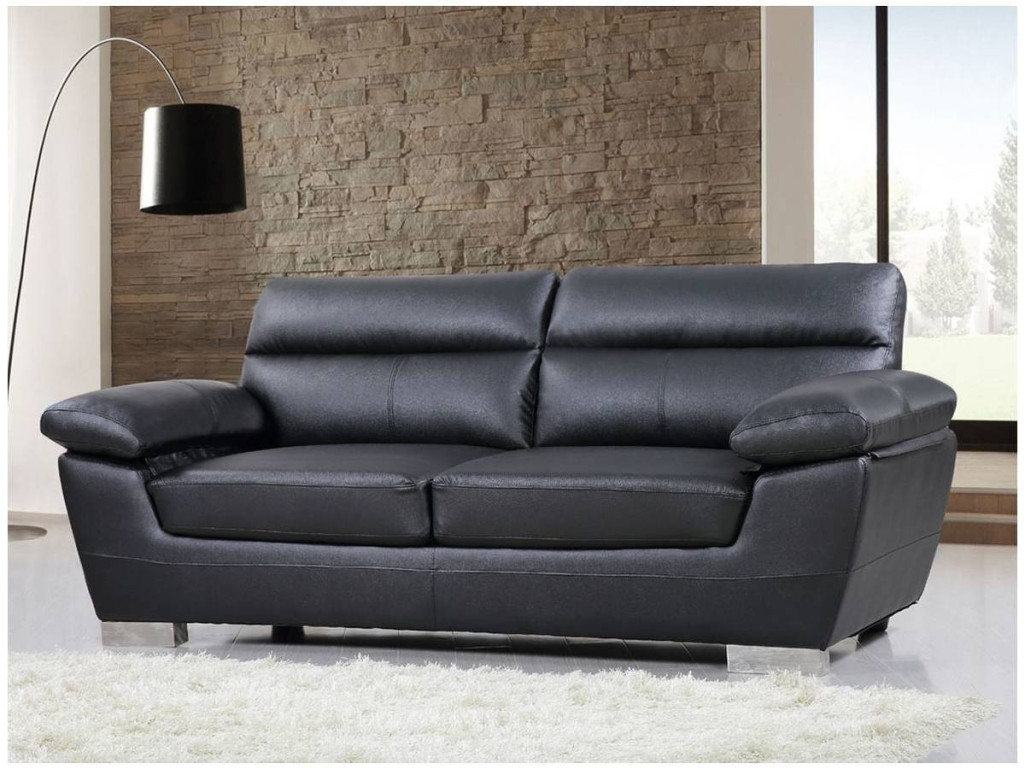
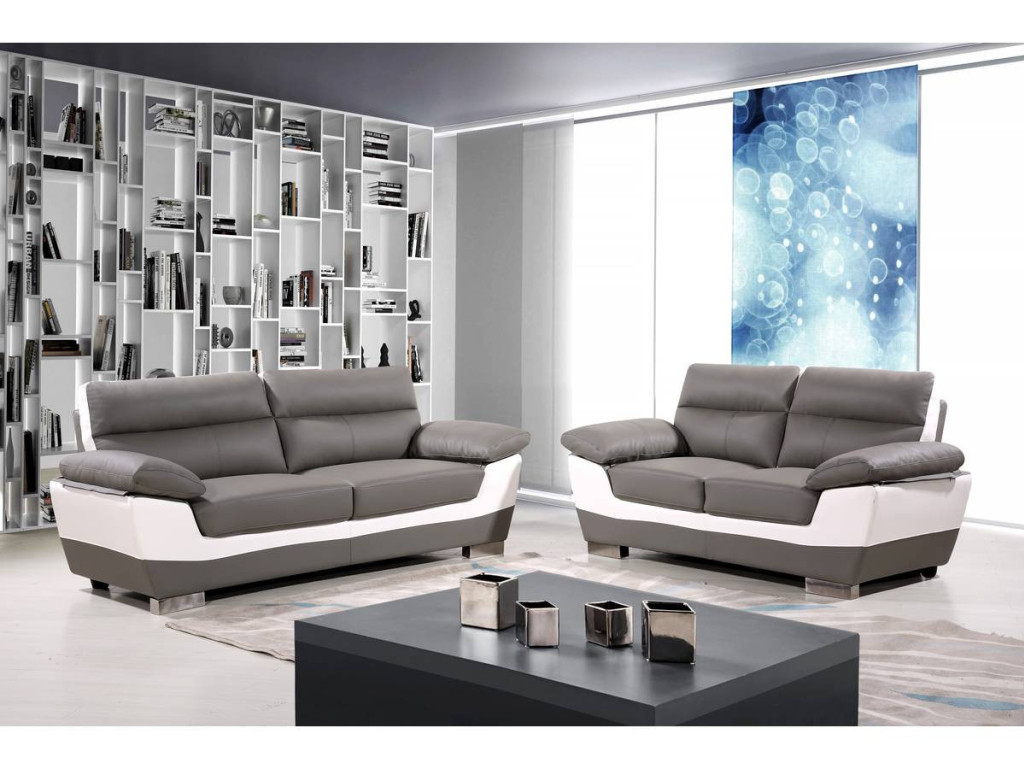
The leather sofa remains an undisputed classic. Highly durable, it represents a long-term investment. However, it is expensive, requires maintenance and is not generally recommended for families with children or pets. There are also sofas made from imitation leather or PVC. Whilst these are cheaper to buy, they may not last as long. Furthermore, odours tend to linger on them more easily. They can also cause you to sweat if you sit on them for long periods or during the summer months. Fabric sofas do not have this drawback. Fabric sofas come in a wide range of colours, allowing you to match them to the wallpaper or the colour scheme of the room in which they will be placed. Fabric is fairly easy to look after and can be either hand-washed or treated with a stain remover. A fabric sofa is less expensive to buy and looks attractive.
Selection criteria
The choice of a fabric sofa will depend on several criteria: style, location, material and comfort. A leather sofa in a traditional interior is not necessarily the best choice. Similarly, a large sofa in a cramped space is less suitable than a two-seater sofa, to which an armchair can be added. It is important to bear in mind that a fabric sofa, above all, complements an interior and is the main place to sit comfortably in a home. A sofa that sags under a person’s weight, for example, is hardly recommended. A fabric sofa that feels soft and comfortable at first touch is not necessarily a guarantee of quality. Finally, if the sofa is to be used frequently by children or pets, you might want to opt for a fabric sofa with removable covers, which is very easy to look after.
Categories of fabric sofas
Straight, fixed fabric sofa
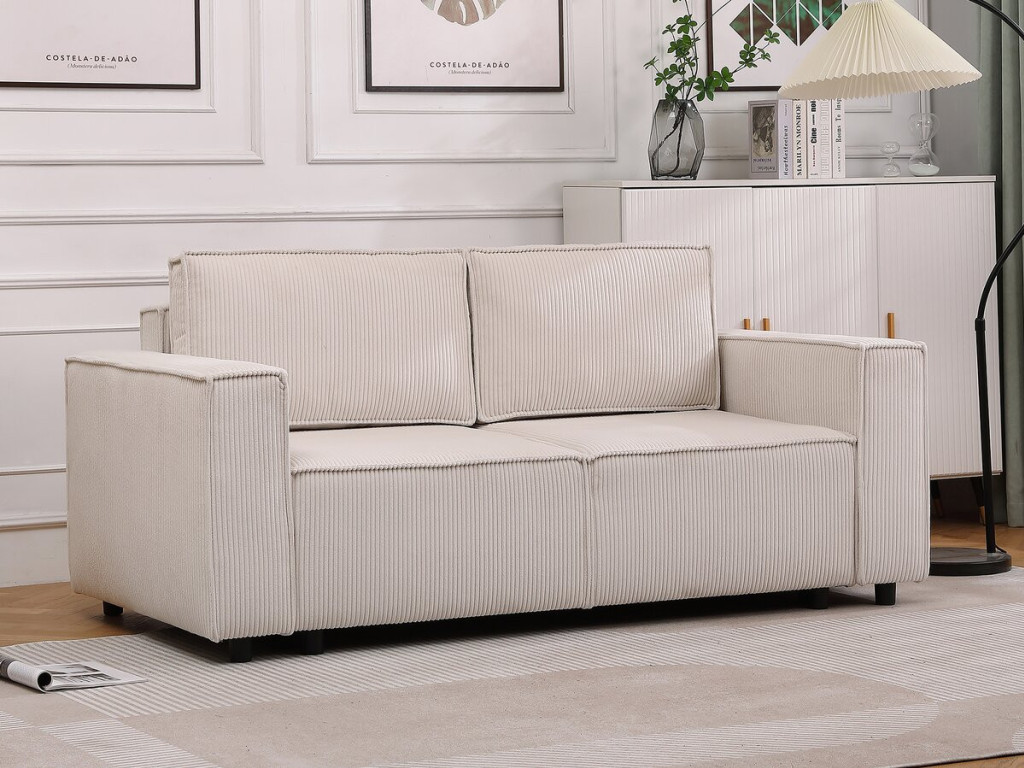
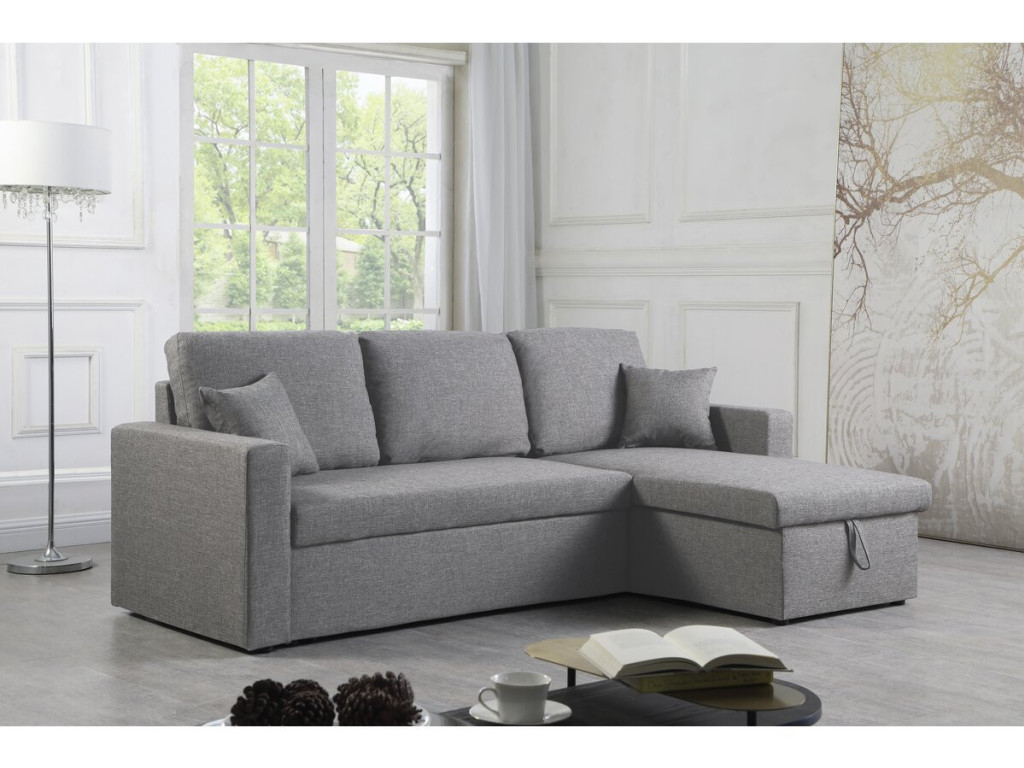
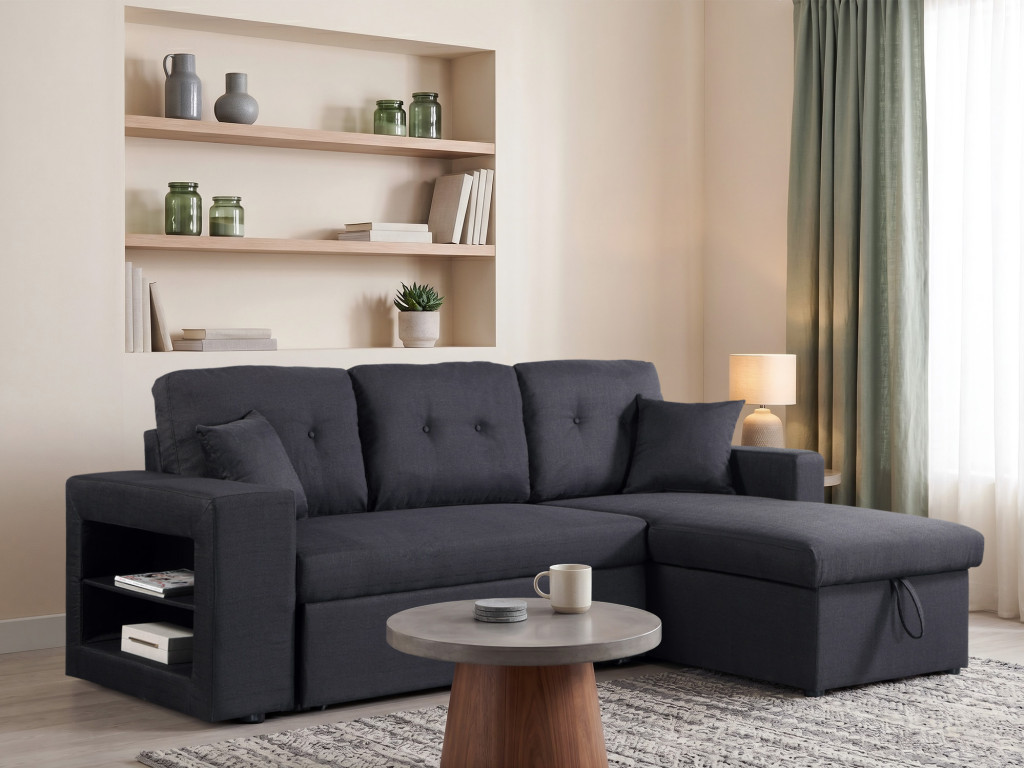
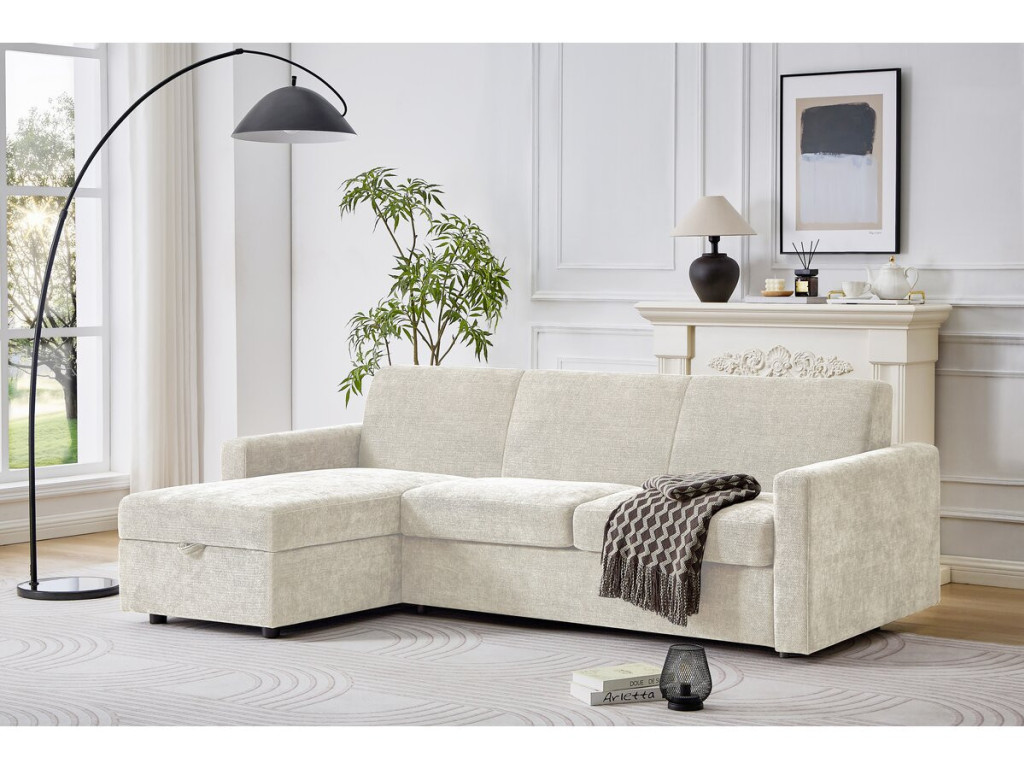
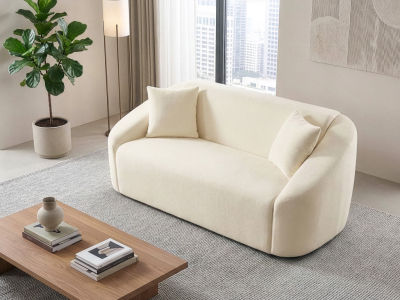
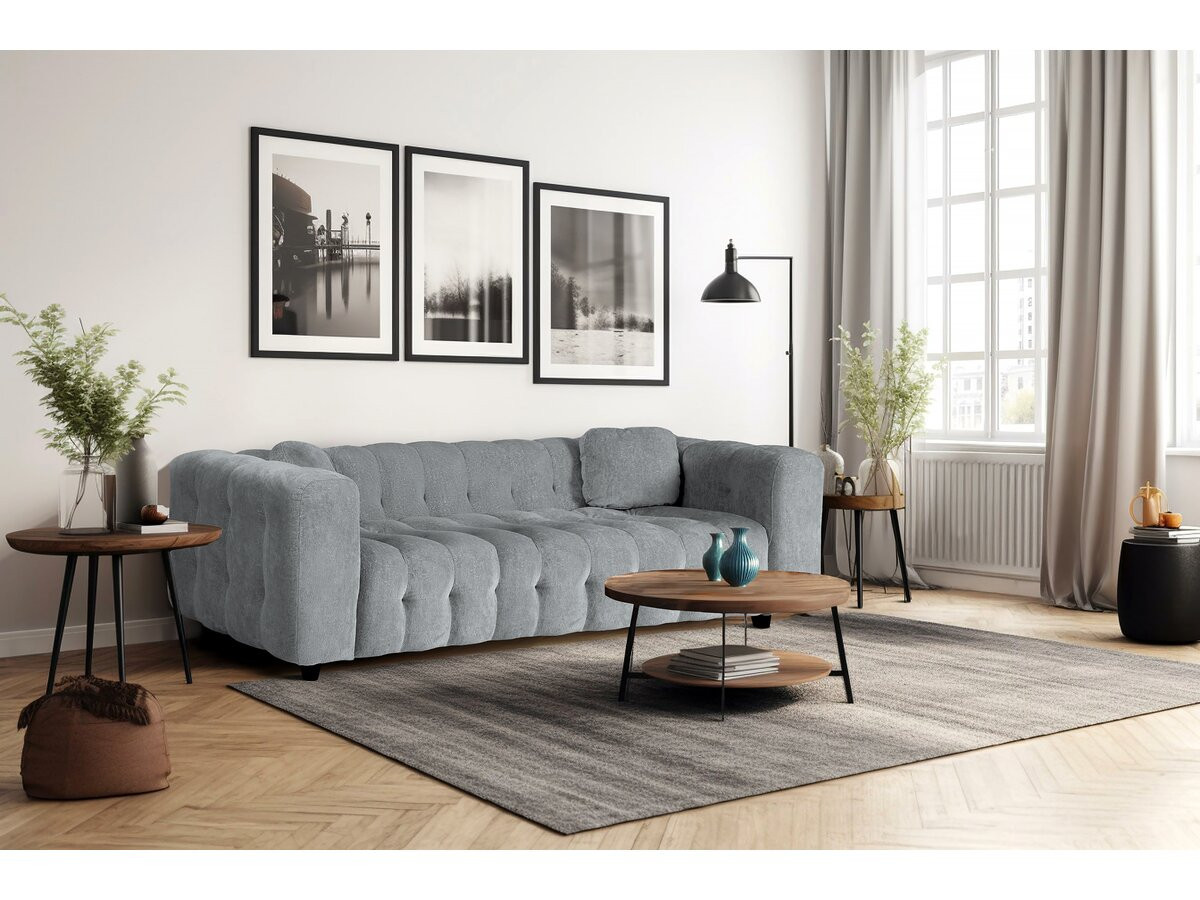
There are three main types of fabric sofa: the straight, fixed sofa, the corner sofa and the sofa bed. The straight, fixed sofa can seat two, three or even four people. It is the most classic of sofas. Prices range on average from 400 euros to 3,000 euros. The fabric corner sofa, which is particularly spacious, offers the option, amongst other things, of separating the living room from the dining room. Prices range on average from 900 to 4,000 euros.
Fabric sofa bed
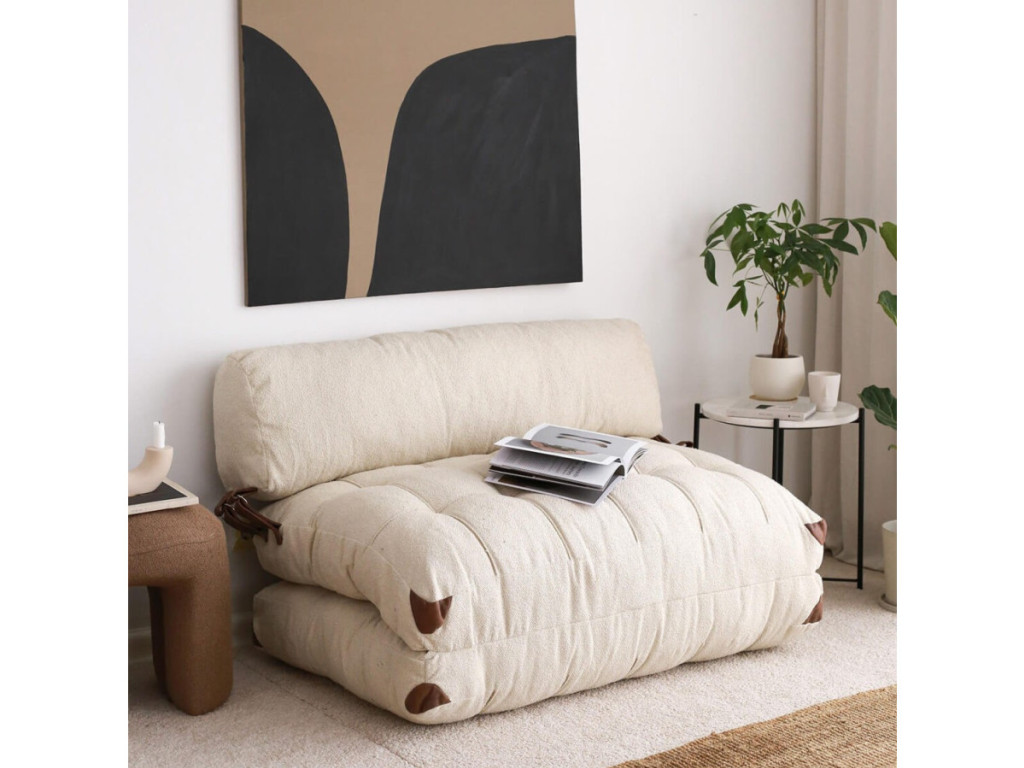
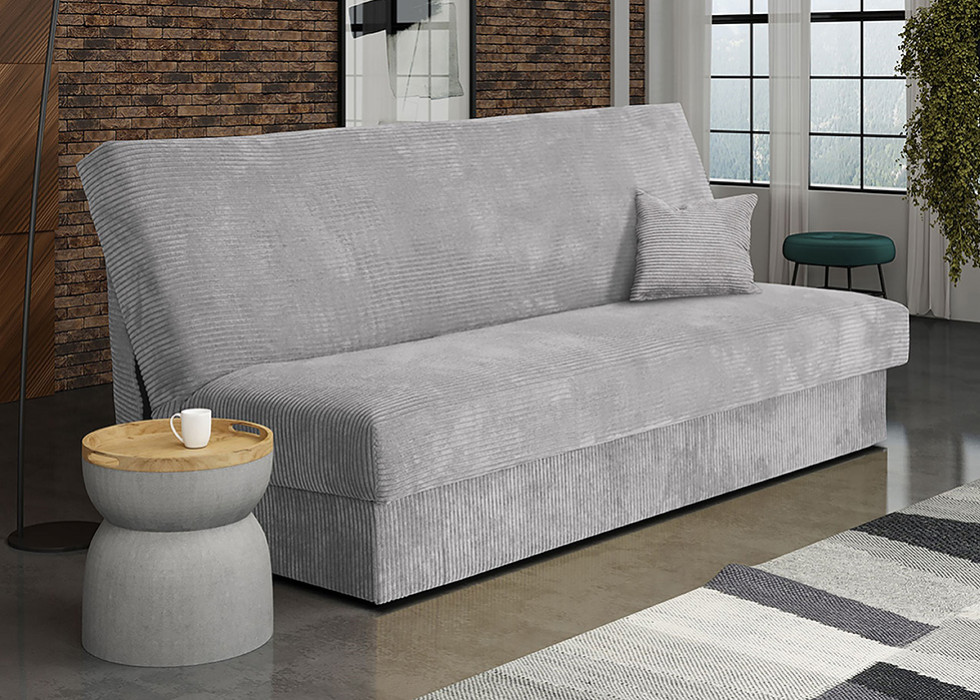
The fabric convertible sofa serves a dual purpose: as a sofa and as a bed. There are both straight and corner convertible sofas. There are also convertible futon sofas and sofa beds. The sofa bed, whilst more bulky, is a proper sofa. It has the advantage of providing a more comfortable place to sleep. A fabric sofa can be converted using various mechanisms, including the ‘clic-clac ’ and the ‘Bz’. The ‘clic-clac’ has become a favourite among young people due to its versatility. It is also very easy to clean as it comes with a removable cover.
Unfolding the fabric sofa
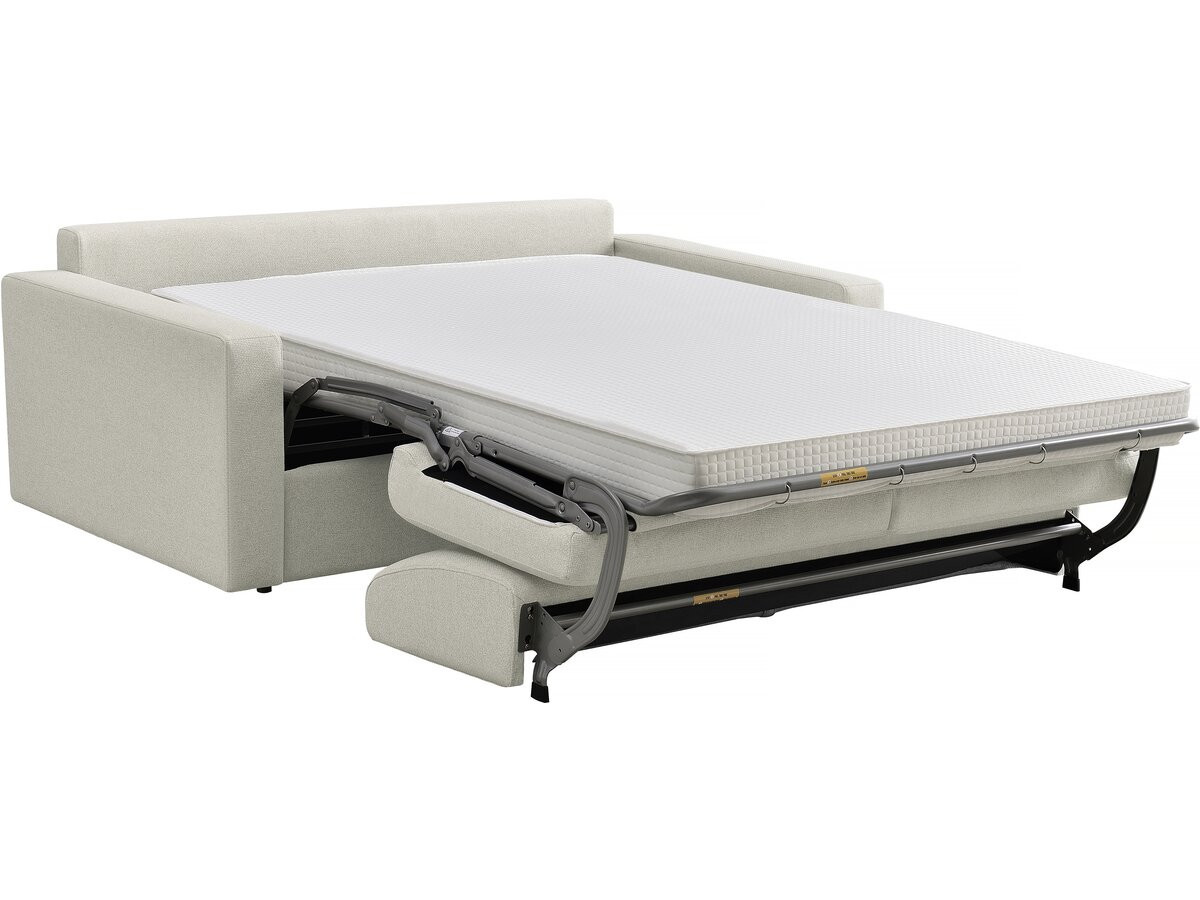
The ‘clic-clac’ system allows for very easy unfolding by tilting the backrest. The ‘BZ’ system involves an accordion-style opening mechanism. In the case of a convertible futon sofa, you unfold the wooden frame on which the mattress rests. A sofa bed unfolds in several stages: by removing the seat cushions and then unfolding the legs and the bed base. The price of a fabric sofa designed for sleeping varies greatly depending on the quality of the mattress as well as the fabric. It is possible to find a fabric click-clack or BZ sofa for 300 euros. However, the cost of a proper sofa bed is estimated at between 1,000 and 3,000 euros.
Materials and quality of fabric sofas
Materials used in classic fabric sofas
The upholstery of a fabric sofa varies in quality depending on the type of fibres used. These may be plant-based or synthetic fibres. Cotton and linen are easy-care materials that come in a wide range of colours. Linen has the advantage of being a low-allergenic material and a natural temperature regulator. Among plain colours, white, ecru, grey, red, brown and black are the most common. Light colours should be avoided in homes with children and pets. You can, however, choose a white or ecru fabric sofa. Sofa beds and BZ sofas, which come with a removable cover, are available in a wide range of colours and printed patterns: Red Kimono, Red Tchang, Beijing, Lisbon, Santiago, etc. Eco-friendly sofas are also available. The frame is made from plant-based materials such as water hyacinth. The filling is made from soya-based polyurethane foam. The fabric can be a blend of cotton and linen or 100 per cent cotton.
Materials for fabric sofa beds
In the case of a fabric sofa bed or a convertible fabric sofa, particular attention should be paid to the mattress. Indeed, it is often the case that a comfortable sofa is not always a comfortable bed, and vice versa. If the sofa is only used occasionally for sleeping, the quality of the mattress may be less of a priority, and a polyurethane foam mattress with a density of between 26 kg/m³ and 30 kg/m³ will suffice. If the sofa is used frequently or even daily, the mattress should have a density of between 30 kg/m³ and 50 kg/m³. For daily use, it is best to choose a latex mattress 15 or 16 cm thick or a mattress bearing the HR label, which stands for High Resilience. The principle behind High Resilience foam is a layer of micro-cells and air bubbles that give way under the pressure of a person’s body.
The padding
The padding in a fabric sofa is made of foam. There are three main categories of foam, classified according to their density. Density is measured in kilograms per cubic metre. The HR label guarantees the foam’s elasticity and durability, and consequently its lifespan as well as the comfort of the fabric sofa. The polyether foam in a basic fabric sofa has a density of 25 kg/m³. This upholstery foam is of average quality. Although inexpensive, it is not very durable. Polyurethane foam has a density ranging from 26 kg/m³ to 35 kg/m³. HR polyurethane foam has a density of 35 kg/m³. Poured polyurethane is used in the manufacture of high-end sofas. Polyurethane foam, combined with goose down, can also provide high-quality padding. HR foam is generally used in the manufacture of designer sofas. Memory foam has the advantage of not losing its shape over time. It is more expensive and is used less frequently in the manufacture of fabric sofas than in mattresses. Its characteristic is that it moulds to the shape of the body under the weight of the user.
Caring for and maintaining a fabric sofa
Care
Very often, simply vacuuming a fabric sofa is sufficient. A fabric sofa with removable covers, particularly sofa beds and BZ sofas, allows the cover to be machine-washed. Cotton fabric can be ironed. For other fabric sofas, care should be taken to avoid leaving permanent stains on coloured fabric. Some people choose to cover their fabric sofas not only to prevent them from getting dirty but also to preserve their colour. For a fabric sofa with a non-removable cover, it is best to check whether the upholstery allows the use of a stain remover. In all cases, you should follow the instructions on the cover’s care label. A velvet fabric sofa, on the other hand, is more difficult to look after. It is not recommended to clean it with water; instead, use a damp chamois leather. It is also advisable to use a brush dipped in a little ammonia for stubborn stains. Some fabric sofas have a stain-resistant finish. They are treated with Teflon or Scotchgard. In this case, you can simply wipe them down with a sponge.
Upholstery
Instead of buying a new fabric sofa, especially if it is of some value, it is often more cost-effective to use a professional upholsterer. It is also an environmentally friendly solution. The upholsterer will check whether the sofa is still in good condition by removing the old fabric to leave just the frame. The upholsterer will suggest a filling material suited to how you use your fabric sofa. If necessary, they can replace the springs or reupholster the armrests. They may also recommend other decorative items such as cushions, curtains or pouffes.