Your cart
There are no more items in your cart
Ultra-comfortable lounge chair – Guide and tips
Categories :
Interior furniture
, Practical Guides
, Sofas
Here you’ll find some simple guidelines to help you choose a model suited to your body shape, your everyday needs and the style of your home. To explore the full range, Habitat et Jardin offers a wide selection of comfortable living room armchairs, which you can filter by type, colour and ergonomic features.
Ergonomic criteria for choosing a comfortable armchair
The comfort of an armchair depends first and foremost on good proportions. Height, depth, the shape of the backrest and the position of the armrests all have a direct impact on the seating experience, support and comfort felt after several minutes – or even several hours – spent in a living room armchair. The right choice comes down to dimensions that suit your body shape.
Seat height and depth according to body type
When choosing an armchair, start with the seat height. Someone who is 1.65 m tall will generally be comfortable at around 43 cm, whilst for someone 1.80 m tall, a height of 49.6 cm is more suitable. Your feet should rest flat on the floor: this is the basic requirement for correct posture in everyday life. The comfortable Duchesse lounge chair, for example, has a seat height of 49 cm, a size suitable for most people of average to large build.
Seat depth deserves the same attention. Between 48 and 55 cm, it supports the thighs without creating pressure behind the knees; the Duchesse model measures 56 cm, offering more generous support for prolonged use. The difference often lies in this detail, as a seat that is too short quickly causes fatigue, whilst one that is too deep prevents the back from resting comfortably against the backrest.
The width also contributes to the comfort of an armchair. It is generally 2 to 4 cm narrower than the depth to help support the pelvis without feeling constricted.
| Body size | Recommended seat height | Recommended seat depth |
| 1.65 m | 43 cm | 42.5 – 48 cm |
| 1.70 m | 46 cm | 44–51 cm |
| 1.80 m | 49.6 cm | 46.4 – 55 cm |
The backrest and armrests for optimal support
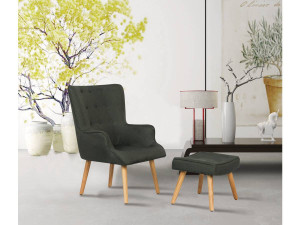
The backrest remains one of the key aspects of ergonomic chair design. An angle of between 100 and 105° promotes relaxation without disrupting the natural alignment of the back, whilst a slightly contoured shape distributes the pressure points more evenly. Depending on the layout of your space, this balance between support and flexibility will make all the difference in an ergonomic chair intended for regular use.
Its height is just as important. For someone 1.65 m tall, a height of 46.9 cm will cover the shoulder blades; if you’re looking for a headrest, aim for 82.5 cm. The Duchesse model features a 50 cm backrest, which is sufficient to support the upper back in standard use, with the option of adding a cushion to enhance the padding and cervical support.
The armrests, meanwhile, should be between 60 and 65 cm from the floor to allow the shoulders to relax. If they are too high, they cause tension; if too low, they lose their function.
Which armchair should you choose to avoid back pain?
When choosing a comfortable chair for a sensitive back, it is best to look for a stable frame and well-distributed support: the seat should prevent pressure behind the knees, the backrest should follow the natural curve of the spine, and the armrests should provide genuine relief for the arms. Conversely, a soft, flimsy model – even if it feels comfortable at first – quickly loses its effectiveness.
The upholstery plays a key role here. Suitable foam minimises sagging over time and maintains good posture, particularly with daily use.
The comfort recliner, invented in 1928, remains a worthwhile option if you alternate between reading, resting and prolonged relaxation. Its adjustable angle allows you to adapt your position to the time of day, making it the preferred choice whenever space permits.
Padding and upholstery for a truly comfortable seat
The comfort of an armchair is not just down to its style. The difference often lies in two very practical factors: the density of the padding and the material of the upholstery. These choices influence not only everyday comfort but also the support provided for your back and the durability of the furniture.
What foam density is needed for a comfortable armchair?
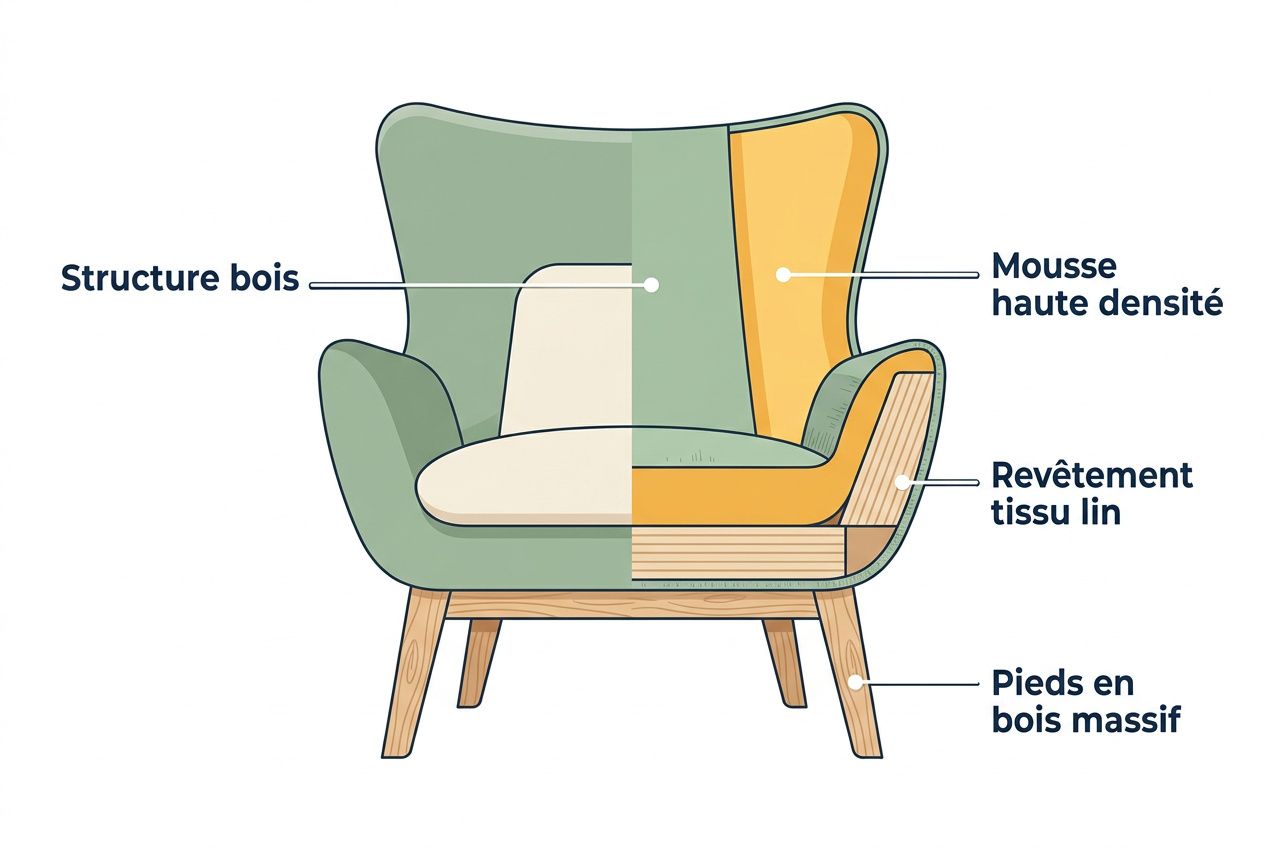
The density of the padding is measured in kg/m³. It determines the firmness, how well it holds its shape over time and the level of comfort you experience, depending on your body shape. For a comfortable living room armchair intended for everyday use, it is best to opt for foam with a density of 30 to 35 kg/m³ for the seat; for the backrest, 20 to 25 kg/m³ generally provides good support without being too stiff.
- Foam density of 30–35 kg/m³ for the seat: suitable for regular use, it minimises sagging and improves long-term support.
- Foam density of 20–25 kg/m³ for the backrest: this offers a more supple, better-balanced support for the back.
- Memory foam: this moulds gentlyto the body’sshape and reduces pressure points over time.
- Synthetic fibres: lighter and more economical, they are better suited to occasional use or as an extra seat.
The right choice comes down to striking a balance between softness and firmness. The Duchesse armchair features 24 kg/m³ foam: this padding density is suitable for those seeking a soft seat with adequate support, with the option of adding a cushion to adjust the comfort level. However, denser foam retains its shape better over several years.
Choosing the right upholstery to suit your lifestyle
Depending on the layout of your space and your lifestyle, the right material will vary between a family living room, a room that is rarely used, or a reading corner.
- Linen (285 g/m²): robust, hard-wearing and easy to look after, this flooring is well suited to frequent use.
- Microfibre: it’s stain-resistant and easy to clean, making it a practical choice if you have pets or children.
- Velour: visually warmer, it enhances the style and requires gentle care to preserve its appearance.
- Leather: durable and elegant, it requires regular care using a damp cloth, mild soap and nourishing cream.
The comfortable black Duchesse Scandinavian armchair is a perfect example of this approach, featuring a 285 g/m² linen upholstery designed to combine aesthetics, ease of care and durability.
Which style of comfortable armchair should you choose for your living room?
Choosing an armchair is about more than just comfort. The choice of an armchair depends on the seat, the style and the actual space available in the room.
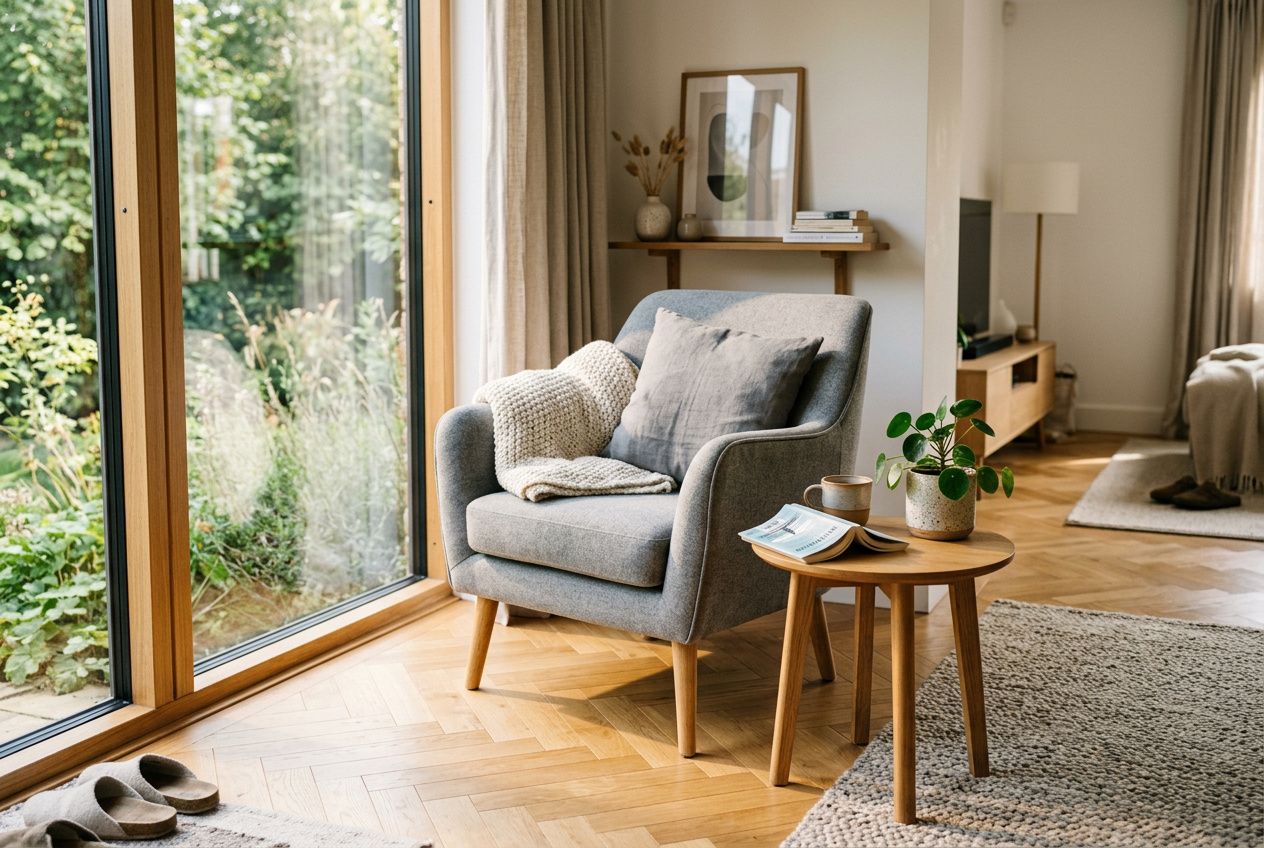
Choosing an armchair based on its intended use and the layout of the living room
When choosing an armchair, its intended use remains the primary consideration. In a living room that sees a lot of use, a generous seat, a well-supported backrest and high-density foam provide lasting comfort, whilst a reading or relaxation corner is better suited to a recliner, perhaps with a footrest to provide better support for the legs.
- Intense daily use: a wide seat, well-positioned armrests and dense foam improve both long-term durability and day-to-day comfort.
- Reading and extended relaxation: a recliner with a built-in or lift-up footrest promotes a more restful posture.
- Small living room or compact space: compact dimensions, for example 76 × 83 cm floor area, allow for easy movement without making the room feel cluttered.
For a classic living room, the club chair remains a classic choice if you’re looking for a striking presence without an overly trendy look. Its inviting backrest, enveloping armrests and deep seat create a comfortable whole, provided the proportions are suited to the size of the room.
Integrating the armchair into the space
Successfully integrating an armchair requires careful consideration of traffic flow. Allow 60 to 80 cm around the chair and at least 40 cm between it and the coffee table: the difference often comes down to just a few centimetres. The same principle applies to the seat height, which should be similar to that of the sofa to maintain a harmonious visual line.
Once in place, the armchair can also create a space of its own near a window or a bookcase, with a side table and a floor lamp. The dimensions of the Duchesse model – 76 × 83 × 100.5 cm – are well suited to this type of arrangement, including against a wall or in the corner of an average-sized room.
Frame, backrest and durability: the criteria that matter
When choosing an armchair that will remain comfortable over time, the frame deserves your full attention. It accounts for around 80 per cent of the furniture’s longevity: solid wood withstands repeated stress better and retains good stability. Oak stands out for its density, whilst teak withstands fluctuations in humidity better.
The backrest, the quality of the foam and how the legs are attached are just as important when choosing an armchair. On the Duchesse armchair, the eucalyptus wood legs are screwed on rather than glued, which enhances stability, whilst the rubberwood frame reinforces the whole structure. Weighing 18 kg, the armchair remains fairly easy to move around to suit your layout needs.
Habitat et Jardin provides a 2-year guarantee against manufacturing defects on its products.
Frequently Asked Questions
What makes a living room armchair truly comfortable?
The comfort of an armchair depends on a precise balance between the seat, the backrest, the armrests and the upholstery. Comfort is based on specific criteria: a height and depth suited to your body shape, a backrest angled between 100 and 105° to support your back, and padding that is firm enough to provide support without compromising on comfort. The material also matters in day-to-day use: a pleasant feel and easy care enhance comfort in the long term.
How do you choose a comfortable armchair to suit the size of your living room?
To choose the right armchair, start by checking the available dimensions and allow 60 to 80 cm of space around it. In a small living room, a size of 76 × 83 cm works well, whilst a more generous model is better suited to a larger space. Proportion is key: if the armchair is too bulky, it will overwhelm the room; if it’s too compact, it will lack presence. The seat height should also be similar to that of the sofa to maintain a balanced look.
What foam density should you choose for everyday use?
For everyday use, the density of the upholstery is a reliable guide: aim for 30 to 35 kg/m³ for the seat to ensure good support over time, and 20 to 25 kg/m³ for the backrest. Memory foam may be suitable if you’re looking for more enveloping support, depending on your needs and body shape. Some models, such as the Duchesse armchair, have a density of 24 kg/m³; in addition, a cushion allows you to adjust the level of comfort.