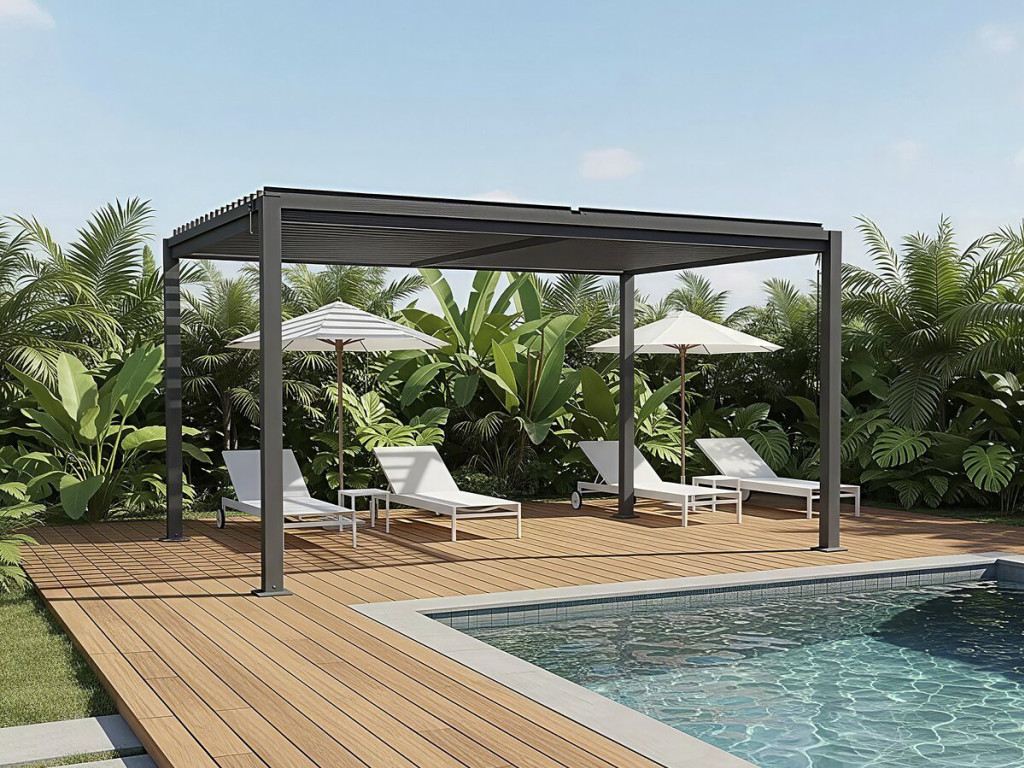
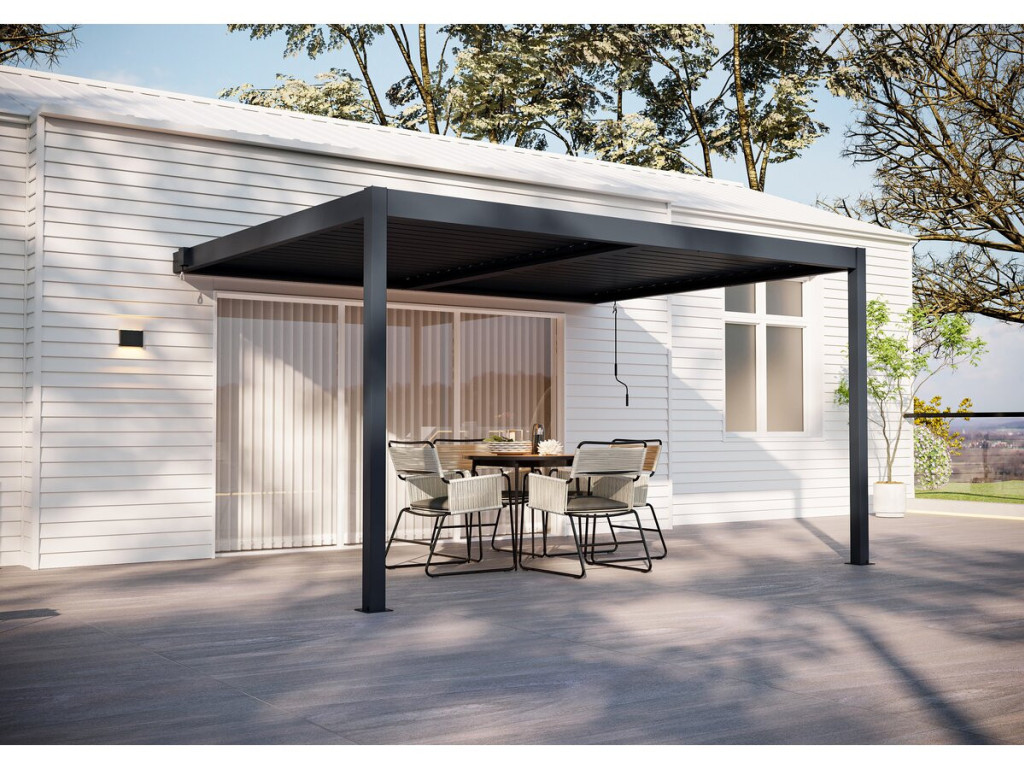
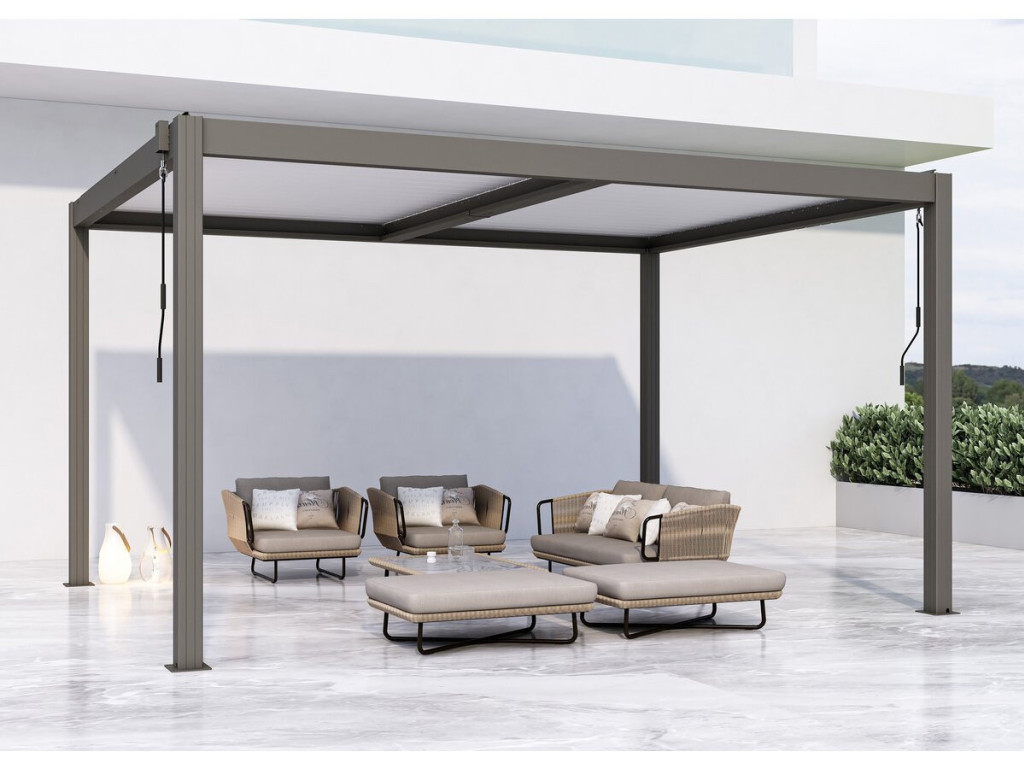
Your cart
There are no more items in your cart
Pergola: A comprehensive guide to the best materials
Categories :
Bioclimatic pergola
, Garden
, Practical Guides
Are you planning to install a pergola in your garden or on your patio? Choosing the right material is one of the most important decisions: it determines the lifespan, maintenance requirements, budget and style of your future structure. In this comprehensive guide, we’ll help you choose between wood, aluminium and steel — with a particular focus on bioclimatic pergolas, the must-have trend of recent years.
Key takeaway: aluminium is currently the best material for a bioclimatic pergola: lightweight, durable, maintenance-free and compatible with all motorised systems. However, wood still has some serious advantages for those who prefer a natural look. Read on to choose the right option for your situation.
What is a bioclimatic pergola?
Before we talk about materials, let’s recap what distinguishes a bioclimatic pergola from a traditional one.
A bioclimatic pergola is fitted with adjustable slats — usually motorised — that open and close depending on the weather. In summer, they tilt to allow ventilation. In rainy weather, they close tightly. It’s a genuine outdoor living space that can be used all year round.
- Motorised or manually operated adjustable slats
- Rainwater drainage integrated into the uprights
- Can be fitted with LED lighting, awnings and infrared heating
- Compatible with glazed side walls
The 3 main materials for a pergola
Let’s now look at the characteristics of each material, their advantages and their practical limitations.
Wood: natural and warm
Wood remains the classic choice for garden pergolas. It offers a warm, natural aesthetic that aluminium cannot truly replicate. The most commonly used woods are treated pine, oak, teak and larch.
- Main advantage: blends perfectly into a natural or rustic garden
- Good natural thermal insulation
- Purchase price often lower than aluminium
- Disadvantage: annual maintenance required (wood stain, oil, paint)
- Susceptible to fungi, insects and changes in humidity
- Shorter lifespan if poorly maintained (10–15 years vs 30+ for aluminium)
Practical tip: if you choose wood, opt for Douglas fir or class 4 autoclave-treated pine: these withstand the elements well without excessive chemical treatment.
Aluminium: the champion of bioclimatic pergolas
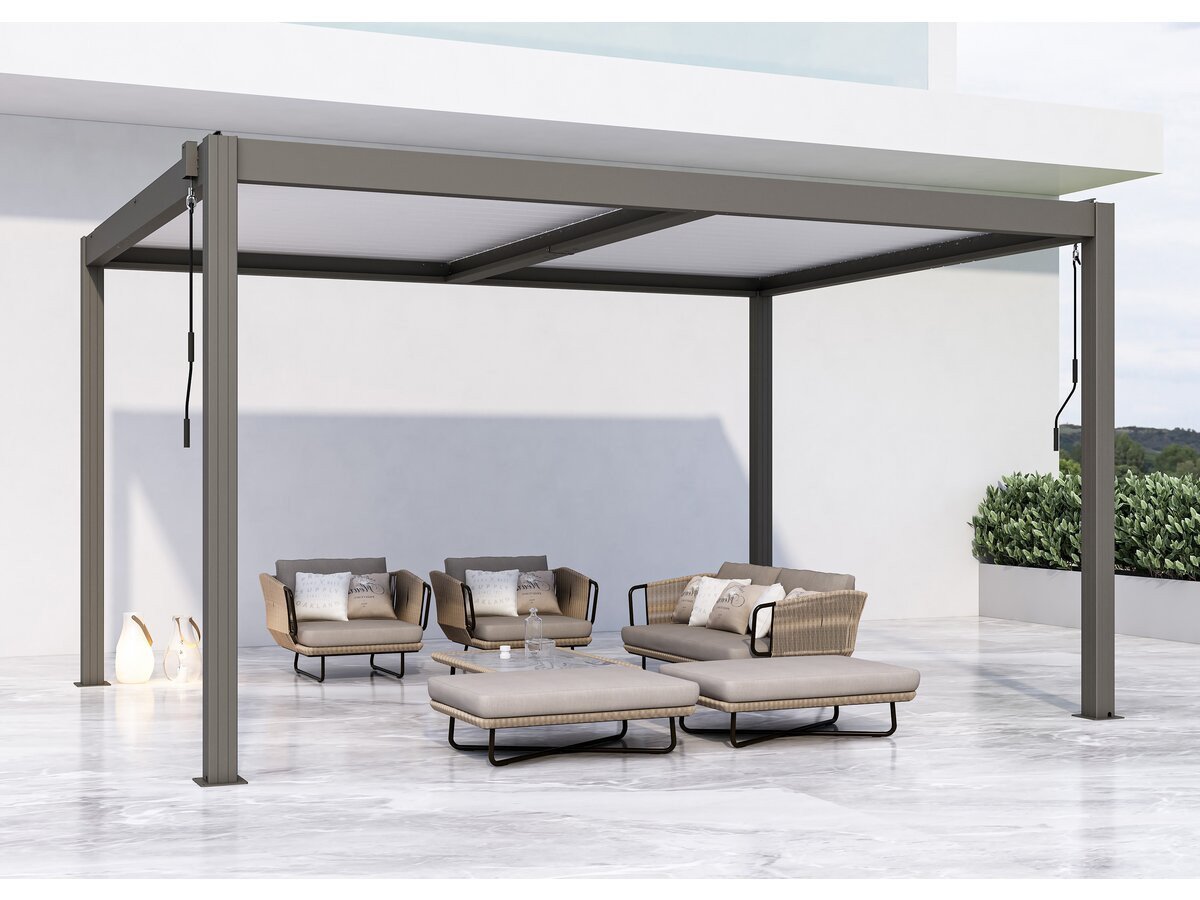
Aluminium is now the material of choice for bioclimatic aluminium pergolas. Why? Because it combines all the technical advantages without the drawbacks of wood or steel.
- Lightweight: makes installation easier and reduces the load on load-bearing walls
- Durability: 30 to 50 years without rust or rot
- Virtually no maintenance: a simple wash with water is all that’s needed
- Compatible with electric motorised systems (slats, awnings, LEDs)
- Wide choice of RAL colours: suits all architectural styles
- Ideal for a bioclimatic lean-to pergola fixed to a façade
Did you know? The best bioclimatic aluminium pergolas incorporate the gutter directly into the vertical posts — rainwater drains away invisibly, with no visible water run-off on the structure.
Steel: robust but heavy
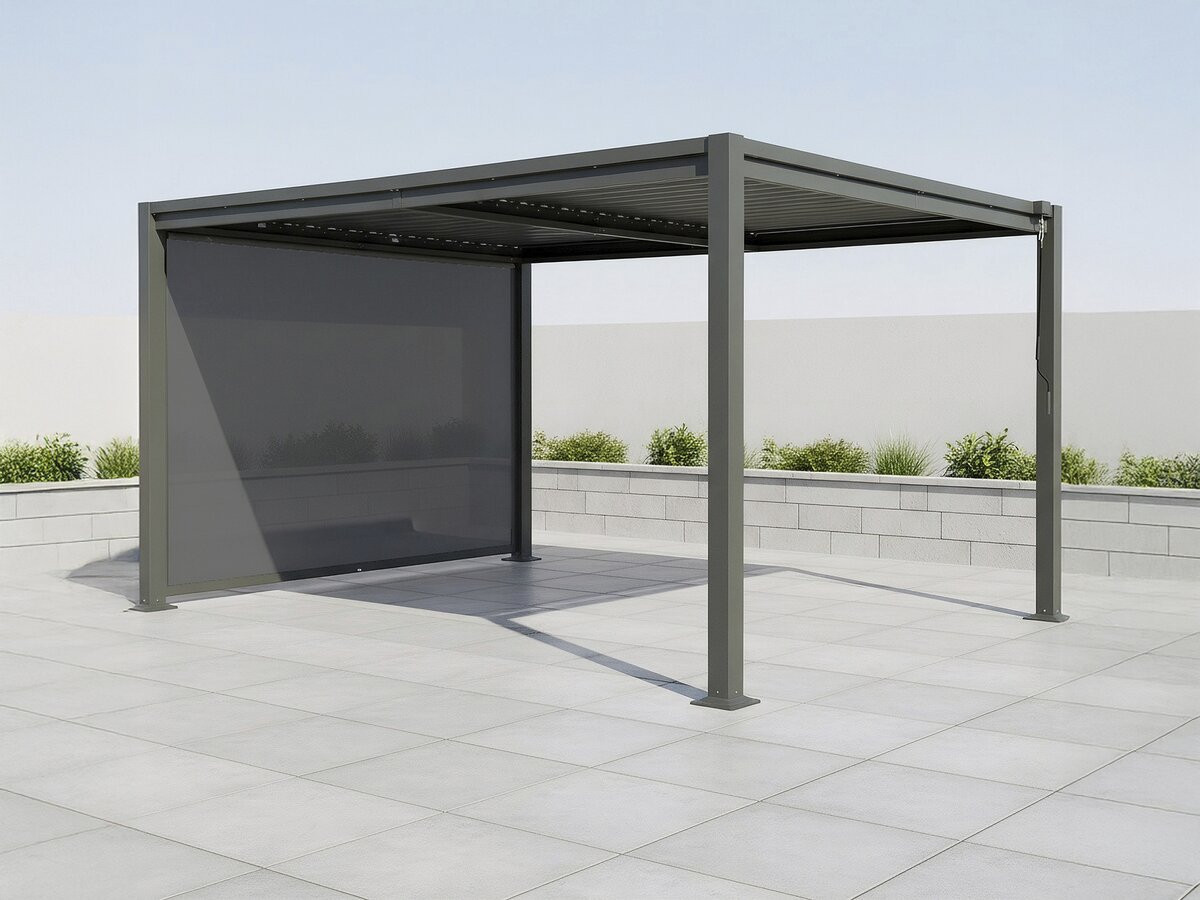
Steel is used for pergolas with large spans (over 6 metres) or industrial structures. It is highly resistant to strong winds but has significant drawbacks for standard residential use.
- Maximum structural strength for large areas
- Price varies depending on thickness and finish
- Heavy: requires solid foundations
- Susceptible to corrosion if the anti-rust treatment is applied incorrectly
- Not well suited to motorised bioclimatic pergolas (too heavy for the slats)
Comparison table: timber vs aluminium vs steel
| Criterion | Wood | Aluminium | Steel |
|---|---|---|---|
| Durability | 10–20 years (with maintenance) | 30–50 years | 20–40 years |
| Maintenance | High (wood stain, varnish) | Virtually none | Moderate (anti-rust) |
| Average price | €€ (affordable) | €€€ (premium) | €€ (variable) |
| Aesthetics | Natural, warm | Modern, elegant | Industrial, robust |
| Weight | Heavy | Very light | Very heavy |
| Thermal insulation | Natural | Low (without thermal break) | Low |
| Bioclimatic-compatible | Partially | Yes (ideal) | Rarely |
For a bioclimatic pergola, aluminium is clearly the best choice. For a traditional pergola on a tight budget, treated timber remains an excellent option.
Which is a better insulator: wood or aluminium?
This is one of the most frequently asked questions. The answer depends on how you intend to use your pergola.
Wood: the best natural insulator
Wood is naturally a good thermal insulator. Its natural fibres slow down heat transfer. For a traditional garden pergola without motorised controls, wood offers slightly better thermal comfort.
Aluminium with a thermal break (TB)
Pure aluminium is an excellent thermal conductor — which is bad news for insulation. However , reputable manufacturers now incorporate a thermal break into their profiles: a polyamide barrier that cuts off the transfer of cold or heat between the outside and the inside.
- Aluminium without a thermal break: the structure feels cold in winter
- Aluminium with thermal break: acceptable thermal performance for a pergola
- Tip: always check for a thermal break before buying
Insulation verdict: for a closed bioclimatic pergola (with glazed walls), you must choose aluminium with a thermal break. For an open pergola, wood and aluminium are equivalent in terms of comfort.
The attached bioclimatic pergola: the best choice for the home
The bioclimatic lean-to pergola is fixed to the wall of your house on one side and rests on posts on the other. This is the most popular configuration as it makes the best use of the patio space and blends naturally with the architecture of the house.
Why is the attached pergola more practical?
- Space-saving: no posts on the wall side
- A natural extension of the living room or kitchen
- Easier electrical connection (close to the house)
- Extra protection against side winds
- Adds value when selling the property
Recommended material for an attached pergola
For a bioclimatic lean-to pergola, aluminium is recommended for several reasons: its light weight reduces the load on the façade, its UV resistance prevents marks on the wall, and its colours blend easily with modern façade finishes.
Affordable bioclimatic pergola: how to find the best value for money?
The price of a bioclimatic pergola varies enormously: from €2,000 for an entry-level model to over €15,000 for a bespoke top-of-the-range model. How can you make sure you make the right choice?
The factors that determine the price
- Quality of the aluminium profiles (thickness, alloy)
- Inclusion of a thermal break
- Motorisation (manual, remote-controlled, smart home integration)
- Size and span (beyond 4 m, the price increases significantly)
- Options: integrated LED lighting, blinds, rain or wind sensors
- Installation by a professional or as a self-assembly kit
Affordable bioclimatic pergola: our recommendations
- Opt for a self-assembly kit if you’re handy: save 30–50 per cent on installation
- Compare several quotes (at least three) from local fitters
- Check the warranty: a minimum of 5 years on the structure, 2 years on the motorised system
- Be wary of very low prices: aluminium that is too thin may bend under the weight of snow
- Take advantage of tax incentives: some models qualify for 10 per cent VAT on renovation projects
Indicative budget: 3x4 m aluminium bioclimatic pergola kit: €2,500–4,500. Including professional installation: €5,000–8,000. Bespoke premium model with home automation: €10,000–20,000.
FAQ: the questions most frequently asked by our customers
Which pergola lasts the longest?
A high-quality aluminium bioclimatic pergola lasts 30 to 50 years. Treated timber lasts 15 to 20 years with proper maintenance. Stainless steel can last up to 40 years but is very expensive.
Do you need planning permission for a bioclimatic pergola?
In France, a pergola of less than 20 m² in an urban area requires only a simple prior declaration of works. For areas over 20 m², a planning permission is mandatory. Check with your local council as rules vary depending on the local authority and the Local Urban Development Plan (PLU).
Can you install a bioclimatic pergola yourself?
Yes, with a self-assembly kit and a good grounding in DIY. Allow 1 to 2 days for two people to install a standard model. The trickiest part is securing it to a load-bearing wall and connecting the electrical wiring (which should be carried out by an electrician).
Is wood or aluminium more cost-effective in the long run?
Aluminium offers better value for money in the long run, despite a higher initial outlay. Wood requires annual maintenance (wood stain: €50–150 per year) and has a shorter lifespan. Over 20 years, the total cost is often equivalent.
Conclusion: which material should you choose for your pergola?
Here’s a simple summary to help you decide:
- You want a motorised bioclimatic pergola → Aluminium, without a doubt
- You have a natural garden and a tight budget → Autoclave-treated timber
- You’re looking for a pergola attached to your house → Aluminium with thermal break
- You want an affordable bioclimatic pergola → Self-assembly aluminium kit
- If you need a large span (>5 m) → Steel or reinforced aluminium