Your cart
There are no more items in your cart
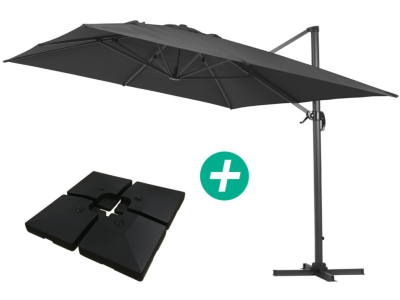
Rectangular offset parasol: the complete guide
Categories :
Garden
, Garden furniture
, Practical Guides
The arrival of warmer weather marks the long-awaited return of al fresco dining, relaxing by the pool and long afternoons spent reading on a sun lounger. However, to make the most of these moments without suffering from the sun’s rays, good-quality shade is essential. This is where the rectangular offset parasol comes into its own, establishing itself as the ultimate solution for combining style, comfort and functionality.
Unlike traditional models, this type of parasol offers unrivalled flexibility in terms of layout. Let’s explore together why this particular model has become a must-have for our outdoor spaces, and how to choose, install and maintain it properly so that it will serve you well for many summers to come.
Why choose a rectangular offset parasol?
Designing a patio or garden requires careful thought. The aim is to make the most of the space whilst ensuring maximum comfort. The rectangular offset parasol meets both these requirements perfectly.
Generous, optimised shade
The rectangular shape is not merely an aesthetic choice: it is a highly strategic one. Indeed, the vast majority of outdoor dining tables are rectangular. A rectangular parasol will therefore fit the shape of your furniture perfectly, providing an even area of shade. With a standard 3x4-metre model, you can easily provide shade for eight people, allowing all your guests to dine sheltered from the sun, without anyone at the end of the table being dazzled.
What’s more, by choosing an off-centre parasol for your garden furniture, you eliminate the main problem with traditional models: the central pole. No more poles obstructing the view, preventing you from placing a large dish in the centre of the table, or getting in the way. The space beneath the canopy is completely unobstructed.
Unbeatable versatility
The sun moves throughout the day, and your shaded area needs to be able to adapt without you having to move the entire structure. That’s the whole advantage of a tilting parasol.
Thanks to a rotation and tilt mechanism (often capable of rotating 360 degrees with a simple press of a pedal), you can follow the sun’s path from morning until evening. Whether you need to block out the low sun at the end of the day or provide vertical shade for a table at midday, this manoeuvrability is an undeniable asset for your comfort.
Key criteria for choosing the right patio parasol
A garden parasol is an investment. To ensure its longevity and effectiveness, several technical factors must be taken into account when making your purchase.
The frame: Sturdiness and aesthetics
The articulated arm and the pole bear the full weight of the canopy. It is therefore crucial to choose the right material. A quick comparison of aluminium versus wood for the frame reveals that both materials have their supporters:
- Wood: It adds a warm, natural and very elegant touch. However, it is heavier, requires regular maintenance (wood stain, varnish) and is often less manoeuvrable.
- Aluminium: It is the king of modern outdoor design. Lightweight, rust-proof and extremely robust, it is the preferred choice for large, offset models. Maintaining an anodised or powder-coated aluminium pole is child’s play: a quick wipe with a damp sponge is all it takes to restore its shine.
The canopy: Your outdoor space’s shield
This is the central element of your offset parasol. It’s not just about providing shade, but about effectively blocking harmful rays. Always check that the fabric is certified to provide protection against UVA and UVB rays (ideally UPF 50+).
To ensure the equipment lasts, you must choose the fabric weight carefully. A low weight (less than 180 g/m²) will let light through and be vulnerable to the wind. For a top-of-the-range model, aim for a weight of between 200 g/m² and 300 g/m², often made from water-repellent polyester or acrylic.
Also ensure that the fabric offers good weather resistance (particularly waterproofing for summer downpours) as well as an anti-fade treatment for outdoor textiles (often solution-dyed). This will ensure that your beautiful anthracite or ecru awning fabric does not fade to a dull grey after a month of exposure to the midday sun.
Ease of opening
Unrolling a canvas measuring several square metres shouldn’t be a test of strength. Always opt for a model fitted with a non-reverse crank opening system. This mechanism amplifies the force applied and prevents the crank from suddenly turning in the opposite direction if you let go of it, thereby preventing accidents and ensuring smooth operation.
Installation and safety: Securing your parasol with a base
A rectangular offset parasol, due to its large span and off-centre pole, is highly susceptible to wind. Installing and securing the base are therefore crucial steps that must not be overlooked.
The art of ballasting
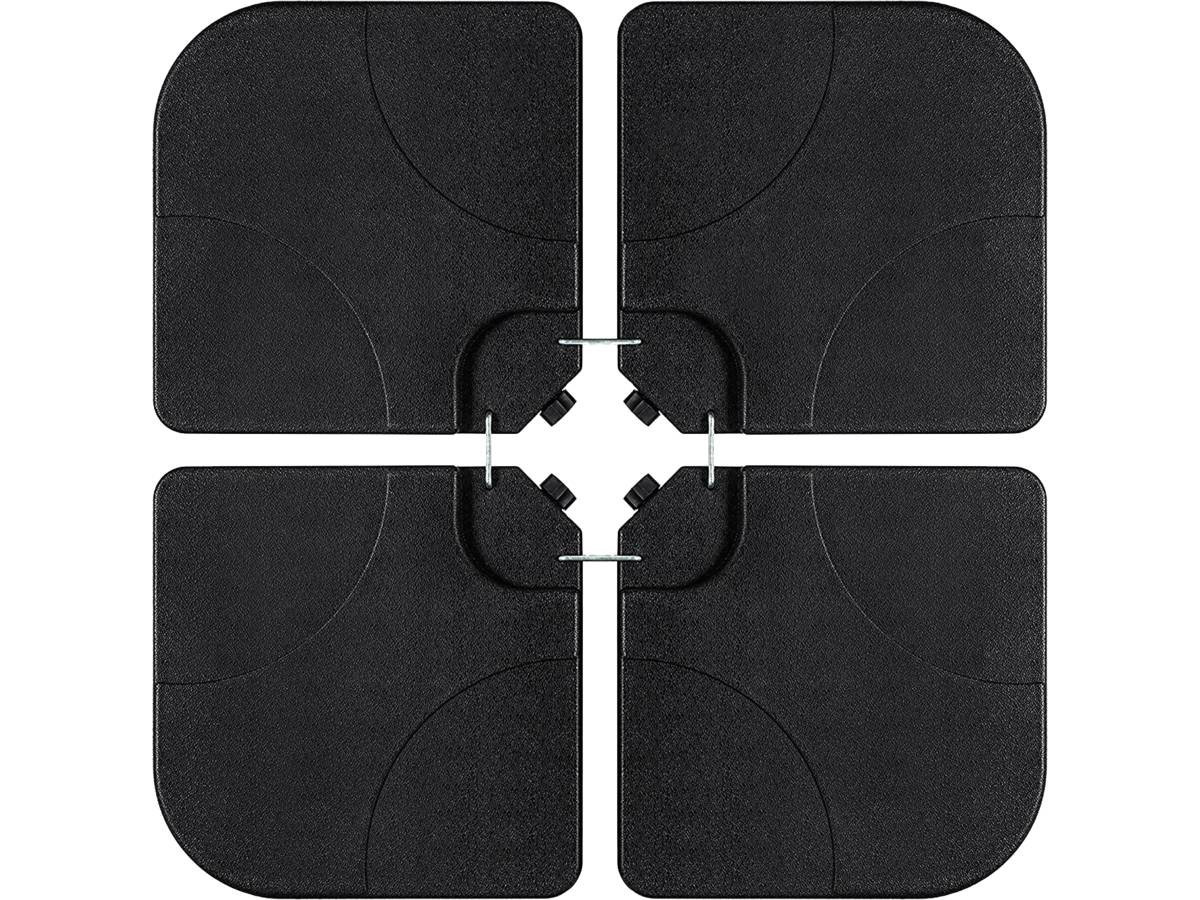
If you buy a parasol with a cross-shaped base (the market standard), this will never be sufficient on its own. You must ensure the cross-shaped base is weighted effectively to prevent the whole structure from tipping over at the slightest gust of wind.
For a 3x4m parasol, it is recommended to use a weight of at least 80 to 100 kg. You generally have a choice between two main options:
- Concrete slabs or slabs to be filled with water (and sand): Slabs designed to be filled are very practical as they are light to carry when purchased. To maximise their weight, fill them with wet fine sand rather than water alone, as sand is denser. Concrete or granite slabs, on the other hand, are heavier and more aesthetically pleasing, but require considerable strength to install.
Permanent fixing to the ground
If you’re certain of the location of your shaded area and want to get rid of the visual clutter caused by ballast slabs, there is an alternative. It’s perfectly possible to fix a stand to a wooden decking.
To do this, forget about the metal cross-brace. Use a universal fixing plate made of galvanised steel. You’ll need to screw this plate in place using lag screws – not simply into the decking boards (which would be torn loose by the wind), but directly into the joists or the supporting structure underneath. This guarantees perfect stability, optimal space-saving and a very clean, minimalist look.
Maintenance, repairs and winter storage: Making your investment last
Even the best equipment is subject to wear and tear over time. A few simple maintenance steps will extend the life of your parasol by several years.
Cleaning and maintenance of the canopy
During the summer, regularly dust the canopy dry with a soft brush. If there are any stains (bird droppings, pine sap), use lukewarm water and mild soap. You must avoid harsh detergents at all costs, as these will damage the fabric’s waterproofing and UV protection.
Even with proper care, after a few years the canopy may tear in a storm or lose its lustre. Don’t throw the frame away! It’s very cost-effective to learn how to replace a parasol canopy. Generally speaking, all you need to do is:
- Fold the parasol away and remove the top cap (the ball at the top of the pole).
- Unscrew or unclip the sleeves at the ends of the ribs.
- Slide the old canopy off.
- Fit the new replacement canopy (make sure to check the dimensions and the number of ribs before buying).
- Refit the top cap and insert the ribs into the new slots.
Winter storage: An essential step
As the end of summer approaches and temperatures drop, it’s time to put your equipment away. Winterising and off-season storage are essential to prevent the growth of mould or rust on untreated metal parts.
- Complete drying: Never close or store a damp parasol. Wait for a fine, sunny day to let it dry out completely.
- Protection: Invest in a protective cover with a zip, which is waterproof and breathable (to prevent condensation). Fitted with a support pole, it slips on easily, even over a tall pole.
- Storage: If possible, store the dismantled frame in a dry garage, garden shed or basement. If you have to leave it outside, ensure the cover is securely fastened and that the base is secured against strong winter winds.
Conclusion
The rectangular offset parasol is much more than just a simple shade accessory: it is the true cornerstone of a successful outdoor space. By removing the constraints of a central pole and providing coverage perfectly suited to dining tables or large garden furniture sets, it allows you to redefine your outdoor living space.
By paying attention to the sturdiness of the materials, the density of the fabric for optimal UV protection, and by ensuring it is securely anchored to the ground, you’ll be making a long-lasting investment. Take the time to choose it carefully and look after it properly: your parasol will then remain, year after year, your trusted companion on your finest summer days.