Your cart
There are no more items in your cart

Which light fitting should you choose for your living room? Lighting guide
Categories :
Furniture trends
, Trends & Inspiration
Which main light fitting should you choose for your living room?
Of the various types of ceiling-mounted light fittings, three generally provide the main lighting: ceiling lights, pendant lights and chandeliers. Making the right choice depends on two factors that are easy to determine: the ceiling height and the room’s floor area. There is also a technical consideration: the availability of an electrical point on the ceiling.
Ceiling-mounted light or pendant light, depending on the height
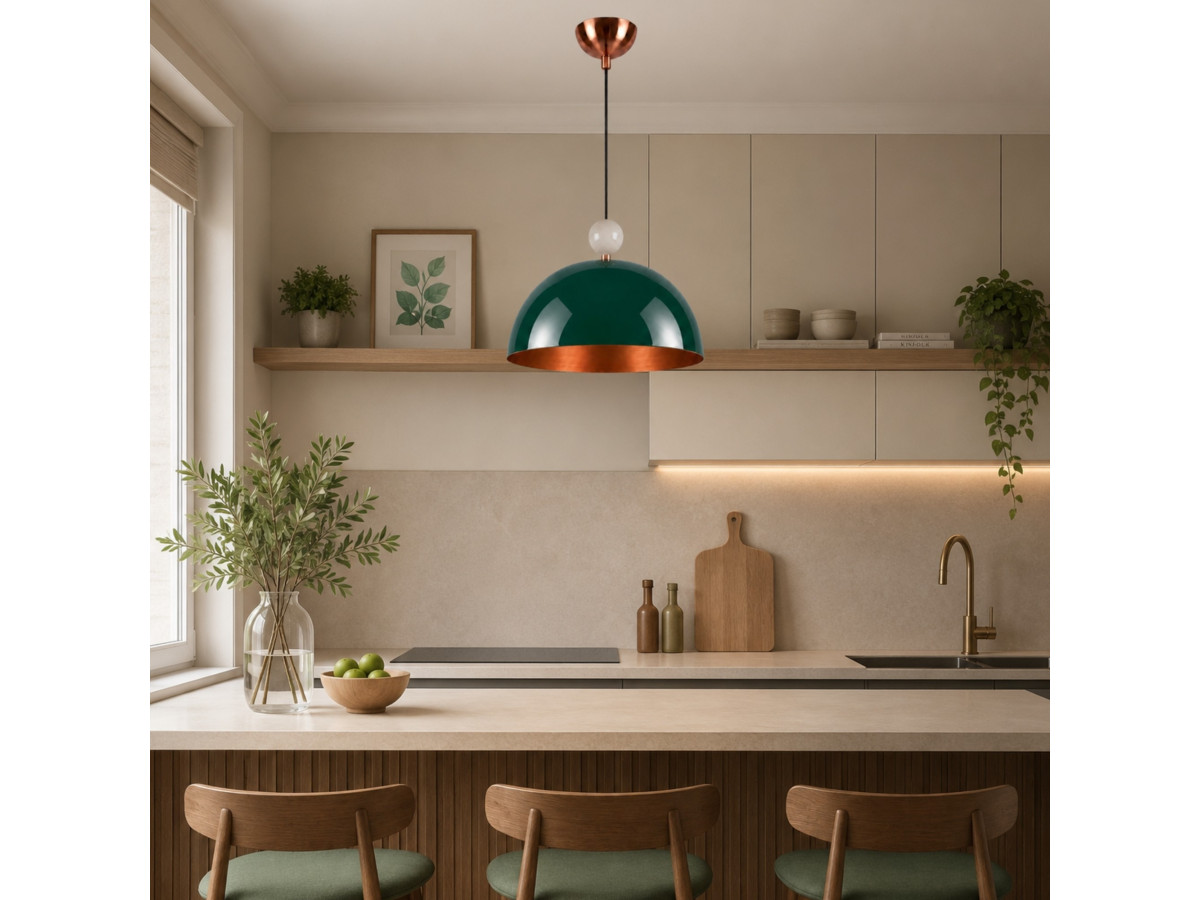
A ceiling-mounted light is fixed directly to the ceiling, whilst a pendant light hangs down from a cable, chain or rod. Under a ceiling height of less than 2.40 to 2.50 m, a designer ceiling light or a short pendant light avoids an awkward drop. Between 2.40 and 2.60 m, a pendant light with an adjustable cable remains a viable option.
At greater heights, the options widen. Between approximately 2.60 and 3 m, a pendant light is suitable provided it does not obstruct movement. Above 3 m, a larger pendant light or chandelier can make use of the available space. These thresholds are for guidance only and are not regulatory requirements.
Chandeliers and pendant lights according to the size of the living room
A chandelier combines several light sources and is particularly suitable for a high-ceilinged, spacious living room. In a small room, however, a large model may appear out of proportion. Three guidelines – which are not standards – help with sizing and positioning:
- Approximate diameter: add the length and width of the living room in metres, then multiply by 8 to obtain the figure in centimetres. For a room measuring 4 m by 5 m, the calculation gives 72 cm.
- Clearance height: under a ceiling of around 2.5 m, the bottom of the pendant light should be between 210 and 220 cm from the floor.
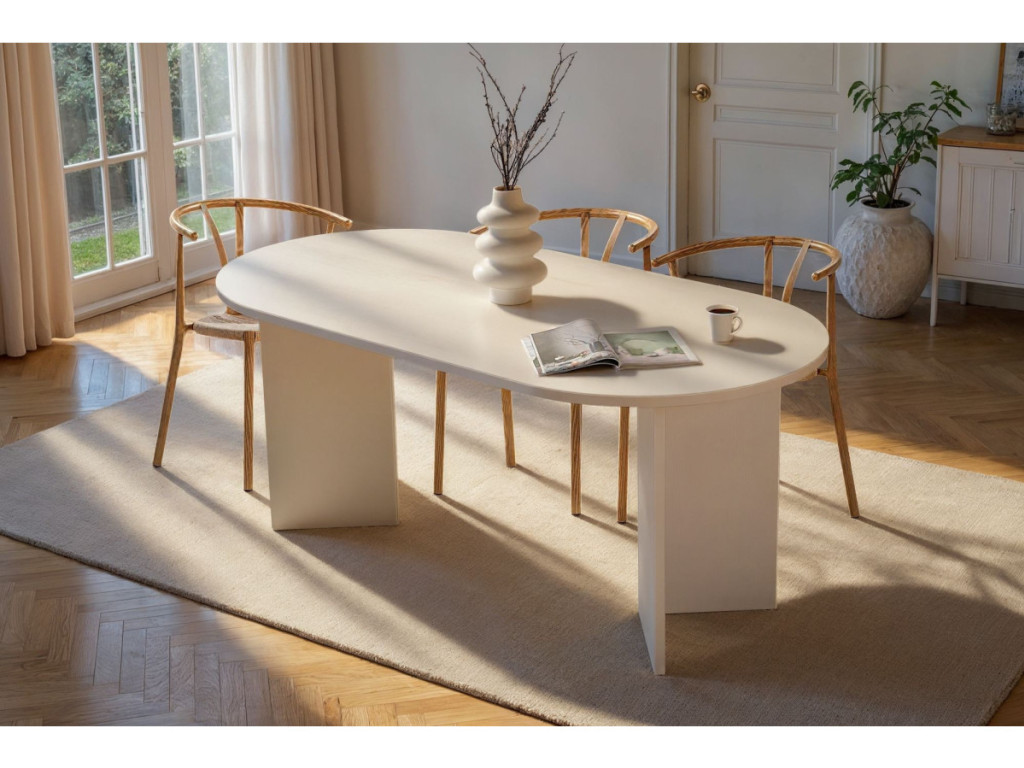
- Above a table: the pendant light should be positioned approximately 70 to 80 cm from the tabletop.
In the living room, the chandelier can be centred over the conversation area rather than the geometric centre of the room. However, the existing light source does not always fall in this spot.
Check the electrical connection and controls
A fixed light fitting requires a power supply at the ceiling and a switch to turn it on. For new or fully refurbished installations concerned, the NF C 15-100 standard, published in August 2024, specifies, in particular, a central lighting point in the living room fitted with a DCL (luminaire connection device).
According to CONSUEL, this revision is not retroactive: the new standard applies from 1 September 2025, based on the project’s reference date. Any existing connection point, with exposed wiring or without a DCL, must therefore be identified before any connection is made. Any modification to the circuit requires an inspection and, if necessary, the intervention of an electrician, which is generally required when fitting a chandelier.
If you are a tenant, ANIL points out that you need the landlord’s written consent to alter the property or its fixtures. A simple refurbishment, however, does not require this.
How many lumens should you allow for your living room?
Once you’ve chosen the main light fitting, you need to determine the right level of brightness. This involves three units of measurement that are often confused on light bulb packaging, followed by numerical guidelines based on the room’s surface area.
Lumens, lux and watts
The lumen (lm) measures the luminous flux emitted by a light source. The lux (lx) measures the light actually received on a surface. The watt (W), on the other hand, indicates the electrical power consumed, not the amount of light produced.
To compare the light output of two LEDs, ADEME therefore recommends looking at the lumens. In addition, the luminous efficacy, expressed in lm/W, relates this flux to the electrical consumption: the higher it is, the more light the bulb produces per watt.
Guidelines based on room size and usage
For general lighting in a living room, a level of around 100 to 200 lux is a practical guideline, though this is not mandatory for private homes. In terms of luminous flux, practical guides suggest around 100 to 300 lm/m², depending on the intended use.
In practical terms, a ceiling light designed for general lighting typically provides between 1,500 and 3,000 lm, depending on the area. The result also depends on the distribution of the light sources and the reflection off the walls, which alter the perceived light.
Useful information about an LED bulb
With LED lighting, energy consumption drops for the same luminous flux: a 5 W LED providing 806 lm gives off as much light as an old 60 W incandescent bulb.
According to ADEME, the current energy label ranges from A to G and indicates energy consumption calculated over 1,000 hours. It replaces the old scale from A++ to E: a current class cannot therefore be directly compared with a class on the old label.
Which light colour should you choose for the living room?
Even with the same amount of light, two bulbs can create very different atmospheres. The difference often lies in the colour temperature, followed by how faithfully the light renders the colours of the furniture.
Colour temperature according to the atmosphere
Colour temperature is measured in kelvins (K). According to ADEME, the lower the temperature, the warmer the light appears. Here are the key figures to bear in mind for a living room:
- 2,700 to 3,000 K: warm white, commonly recommended for the main lighting, which provides a cosy glow.
- Above 4,000 K: a cooler light, generally reserved for functional purposes.
- Around 4,500 K: suitable for activities requiring concentration.
It’s best to avoid combining a 5,000 K light source with a 2,700 K one in the same room: this mix detracts from the coherence of the ambience. A consistent, warm light from the main sources keeps the overall effect harmonious.
CRI and colour rendering of furnishings
The Colour Rendering Index (CRI) assesses colour accuracy on a scale of 0 to 100. In a living room, a CRI of at least 80 is recommended to ensure that the fabric of a sofa or the wood of a coffee table retains its true colour.
The AFNOR NF EN 12464-1 standard, published in August 2021, deals in particular with illuminance, glare and colour rendering. It is intended for indoor workplaces: its requirements do not apply to a private living room.
Adjusting light intensity
A dimmer switch allows you to lower the light level for a quiet moment or increase it when you have guests. For this to work, the LED must be compatible with both the light fitting and the dimmer switch: check for this specification before purchasing.
Conversely, a smart bulb may offer dimming and lighting scenes depending on the model. This then depends on compatibility with its app or ecosystem.
How should you arrange the lighting in the living room?
A single light source cannot cater for all the different uses of a living room. Your living room lighting will benefit from a combination of several light sources, positioned to suit the furniture and coordinated with the décor.
General lighting and activity zones
A living room can combine general lighting for moving around, targeted functional lighting and decorative lighting. The French Lighting Association advises adapting the lighting to specific tasks whilst ensuring safe movement and energy efficiency. The placement of light sources therefore depends on the furniture:
- Sofa and reading armchair: their position dictates where to place the accent lights.
- Television and table: these determine which areas need to be lit separately.
- Ceiling lights or pendant lights: these provide general lighting for the room.
- Indirect lighting: this utilises the reflection from a sufficiently reflective wall or ceiling, where a directed light source illuminates an area directly.
Depending on the layout of your space, distributing the light sources helps to minimise both shadows and areas that are too bright. Floor lamps and table lamps contribute directly to this.
Floor lamps and table lamps according to their use
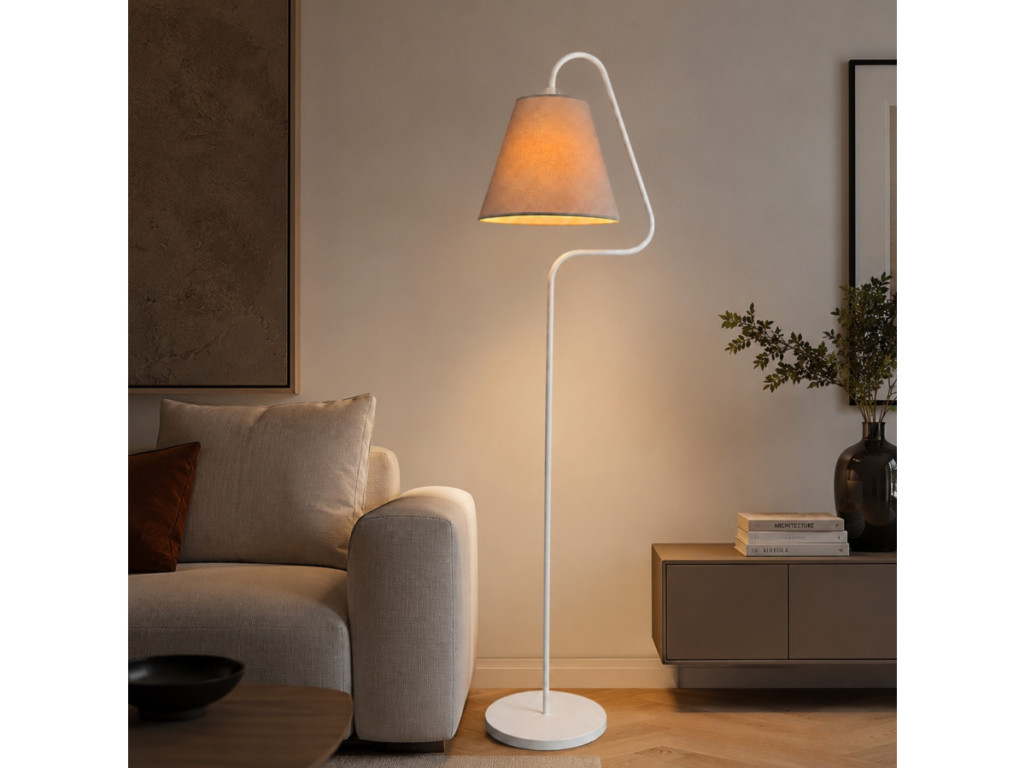
Next to an armchair, an adjustable reading lamp provides focused light for reading, for which around 300 lux is a good guideline. It is not sufficient to light the whole room. Near the sofa, a floor lamp measuring around 1.50 to 1.80 m, depending on the model, complements the main lighting, particularly if there is no ceiling socket.
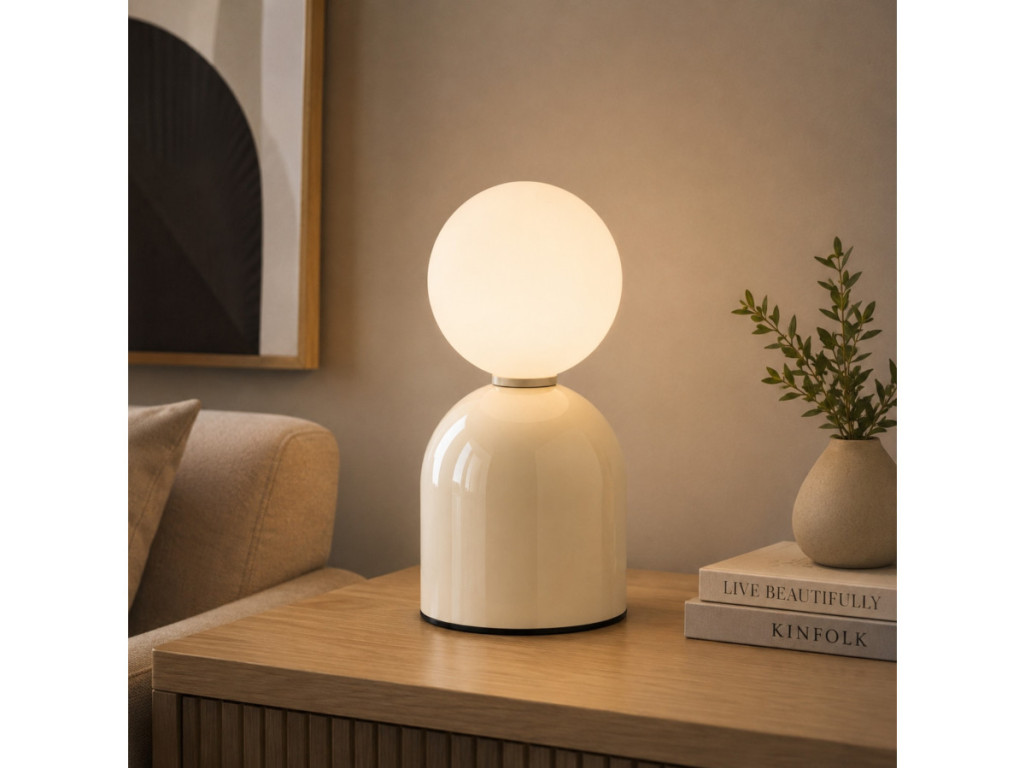
In addition, table lamps placed on an end table or a sideboard provide localised lighting of a few hundred lumens. Near the television, a soft accent light can reduce the contrast with the screen.
Matching the lighting to the décor
Wall lights provide diffused or indirect light. Adjustable spotlights, on the other hand, are better suited to highlighting a painting or storage units. A wired wall light, however, requires an electrical supply in the wall at the chosen location.
Without any building work, an LED strip can indirectly light a recess or a piece of furniture, using a diffuser to conceal the individual light points. A cordless table lamp, on the other hand, can be moved from one corner of the living room to another to create atmosphere wherever it’s needed.
Finally, each light source can echo the finishes of your living room furniture: wood and fabric for a natural feel, or black or chrome-plated metal for a sleek, minimalist style. Habitatetjardin brings together floor lamps, table lamps, pendant lights, wall lights and decorative lighting features in its catalogue of designer interior lighting, allowing you to match the lighting to the style of the room.
Frequently Asked Questions
Is a single ceiling light enough to light a living room?
A single ceiling light limits your ability to light different areas separately and vary the atmosphere. Light sources of the same intensity, the same colour temperature and all directed in the same direction also result in lighting that is too uniform. Varying their direction and intensity creates contrasts, without excessive glare or gaps that leave certain activities poorly lit.
Can recessed spotlights serve as the main lighting in a living room?
Yes: several recessed spotlights can provide the main lighting, just as a ceiling light or a pendant light would. As they are adjustable, they can also direct light towards storage units, a painting or decorative objects.
What precautions should you take when placing a floor lamp in the living room?
Keep the floor lamp away from flammable objects, particularly curtains. Placed near the sofa, a model measuring around 1.50 to 1.80 m complements the main lighting. Some models feature a dimmer switch to illuminate a dark corner with adjustable brightness.