Your cart
There are no more items in your cart
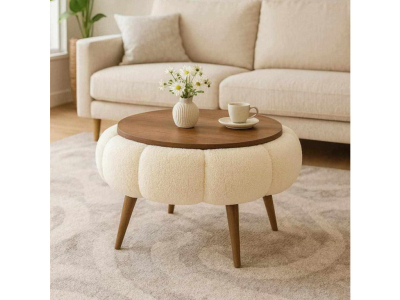
Small designer coffee table: wood and style for a small living room
Categories :
Trends & Inspiration
Buying Guide · Small Spaces
Choosing a small coffee table for a small living room
Choosing a small coffee table suited to a compact space involves matching its shape, material and height to the actual layout of your living room. This guide breaks down each criterion to help you make your decision, from nesting designs to the choice of legs, with practical guidance on available sizes and styles.
The coffee table is a central piece of furniture in the sitting area: placed in front of the sofa or armchairs, it holds drinks, remote controls, magazines and decorative items. In a small space, making the right choice comes down to striking a balance between usable surface area and freedom of movement – two often conflicting requirements that a well-chosen piece can successfully reconcile.
Which coffee table for a small living room
The type of table that takes up the least space in a compact living room is generally a nesting or stackable model, as it combines several surfaces whilst taking up minimal space. As soon as space becomes available, each section unfolds independently; when stowed away, the whole set fits within the footprint of a single table.
| Nesting tables: the ultimate in modular design, they slot together to clear a path and slide apart to provide several surfaces simultaneously, without taking up extra floor space on a day-to-day basis. | |
| Scandinavian coffee table with multiple tops: the slender base and clean lines minimise the visual bulk, making it the ideal choice wherever space allows to maintain a sense of lightness in the room. | |
| Models with discreet legs: in a small living room, slender metal legs allow the eye to travel beneath the table, reducing the impression of clutter without compromising the overall stability. |
Product spotlight
Vulca nesting table set — ceramic
The large table measures 70 × 70 × 42 cm and the small one 50 × 50 × 51 cm, with dimensions carefully calibrated to ensure a perfect nesting fit. The 1 cm-thick ceramic top with a white and grey marbled effect rests on a black metal frame; this contrast creates a bold design without visually weighing down the space.
A round coffee table designed for ease of movement
The round coffee table makes it easier to move around in confined spaces: the absence of corners prevents knocks and allows you to walk around the piece naturally in all directions. It is also the shape that blends most easily with all styles of décor, from Scandinavian to contemporary, making it a safe bet for eclectic interiors.
A small coffee table with a modern design is often available in a round version with a slender metal base and a top made of glass, stained wood or ceramic. This type of design is particularly well-suited to homes with young children, where the absence of right angles offers a practical advantage in everyday life, whilst complementing the rest of the living room’s aesthetic.
The long rectangular coffee table
In a long, narrow room, the rectangular coffee table is the most logical solution: its proportions complement the living room’s layout and align naturally with the sofa. The larger surface area of a rectangular coffee table also makes it practical for eating or working whilst sitting on the sofa – a common practice in small flats where every piece of furniture serves several purposes at once.
Choosing the right coffee table height
The ideal height for a coffee table matches that of the sofa seat: too great a difference means you have to lean forward to reach the tabletop or, conversely, creates a constant visual obstruction. In practice, most models range from 35 to 55 cm, a range that covers the vast majority of seat heights found on sofas currently on the market.
Two small tables of different sizes can also be placed side by side to form a set: as mentioned when discussing the choice of frame, the harmony of styles and colours is key to achieving a visually cohesive result.
Product zoom
Set of 3 nesting tables — clear glass
12 mm clear glass, progressive dimensions: 30 × 30 × 36 cm, 36 × 36 × 39 cm and 42 × 42 × 42 cm. The tables can be nested inside one another for easy storage, or arranged freely to suit the layout of your living room.
Made in Europe. 2-year guaranteeThe transparency of the glass allows for a light, unobtrusive visual integration: the tabletop does not visually overwhelm the décor, a key advantage in small spaces. Conversely, a square coffee table made of solid wood brings more warmth and character, at the cost of being heavier and having a more pronounced visual presence in the room. To round off these points, the coffee table is presented as a piece of furniture that is easily accessible whilst seated, with a variety of functional and decorative uses.
Nested ceramic coffee tables also offer a compact solution: this set comprises a large table measuring 70 × 70 × 42 cm and a small table measuring 50 × 50 × 51 cm, featuring a white and grey marbled effect and a design intended to minimise the space taken up.
Materials and styles to help you choose the right coffee table
The material determines a coffee table’s appearance, weight and maintenance requirements. Wood, glass, ceramic or metal each lend a specific decorative feel to a model, whilst combining two materials – such as a metal frame and a ceramic top – allows you to refine the look to suit the style you’re aiming for in your living room.
Classic materials: wood and metal
A solid wood coffee table offers an inimitable natural warmth, but its weight can be a constraint in a small space where frequent repositioning is required. Wood pairs well with metal to create hybrid designs: the industrial-style coffee table, for example, combines a wooden top with a raw metal base – a combination characteristic of loft-style or workshop-style interiors.
Alongside common woods such as oak or teak, rarer woods are making their way into high-end collections. A mango wood coffee table, for example, stands out for its pronounced natural grain and sturdiness, whilst a rattan coffee table brings a sense of visual lightness that complements bohemian interiors with white or cream walls. A coffee table made from these natural materials will be a good choice if your décor favours warm tones and organic textures.
Glass, ceramic and marble: lightness and refinement
Glass is the most effective material for visually lightening a small living room: the eye passes right through the tabletop, which reduces the impression of clutter. A side table made of 12 mm clear glass, such as the nesting tables in progressive sizes available from Habitat et Jardin – which are European-made and come with a two-year guarantee – perfectly illustrates this advantage in compact spaces.
A marble coffee table, on the other hand, has the disadvantage of being very heavy. Nesting ceramic coffee tables offer an attractive compromise: the white and grey marbled ceramic tabletop replicates the look of marble whilst weighing significantly less. Habitat et Jardin offers these nesting ceramic coffee tables with a 1 cm thick tabletop and a contrasting black metal frame.
Styles: Scandinavian, industrial or contemporary design
The Scandinavian coffee table is recognisable by its clean lines, slender legs and natural tones – light wood, white or grey – which blend into almost any interior without creating a stylistic clash. Conversely, the designer coffee table – often made of metal with slender, geometric lines – is suited to resolutely contemporary living rooms where formal rigour takes precedence over the warmth of natural materials.
The metal coffee table with a marbled ceramic top offered by Habitat et Jardin fits into this design aesthetic: depending on the layout of your space, it can serve as a centrepiece or as a supplementary designer coffee table, depending on whether it is used on its own or paired with the small table from the set.